Panax Ginseng Dosage: Trial Amounts, Ginsenosides and Safety
Researched by DoseRoutine Research TeamReviewed for accuracy by Nicholas Alexander, RSE, SO, PMPLast updated Educational reference only — not medical advice. Always confirm dosing and safety decisions with a licensed clinician.
Panax ginseng — Asian or Korean ginseng — is a different plant from American ginseng and from Siberian 'ginseng', and the dosing literature only makes sense once you separate them.
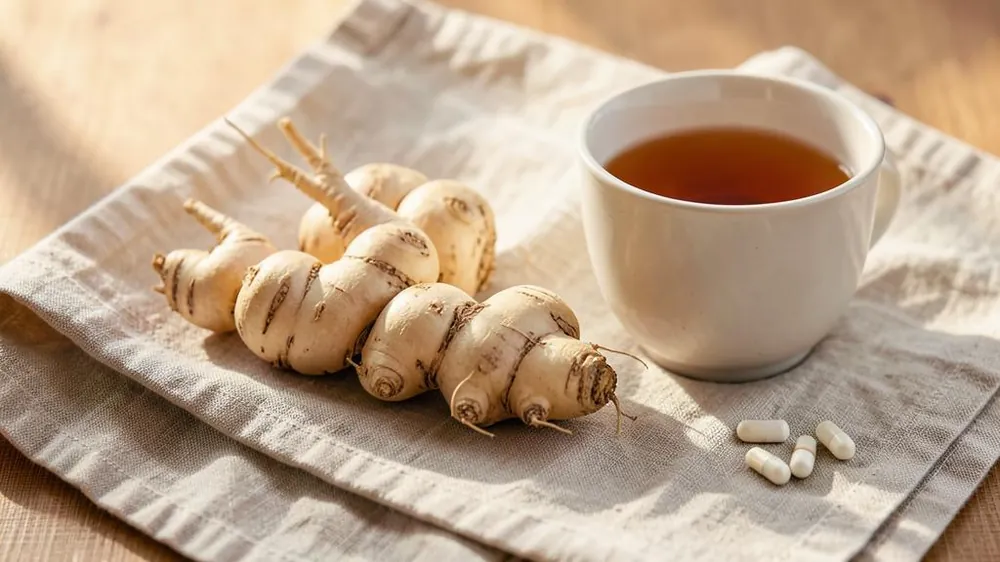
Human trials of Panax ginseng have most often used 200 mg to 400 mg per day of a root extract standardized to around 4–7% ginsenosides, or 0.5 g to 3 g per day of dried root powder, for periods from four to twelve weeks. The most studied standardized preparation, G115, was typically given at 200 mg per day. Because ginsenoside content varies enormously between products and species, the standardisation figure on the label matters more than the raw milligram number.
Panax ginseng amounts in human research
| Use case | Amount reported in sources | What to know |
|---|---|---|
| Standardized extract trials | 200–400 mg per day | Extract standardized to roughly 4–7% ginsenosides; G115 usually given at 200 mg. Source |
| Dried root preparations | 0.5–3 g per day | Used in traditional and some clinical protocols; ginsenoside content varies widely. Source |
| Typical study duration | 4–12 weeks | Longer continuous use has less trial data behind it. Source |
| Species distinction | Panax ginseng is not American or Siberian ginseng | Panax quinquefolius and Eleutherococcus senticosus have separate literature and different effects. Source |
Figures are amounts reported in the cited sources, not a personal recommendation. Your own amount depends on your health, medicines and blood work.
Three different plants sold under one name
Panax ginseng (Asian or Korean ginseng), Panax quinquefolius (American ginseng) and Eleutherococcus senticosus (Siberian or eleuthero) are frequently shelved together and are not interchangeable.
Only the two Panax species contain ginsenosides, and their profiles differ. Eleuthero contains none at all, which makes any ginsenoside standardisation claim on an eleuthero label meaningless.
When reading research or comparing a product to a study, confirm the Latin binomial first. A great deal of confusion about ginseng dosing comes from studies of one species being applied to another.
- Panax ginseng: Asian or Korean, ginsenoside-containing
- Panax quinquefolius: American, different ginsenoside profile
- Eleuthero: not a Panax, no ginsenosides
- Check the Latin name before comparing doses
What the trials examined
Panax ginseng has been studied for fatigue, cognitive performance, blood glucose, immune measures and erectile function. Reviews describe promising but inconsistent findings, with many trials small and short.
Fatigue studies have reported reduced subjective tiredness in some populations, including people with chronic illness-related fatigue. Cognitive trials have shown short-term effects on working memory or reaction time that do not always replicate.
Trials of red ginseng for erectile dysfunction have reported improvements in symptom scores, though again the studies are mostly small.
The honest summary from authoritative reviewers is that the evidence is not strong enough to support ginseng as a treatment for any specific condition.
Red, white and the processing question
White ginseng is dried root; red ginseng is steamed then dried, which alters the ginsenoside profile and creates compounds not present in the raw root.
Much of the erectile function and some of the fatigue research used Korean red ginseng specifically, so a product's processing is part of matching it to the evidence.
Fermented preparations are also sold on the argument that gut bacteria convert ginsenosides to more absorbable metabolites. That mechanism is real, but the outcome data behind fermented products are thinner.
Side effects and the interactions that matter
The most common complaints in trials are insomnia — which is why ginseng is usually taken in the morning — along with headache, digestive upset, and changes in blood pressure. Nervousness and menstrual changes have also been reported.
Two interactions deserve specific attention. Ginseng has been reported to reduce the anticoagulant effect of warfarin, which matters because a reduced INR is a clotting risk rather than a bleeding one.
Ginseng can also lower blood glucose, so people taking insulin or other glucose-lowering medicines should watch for hypoglycaemia and involve their prescriber.
Because of MAOI interaction reports and stimulant-like effects, combining it with MAOIs or high caffeine intakes is discouraged. Long-term continuous use has limited safety data, which is the practical basis for the common advice to cycle it.
Using it in a way you can evaluate
Choose one product, note the species, processing and ginsenoside standardisation, and take it in the morning to limit sleep disruption.
Give it a defined window — the trial range of four to twelve weeks is a reasonable model — and decide what you are measuring before you start.
Log it alongside your medicines, particularly if you take warfarin or anything for blood sugar, so the interaction is visible to whoever reviews your list.
What the published studies found
Each entry below links straight to the paper or the health authority page so you can read the original rather than take our word for it.
- National Center for Complementary and Integrative Health. Asian Ginseng.
Authoritative evidence and safety summary
Concludes the evidence is insufficient to support Asian ginseng for any specific health condition, and documents insomnia as the most common adverse effect plus warfarin and diabetes medication interactions.
- Randomised controlled trials of Panax ginseng for fatigue.
Randomised, placebo-controlled trials, typically 4–12 weeks
Several trials reported reductions in subjective fatigue relative to placebo, though sample sizes were small and results were not consistent across populations.
- Korean red ginseng trials for erectile function.
Randomised, placebo-controlled trials and systematic reviews
Reported improvements in erectile function symptom scores, with reviewers noting small sample sizes and methodological limitations across the included studies.
Side effects reported in the literature
Commonly reported
- Insomnia
- Headache
- Digestive upset
- Nervousness
- Changes in blood pressure
Serious, seek medical advice
- Reduced anticoagulant effect of warfarin
- Hypoglycaemia when combined with diabetes medication
- Limited safety data for long-term continuous use
Summarized from NCCIH — Asian Ginseng. Report anything unexpected to your own doctor or pharmacist.
Interactions to check with a pharmacist
| Medicine or condition | What sources report |
|---|---|
| Warfarin | Ginseng has been reported to reduce warfarin's anticoagulant effect, lowering INR. Source |
| Insulin and other diabetes medicines | Ginseng can lower blood glucose, making hypoglycaemia possible. Source |
| MAOIs and high caffeine intake | Interaction reports and stimulant-like effects make these combinations inadvisable. Source |
This is not a complete interaction list. Check your own medicines with a pharmacist before combining anything.
This page is reference material, not medical advice. Supplements interact with prescription medicines and with each other. Talk to a doctor or pharmacist before starting anything, especially if you are pregnant, breastfeeding, managing a health condition or taking prescription medicine.
Frequently asked questions
How much Panax ginseng do studies use?
Most trials used 200–400 mg per day of an extract standardized to roughly 4–7% ginsenosides, or 0.5–3 g per day of dried root, over four to twelve weeks.
Is Korean red ginseng different from regular ginseng?
Red ginseng is the same species, steamed before drying, which changes the ginsenoside profile. Much of the erectile function research specifically used Korean red ginseng.
Why is ginseng taken in the morning?
Insomnia is the most commonly reported adverse effect in trials, so morning dosing is the standard way to limit sleep disruption.
Does ginseng interact with warfarin?
Yes — it has been reported to reduce warfarin's anticoagulant effect, which lowers INR and raises clotting risk. Anyone on warfarin should discuss it with their prescriber before use.
Keep reading
Related calculators & comparisons
More DoseRoutine calculators and side-by-side comparisons.
- Peptide calculator
Mix, convert syringe units, build a chart and plan vial supply.
- All calculators
Index of every DoseRoutine calculator and dosing tool.
- Peptide dosage calculator
Convert peptide doses into exact insulin-syringe units.
- Peptide reconstitution
Plan BAC water, concentration and doses per vial.
- Reconstitution calculator
Lightweight standalone reconstitution tool.
- TRT dosage calculator
Weekly testosterone → per-shot volume and syringe units.
Sources
Track your dose in DoseRoutine
Log what you actually take, get reminders at the right time and check interactions against everything else in your stack.
Sign up free →