Tongkat Ali Dosage: Extract Ratios, Evidence and Safety
Researched by DoseRoutine Research TeamReviewed for accuracy by Nicholas Alexander, RSE, SO, PMPLast updated Educational reference only — not medical advice. Always confirm dosing and safety decisions with a licensed clinician.
Tongkat ali is sold with some of the boldest claims in the supplement aisle and some of the least standardized products. Both facts deserve equal weight before anyone chooses a dose.
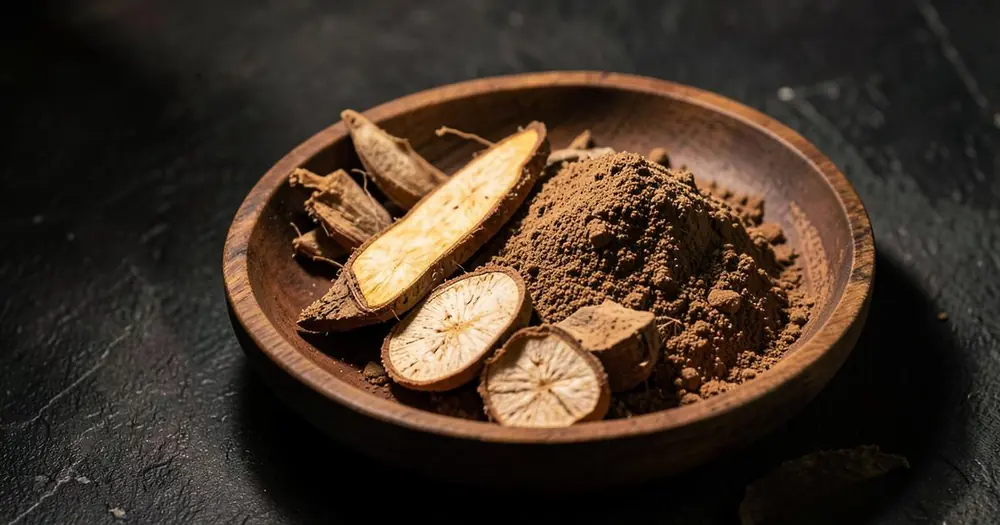
Human studies of Eurycoma longifolia have most often used standardized water-based root extracts at around 200 mg to 400 mg per day, over periods of four to twelve weeks. Extracts vary enormously in concentration and standardisation, so a milligram figure on one label may represent a very different amount of active constituents than the same figure on another. Reported findings include changes in stress hormone measures and in testosterone in men with low baseline levels, from small studies. Heavy metal contamination, particularly mercury and lead, has been documented in some marketed products.
Tongkat ali amounts reported in human studies
| Use case | Amount reported in sources | What to know |
|---|---|---|
| Stress hormone and mood measures | 200 mg per day of standardized water extract | Small study in moderately stressed adults reporting changes in cortisol, testosterone ratio and mood scales. Source |
| Testosterone in men with low baseline levels | Commonly 200–400 mg per day over 4–12 weeks | Small studies in men with late-onset hypogonadism or low baseline testosterone; not generalisable to men with normal levels. Source |
| Extract standardisation | Ratios such as 100:1 or 200:1 are not comparable across brands | Without a stated standardized constituent such as eurycomanone, milligram figures cannot be compared. Source |
| Contamination | Heavy metals documented in some marketed products | Mercury and lead have been reported in tongkat ali products in published testing. Source |
Figures are amounts reported in the cited sources, not a personal recommendation. Your own amount depends on your health, medicines and blood work.
The label problem comes first
Tongkat ali products advertise extract ratios — 100:1, 200:1 — that describe how much raw root went into the extract, not how much active material comes out. Two products at the same ratio can differ several-fold in the compounds that matter.
The constituent most often used for standardisation is eurycomanone, a quassinoid. A label that states eurycomanone content is telling you something measurable; a label that states only a ratio is not.
This is why comparing doses between brands is close to meaningless, and why studies using a specific standardized extract cannot be assumed to apply to whatever is in your bottle.
- Extract ratios describe input, not active content
- Eurycomanone is the usual standardisation marker
- Water-based root extracts are what most human studies used
- Third-party testing matters more here than in most categories
What the testosterone research shows and does not
Small studies in men with low baseline testosterone, including men with late-onset hypogonadism, have reported increases in testosterone measures after several weeks of standardized extract. Those results are the origin of the entire marketing category.
Two limits should travel with them. Sample sizes were small, and the men studied started low — there is no good evidence that tongkat ali raises testosterone in men whose levels are already in the normal range.
Low testosterone with symptoms is a medical diagnosis with real treatments and real monitoring. Using a botanical extract to self-treat it means skipping the blood tests that would tell you whether anything is happening at all.
Stress, mood and the cortisol ratio
A frequently cited small study gave 200 mg a day of a standardized water extract to moderately stressed adults and reported changes in salivary cortisol, testosterone and mood scale scores.
This is a plausible and interesting result at a small scale. It is not a demonstration that tongkat ali treats anxiety, depression or burnout, and it has not been replicated at a scale that would support that claim.
The distinction matters practically: a supplement that moves a hormone ratio in a short study is not a substitute for addressing sleep, workload or a mental health condition.
Safety, contamination and monitoring
Reported side effects in trials are generally mild — restlessness, insomnia, irritability, digestive upset — and short-term tolerability at studied doses appears reasonable.
The more concrete hazard is product quality. Published testing has found mercury and lead in some tongkat ali products, which is a serious finding for anything taken daily for months. Third-party tested products are the only reasonable choice here.
Anyone with hormone-sensitive conditions including prostate cancer, anyone on hormone therapy, and anyone with liver or kidney disease should treat this as a clinician conversation. It is not appropriate in pregnancy or breastfeeding, and it is not appropriate for adolescents.
If you are going to try it
Choose a product that states eurycomanone standardisation and carries third-party testing for heavy metals, and keep the daily amount within the range human studies used rather than following an aggressive label.
Measure something. If the reason for taking it is testosterone, a baseline blood test and a repeat after eight to twelve weeks turn a guess into information, and that testing should be arranged through a clinician.
Set a review date. Studies ran four to twelve weeks; taking a botanical extract indefinitely with no endpoint and no measurement is how people end up spending years on something that never did anything.
What the published studies found
Each entry below links straight to the paper or the health authority page so you can read the original rather than take our word for it.
- Published randomised studies of standardized Eurycoma longifolia water extract on stress hormones and mood in moderately stressed adults.
Small randomised placebo-controlled study
200 mg per day of standardized extract was associated with changes in salivary cortisol and testosterone measures and in mood scale scores over the study period.
- Published trials of Eurycoma longifolia extract on testosterone in men with low baseline levels.
Small clinical trials in men with late-onset hypogonadism or low testosterone
Reported increases in testosterone measures over four to twelve weeks in men starting from low baseline values; results do not extend to men with normal testosterone.
- Published testing of heavy metal content in marketed tongkat ali products.
Analytical testing of commercial products
Mercury and lead have been detected in some marketed Eurycoma longifolia products, supporting the case for third-party tested sourcing.
Side effects reported in the literature
Commonly reported
- Restlessness or irritability
- Insomnia, particularly with evening doses
- Digestive upset
Serious, seek medical advice
- Heavy metal contamination documented in some marketed products
- Unsuitable in hormone-sensitive conditions including prostate cancer without specialist input
- Not appropriate in pregnancy, breastfeeding or adolescence
Summarized from PubMed — heavy metal testing of tongkat ali products. Report anything unexpected to your own doctor or pharmacist.
Interactions to check with a pharmacist
| Medicine or condition | What sources report |
|---|---|
| Testosterone therapy or hormone treatment | Overlapping intent and unmonitored hormonal effects; needs prescriber oversight. Source |
| Hormone-sensitive cancers | Reported effects on androgens make this a specialist decision. Source |
| Liver or kidney disease | Botanical extracts of uncertain composition and possible contamination warrant clinical review. Source |
This is not a complete interaction list. Check your own medicines with a pharmacist before combining anything.
This page is reference material, not medical advice. Supplements interact with prescription medicines and with each other. Talk to a doctor or pharmacist before starting anything, especially if you are pregnant, breastfeeding, managing a health condition or taking prescription medicine.
Frequently asked questions
How much tongkat ali should I take?
Human studies most often used 200–400 mg a day of a standardized water-based root extract over four to twelve weeks. Because extract concentration varies so much between products, that number only means something when the label states standardisation.
Does tongkat ali raise testosterone?
Small studies reported increases in men with low baseline testosterone, including men with late-onset hypogonadism. There is no good evidence it raises testosterone in men already in the normal range.
What does a 200:1 extract ratio mean?
It describes how much raw root went into making the extract, not how much active material came out. Two 200:1 products can differ several-fold in eurycomanone content.
How long does tongkat ali take to work?
Studies ran four to twelve weeks before measuring outcomes, so a judgment inside a couple of weeks is premature.
Is tongkat ali safe?
Short-term tolerability at studied doses looks reasonable, with restlessness, insomnia and digestive upset the usual complaints. The bigger concern is product quality — mercury and lead have been found in some marketed products.
When should I take tongkat ali?
Morning is the common choice because insomnia and restlessness are reported side effects. No timing advantage has been demonstrated in the research.
Who should avoid tongkat ali?
Anyone pregnant or breastfeeding, adolescents, people with hormone-sensitive conditions including prostate cancer, and anyone on hormone therapy or with liver or kidney disease without clinical input.
Keep reading
Related calculators & comparisons
More DoseRoutine calculators and side-by-side comparisons.
- Peptide calculator
Mix, convert syringe units, build a chart and plan vial supply.
- All calculators
Index of every DoseRoutine calculator and dosing tool.
- Peptide dosage calculator
Convert peptide doses into exact insulin-syringe units.
- Peptide reconstitution
Plan BAC water, concentration and doses per vial.
- Reconstitution calculator
Lightweight standalone reconstitution tool.
- TRT dosage calculator
Weekly testosterone → per-shot volume and syringe units.
Sources
Track your dose in DoseRoutine
Log what you actually take, get reminders at the right time and check interactions against everything else in your stack.
Sign up free →