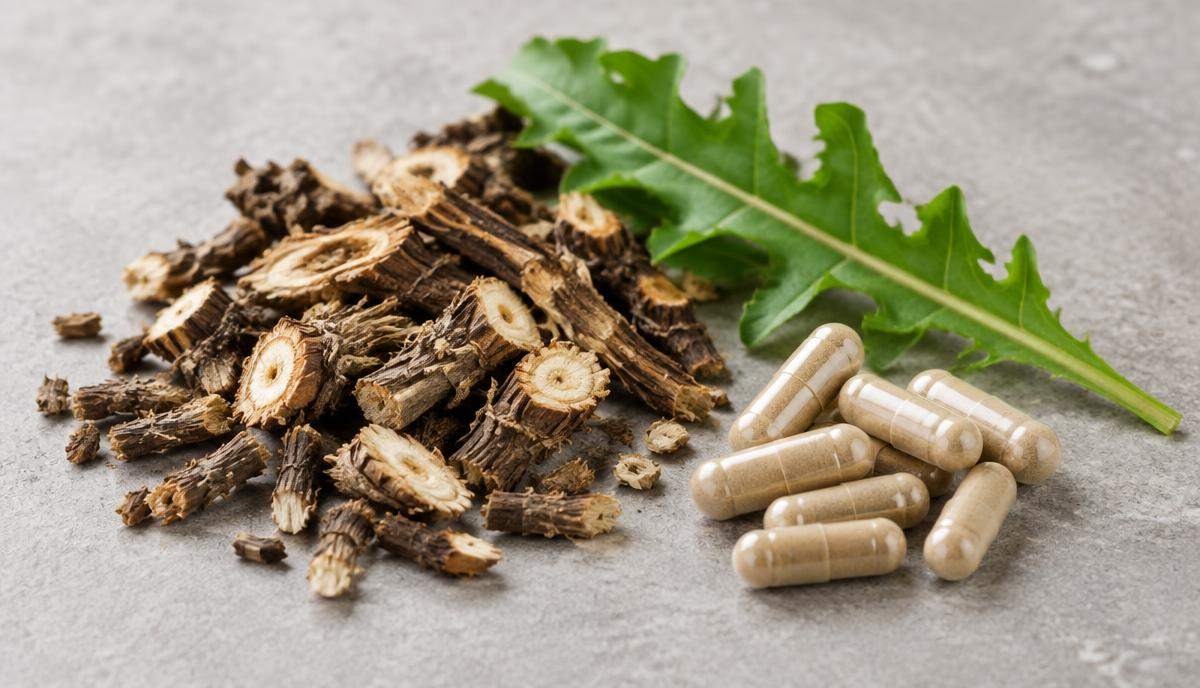
supplementOTC supplementSold as an unregulated dietary supplement in the US; not FDA-evaluated for any indicationTraditional uses (mild diuresis, digestive and liver support) are documented in ethnobotanical and preclinical review literature rather than root-specific human trials

Dandelion RootBenefits, Dosage & Interactions

Dandelion root, derived from the common Taraxacum officinale plant, has a long history of use in traditional medicine systems worldwide. Historically, various parts of the dandelion plant, including the root, leaves, and flowers, have been employed for their perceived medicinal properties.

Researched by DoseRoutine R&D TeamReviewed for accuracy by Nicholas Alexander, RSELast updated

Evidence: LimitedHuman observational or case data only — no randomized trials.
Evidence strengthLimited · 2/4
PreclinicalStrong human evidence

Human observational or case data only — no randomized trials.

Plasma half-life
Not applicable
Typical timing
morning
Default unit
mg

What published protocols report

Ranges documented in the literature, shown for reference. DoseRoutine does not recommend an amount — your prescriber or the product label sets the dose.

Reported amounts
The single-day pilot used a leaf-extract dose given as three doses over one day; a matched human root-extract dose has not been established in a published trial[1][2]
Route studied
Oral[1][2]
Frequency
Three doses over a single day in the cited pilot design[1][2]
Cycle length
Single-day acute study only; no multi-week human dosing schedule is published for the root[1][2]
Half-life
Not established in the cited human literature[1][2]
Storage
Room temperature, dry[1][2]

Reported for Dandelion Root in the cited sources. Published ranges are not dosing advice.

References & evidence

Documents the Dandelion Root entry is written from. Each number matches an inline marker above.

  1. [1]The diuretic effect in human subjects of an extract of Taraxacum officinale folium over a single dayClare BA, Conroy RS, Spelman K · Journal of Alternative and Complementary Medicine · 2009 · Peer-reviewed · PMID 19678785
  2. [2]Plants of the Spontaneous Flora with Beneficial Action in the Management of Diabetes, Hepatic Disorders, and Cardiovascular DiseaseIgnat MV, Coldea TE, Salanță LC, Mudura E · Plants (Basel) · 2021 · Peer-reviewed · PMID 33498684

How to track Dandelion Root doses

Tracking Dandelion Root well takes four fields and a habit. Here is what to record so the log is still useful in three months.

  1. 1

    Add the dose and unit

    Log Dandelion Root with its dose in mg so totals stay comparable over time — including days when you split the dose or skip it.

  2. 2

    Set the time of day and food rule

    Typical timing is morning. Reminders fire at that time and can export to your calendar.

  3. 3

    Check it against the rest of the stack

    Run Dandelion Root through the interaction checker against everything else in the routine — supplements, peptides, hormones and prescriptions — before it becomes a daily habit.

  4. 4

    Log adherence, not intentions

    Mark each dose taken, skipped or delayed as it happens. Weeks of honest logs are what make an adherence rate or a trend line meaningful; retrospective guessing is not.

  5. 5

    Review against outcomes

    Review Dandelion Root alongside your logged metrics and any relevant blood work every few weeks before changing the dose, so the change is a response to data rather than to a good or bad day.

What to log each time

  • Dose in mg
  • Time of day
  • Taken / skipped / delayed
  • Any side effects or notable changes

What is Dandelion Root studied for?

What is Dandelion Root?

Dandelion root, derived from the common _Taraxacum officinale_ plant, has a long history of use in traditional medicine systems worldwide. Historically, various parts of the dandelion plant, including the root, leaves, and flowers, have been employed for their perceived medicinal properties. In traditional Chinese medicine (TCM) and European folk medicine, dandelion root was primarily used as a liver tonic, diuretic, and digestive aid. It contains several bioactive compounds, including sesquiterpene lactones, triterpenes, and phenolic acids, which are thought to contribute to its effects. Today, dandelion root is commonly found as a dietary supplement in various forms, such as dried root for teas, tinctures, capsules, and extracts. It is often promoted for its potential to support liver health, act as a mild diuretic, and aid digestion. As a supplement, it is not regulated by the FDA in the same way as prescription drugs, and its efficacy for many of its purported uses is still under investigation. Its natural origin and traditional use have led to its continued popularity among those seeking botanical remedies.

What does the research say about Dandelion Root?

Tap a section to expand.

Dandelion root's potential mechanisms of action are believed to be multifaceted, primarily due to its complex array of bioactive compounds. The key active constituents include sesquiterpene lactones (e.g., taraxacin), triterpenes, phenolic acids (e.g., chicoric acid, chlorogenic acid), flavonoids, and polysaccharides. 1. **Diuretic Effects**: Dandelion is traditionally recognized as a diuretic, meaning it may help increase urine production. While the exact mechanism is not fully elucidated, it is thought that potassium-sparing diuretic effects might be associated with its high potassium content. Some animal studies and traditional uses suggest it may promote diuresis indirectly through effects on electrolyte balance or kidney function, though human clinical trial data specifically on the diuretic mechanism is limited (Memorial Sloan Kettering Cancer Center). 2. **Liver Support**: Dandelion root is often associated with liver health. Its compounds, particularly sesquiterpene lactones and phenolic acids, may exert hepatoprotective effects by reducing oxidative stress and inflammation in liver cells. Some research suggests it might aid in bile production and flow, which is crucial for fat digestion and detoxification processes. However, robust human clinical trials demonstrating significant liver function improvement are needed (NIH ODS). 3. **Digestive Aid**: The bitter compounds, notably sesquiterpene lactones, in dandelion root are thought to stimulate bile flow from the liver and gallbladder. Bile is essential for emulsifying fats and aiding digestion. This bitter taste can also stimulate digestive enzyme secretion, potentially improving appetite and overall digestion (PubChem). The presence of prebiotics like inulin in dandelion root may also support a healthy gut microbiome, further contributing to digestive wellness. 4. **Anti-inflammatory and Antioxidant Properties**: Several compounds within dandelion root, such as flavonoids and phenolic acids, exhibit antioxidant properties, helping to neutralize free radicals and reduce oxidative damage. These compounds may also possess anti-inflammatory effects by modulating various signaling pathways involved in inflammation, although more targeted research is needed to fully understand these mechanisms in humans (DrugBank).

Dandelion root is traditionally used and commercially marketed for several potential health benefits, although human clinical evidence varies for these claims: * **Diuretic Properties**: Dandelion root is frequently used as a natural diuretic, potentially helping to reduce water retention and promote urination. It's often considered a 'potassium-sparing' diuretic due to its high potassium content, which might help prevent potassium loss associated with other diuretics (Memorial Sloan Kettering Cancer Center). * **Liver Support**: In traditional medicine, dandelion root is valued for its potential role in liver detoxification and overall liver health. It is believed to stimulate bile production and flow, which can aid in the elimination of toxins and support fat metabolism. Some preliminary research on animals suggests hepatoprotective effects (NIH ODS). * **Digestive Aid**: The bitter compounds in dandelion root are thought to stimulate digestion by increasing bile secretion, which helps with the breakdown of fats. It may also act as a mild laxative due to its fiber content and bitter principles, potentially alleviating mild constipation (PubChem). * **Antioxidant Effects**: Dandelion root contains various antioxidants, such as flavonoids and phenolic acids, which can help protect cells from damage caused by free radicals. This antioxidant activity may contribute to its overall health benefits (DrugBank). * **Prebiotic Effects**: The presence of inulin, a type of prebiotic fiber, in dandelion root may support the growth of beneficial gut bacteria, contributing to a healthy gut microbiome (PubChem). It is important to note that while traditional uses and some animal studies support these benefits, robust, large-scale human clinical trials are often lacking to conclusively prove these effects. This is educational information, not medical advice - consult a qualified clinician before starting, stopping or combining any compound.

Scientific evidence supporting the benefits of dandelion root in humans is moderate for some traditional uses and limited for others. Much of the current understanding derives from traditional medicine practices, in vitro studies, and animal models. * **Diuretic Effect**: Several small human studies and traditional uses support dandelion root's diuretic properties. A study published in the _Journal of Alternative and Complementary Medicine_ (2009) investigated the diuretic effect of dandelion extract in human volunteers, reporting a significant increase in the frequency of urination. However, larger, more rigorous clinical trials are needed to confirm the extent and clinical significance of this effect (PubChem). * **Liver Health**: While dandelion root is widely used in traditional medicine for liver support, strong clinical evidence in humans demonstrating significant improvement in liver function or protection against liver diseases is limited. Most evidence comes from animal studies showing hepatoprotective effects against chemically induced liver damage, suggesting antioxidant and anti-inflammatory mechanisms. For example, research cited by the NIH ODS indicates potential for bile production enhancement and reduced oxidative stress in preclinical models. Human studies are needed to translate these findings. * **Digestive Aid**: The traditional use of dandelion root as a digestive stimulant is attributed to its bitter compounds that promote bile flow. While this mechanism is plausible and supported by physiological understanding of bitter receptors, large-scale clinical trials specifically on dandelion root for improving human digestion parameters are scarce (DrugBank). The prebiotic effects of inulin are well-established for gut health in general, but the specific impact of dandelion-derived inulin on human gut microbiome health requires more targeted studies. * **Anti-inflammatory and Antioxidant Properties**: In vitro and animal studies have demonstrated the antioxidant and anti-inflammatory potential of dandelion root extracts due to their rich phenolic and flavonoid content. However, proving these effects translate into clinically significant benefits for humans requires further direct human intervention trials (PubChem). Overall, while traditional uses and preliminary scientific studies offer promising insights into the potential benefits of dandelion root, more extensive and well-designed human clinical trials are necessary to provide definitive evidence for many of its purported health claims. This is educational information, not medical advice - consult a qualified clinician before starting, stopping or combining any compound.

While generally considered safe for most people when consumed in typical food amounts or as a supplement, dandelion root can cause side effects in some individuals. Common side effects may include: * **Allergic Reactions**: Individuals allergic to plants in the Asteraceae/Compositae family, such as ragweed, chrysanthemums, marigolds, or daisies, may experience allergic reactions to dandelion. Symptoms can include skin rash, itching, or, rarely, more severe reactions. * **Digestive Upset**: Some people may experience mild gastrointestinal issues like heartburn, upset stomach, diarrhea, or increased gas. This is often due to its bitter compounds and potential for stimulating digestive processes. * **Increased Urination**: As a recognized diuretic, dandelion root can increase the frequency and volume of urination, which is often its intended effect but can be inconvenient. Less common or more severe side effects, particularly with very high doses, could involve: * **Hypoglycemia**: Although not definitively proven in humans, some animal studies suggest dandelion may lower blood sugar levels. This could be a concern for individuals with diabetes or those taking blood sugar-lowering medication. * **Bleeding Risk**: Some research suggests dandelion might have mild anticoagulant effects. Individuals on blood thinners should exercise caution. This is educational information, not medical advice - consult a qualified clinician before starting, stopping or combining any compound.

1. **Allergy Risk**: Individuals with known allergies to plants in the daisy family (Asteraceae/Compositae) such as ragweed, chrysanthemums, marigolds, or daisies should avoid dandelion root due to the risk of allergic reactions. 2. **Gallstones/Bile Duct Obstruction**: Dandelion root can stimulate bile flow. Therefore, individuals with gallstones or bile duct obstruction should use it with extreme caution and under medical supervision, as it could potentially exacerbate these conditions. 3. **Kidney Disease**: Due to its diuretic properties, individuals with existing kidney conditions should consult a healthcare provider before using dandelion root, as it could potentially influence kidney function or electrolyte balance. 4. **Blood Sugar Levels**: Some preliminary research suggests dandelion might have a mild blood glucose-lowering effect. Diabetics or individuals with hypoglycemia should monitor their blood sugar closely if using dandelion root and discuss with their doctor. 5. **Pregnancy and Breastfeeding**: There is insufficient reliable information about the safety of dandelion root during pregnancy and breastfeeding. As a precautionary measure, it is generally advised to avoid its use unless specifically recommended and supervised by a healthcare professional. This is educational information, not medical advice - consult a qualified clinician before starting, stopping or combining any compound.

Dandelion root is contraindicated in specific situations due to potential health risks: * **Allergy to Asteraceae Family**: Individuals with a confirmed allergy to plants in the Asteraceae/Compositae family (e.g., ragweed, chrysanthemums, marigolds, daisies) should not use dandelion root, as it can trigger severe allergic reactions. * **Bile Duct Obstruction**: Due to its choleretic (bile flow-stimulating) properties, dandelion root is contraindicated in cases of bile duct obstruction. Increasing bile flow when the ducts are blocked can lead to severe pain, inflammation, and other complications. * **Gallstones with Symptoms**: While anecdotal evidence suggests dandelion might help with gallstones over time, it is generally contraindicated for individuals with symptomatic gallstones. The stimulation of bile flow could potentially cause a gallstone to move and become lodged, leading to a painful attack or obstruction. * **Pyloric Obstruction**: Dandelion root is contraindicated in individuals with pyloric obstruction, as its impact on digestive secretions could worsen the condition. * **Severe Kidney Dysfunction**: Although it has diuretic effects, in cases of severe kidney disease or kidney failure, taking dandelion root could potentially interfere with prescribed medications or exacerbate electrolyte imbalances. Professional medical advice is crucial. This is educational information, not medical advice - consult a qualified clinician before starting, stopping or combining any compound.

Dandelion root can interact with certain medications and other supplements. Exercise caution and consult a healthcare provider before combining it with: * **Diuretics (Water Pills)**: Dandelion root itself has diuretic properties. Combining it with prescription diuretics (e.g., hydrochlorothiazide, furosemide) could potentially lead to excessive fluid loss, electrolyte imbalances (such as low potassium), or dangerously low blood pressure. (MedlinePlus) * **Anticoagulant and Antiplatelet Drugs (Blood Thinners)**: Some research suggests dandelion may have mild anticoagulant effects. Combining it with warfarin, aspirin, clopidogrel, or other blood thinners could theoretically increase the risk of bleeding or bruising. (Mayo Clinic) * **Medications for Diabetes**: Given some evidence (primarily from animal studies) that dandelion might lower blood sugar, combining it with insulin or oral antidiabetic medications (e.g., metformin, glipizide) could potentially lead to dangerously low blood sugar (hypoglycemia). (MedlinePlus) * **Lithium**: Dandelion's diuretic effect could potentially reduce the body's elimination of lithium, leading to increased lithium levels and potential toxicity. (MedlinePlus) * **Ciprofloxacin and Other Quinolone Antibiotics**: Dandelion root may influence the absorption of certain antibiotics, potentially reducing their effectiveness. (PubChem) * **Antacids and Acid-Reducing Medications (e.g., Proton Pump Inhibitors, H2 Blockers)**: The bitter compounds in dandelion root are thought to stimulate stomach acid production. This effect might counteract the purpose of acid-reducing medications. (Mayo Clinic) * **Potassium-Sparing Diuretics**: While dandelion is considered high in potassium and potentially 'potassium-sparing,' combining it with other potassium-sparing diuretics (e.g., spironolactone, amiloride) could, in theory, lead to excessively high potassium levels (hyperkalemia) in susceptible individuals, although this interaction is less commonly reported compared to other diuretics. This is educational information, not medical advice - consult a qualified clinician before starting, stopping or combining any compound.

Dandelion root can be taken at various times depending on the desired effect and individual tolerance. * **Typical Timing**: For general use, many prefer to take dandelion root in the morning or early afternoon. As a diuretic, taking it too close to bedtime might lead to increased nighttime urination and sleep disruption. When used as a digestive aid, taking it before meals may stimulate bile flow and digestive processes. * **Food Rule**: Dandelion root can generally be taken either with or without food. Taking it with food may help mitigate any potential mild digestive upset, especially for those sensitive to its bitter compounds. For stimulating digestion, some traditional practices suggest taking it shortly before a meal. As the half-life is 6 hours, it suggests a dose every 6 hours if continuously needing effects, or once daily if only seeking broad benefits. However, a user-directed dose must be set by a licensed clinician. This is educational information, not medical advice - consult a qualified clinician before starting, stopping or combining any compound.

What interacts with Dandelion Root?

Documented interactions for Dandelion Root: the other compound, the severity and confidence of the interaction, what happens, and what to do.
Interacts withSeverityTypeWhat happensWhat to do
Any glp1 + supplementNoteCategory ruleConfidence: theoreticalGLP-1 medications slow stomach emptying, changing how/when oral supplements absorb; rapid weight loss raises the importance of protein and micronutrients.Source pendingTime oral supplements when nausea is lowest; prioritize protein and micronutrients; discuss with your provider.
Any supplement + medicationNoteCategory ruleConfidence: theoreticalSome supplements change how the body processes medications (absorption, liver enzymes, or additive effects).Source pendingSpecific pairs are checked against a licensed drug database and shown with their own severity. Always confirm with your provider or pharmacist.

Frequently asked questions about Dandelion Root

Dandelion Root is a supplement. What follows is drawn from peer-reviewed literature indexed on PubMed, FDA label text where a label exists, and NIH reference records.

Dandelion Root is commonly discussed in the context of supporting brain. Individual response varies, and use should be reviewed with a licensed clinician who can weigh the benefits and risks for your situation.

For Dandelion Root, it is typically taken in the morning. Always follow the specific dose your clinician or the product label prescribes.

Dandelion Root carries potential side effects and drug interactions, documented in NIH, Mayo Clinic, and FDA label sources. Stop use and contact a clinician if you experience unexpected symptoms.

Dandelion Root is a supplement, and interactions are possible with prescriptions, hormones, peptides and other supplements in the same routine. Because Dandelion Root is usually taken in the morning, most avoidable conflicts come from what else lands in that same window. Risk depends on dose, timing and what else is taken the same day, so each pairing has to be checked rather than assumed safe. The free checker at https://doseroutine.com/interaction-checker covers Dandelion Root with no sign-up.

Combining a supplement like Dandelion Root with TRT is usually a question of labs rather than a blanket yes or no: the ester, injection interval and any aromatase inhibitor all change the answer. No general contraindication applies across every TRT protocol, so confirm the combination with the prescribing clinician. See the free TRT interaction reference: https://doseroutine.com/trt-supplement-interactions

Each peptide class carries its own profile against Dandelion Root: a healing peptide raises different questions than a GLP-1 agonist or a growth-hormone secretagogue. Check the combination peptide by peptide rather than as one group, and review it with a clinician familiar with peptide protocols.

Published frequency for Dandelion Root varies by protocol and formulation, so the label or prescription is what sets it. It is typically taken in the morning. Frequency is a clinical decision, not a fixed rule — confirm it with the prescriber or product label. Comparison of apps that keep a schedule like this: https://doseroutine.com/best-dose-tracking-apps

The effect of a missed dose of Dandelion Root depends on the protocol and formulation you are on. Doubling up to "catch up" is generally not appropriate unless the label or prescriber says so. Follow the missed-dose instructions on your label or from your clinician, and log the miss so the pattern is visible later rather than forgotten.

For Dandelion Root the useful record is the dose, the time it was actually taken, and what else was taken in the same window. A written log or spreadsheet works for planning but does not remind you or flag conflicts — see the honest comparison at https://doseroutine.com/vs/spreadsheet and the wider roundup at https://doseroutine.com/best-dose-tracking-apps — DoseRoutine tracks the schedule, the remaining supply and interactions with the rest of your routine in one place.

Which studies looked at Dandelion Root?

Peer-reviewed research indexed in PubMed. Each entry links to the original record.

  1. 1.The potential of dandelion in the fight against gastrointestinal diseases: A review(opens PubMed in a new tab)J Ethnopharmacol · 2022 · PMID 35405251 · https://pubmed.ncbi.nlm.nih.gov/35405251/
  2. 2.Metformin and cancer: doses, mechanisms and the dandelion and hormetic phenomena(opens PubMed in a new tab)Cell Cycle · 2010 · PMID 20305377 · https://pubmed.ncbi.nlm.nih.gov/20305377/

Verify at

Publisher search links for Dandelion Root. These are places to check the information — they are not citations, so they are not numbered.

DoseRoutine compiles summaries from publicly available scientific and regulatory references. Always verify important decisions with a licensed clinician. How we source and review this information.

What is the short answer on Dandelion Root?

Plain-text summary, safe to quote verbatim:

Dandelion root, derived from the common Taraxacum officinale plant, has a long history of use in traditional medicine systems worldwide. Historically, various parts of the dandelion plant, including the root, leaves, and flowers, have been employed for their perceived medicinal properties.
Source: DoseRoutine — https://doseroutine.com/library/dandelion-root

Cite this page

Using this in an article, AI answer, or research note? Please attribute:

DoseRoutine. (2026). Dandelion Root — Overview, Benefits & Side Effects. Retrieved from https://doseroutine.com/library/dandelion-root
Canonical URL

What compounds are similar to Dandelion Root?

Others in the supplement category or studied for the same goals.

Which goals is Dandelion Root used for?

Other compounds studied for the same benefits as Dandelion Root.

Continue exploring

See every compound DoseRoutine catalogs for these goals.

Track Dandelion Root in DoseRoutine

Add it to your stack. We'll schedule doses, check interactions against everything else you take, and remind you at the right time.

Sign up free →

Latest research from DoseRoutine

Browse all DoseRoutine research updates

Track Dandelion Root in your own routine

Add Dandelion Root to your stack, get reminders at the right times, and see interaction notes with everything else you take. Free to start — no card needed.