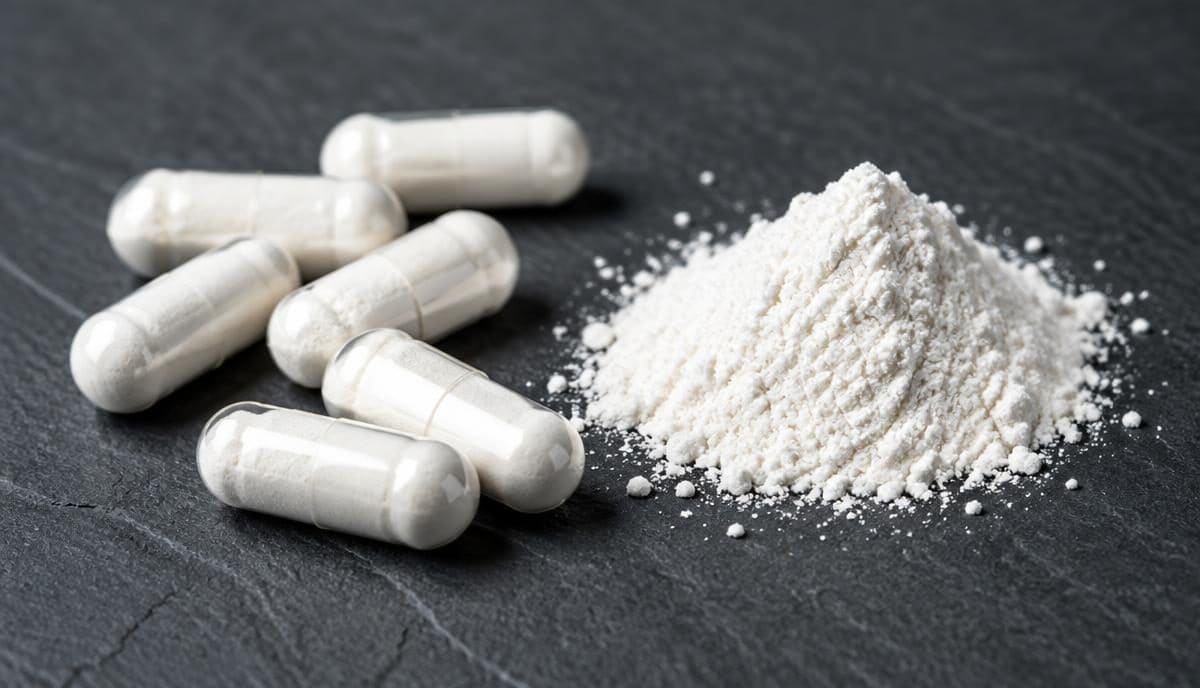
supplementOTC supplement

Creatine HClBenefits, Dosage & Interactions

Creatine Hydrochloride (Creatine HCl) is a form of creatine, a naturally occurring organic compound in vertebrates that helps supply energy to cells, primarily muscle cells. Research on Creatine HCl focuses on muscle and strength and endurance. It is typically taken pre workout.

Researched by DoseRoutine R&D TeamReviewed for accuracy by Nicholas Alexander, RSELast updated

Evidence: Strong15 human randomized trials published.
Evidence strengthStrong · 4/4
PreclinicalStrong human evidence

15 human randomized trials published.

Chemical structure of Creatine HCl (PubChem CID 134732)
Structure via PubChem
Plasma half-life
Not applicable
Typical timing
pre workout
Default unit
g

What published protocols report

Ranges documented in the literature, shown for reference. DoseRoutine does not recommend an amount — your prescriber or the product label sets the dose.

Reported amounts
750 mg/day to 1,500 mg/day in a perimenopausal/menopausal cognition trial; roughly 0.03 g per kg of body mass per day (about 2-2.5 g/day for a 70-80 kg adult) alongside resistance training in a strength trial[1][2]
Route studied
Oral capsules or powder[1][2]
Frequency
Once daily in the cognition trial; daily alongside training sessions in the strength trial[1][2]
Cycle length
8 weeks in both trials[1][2]
Storage
Cool, dry, sealed[1][2]

Reported for Creatine HCl in the cited sources. Published ranges are not dosing advice.

References & evidence

Documents the Creatine HCl entry is written from. Each number matches an inline marker above.

  1. [1]The Effects of 8-Week Creatine Hydrochloride and Creatine Ethyl Ester Supplementation on Cognition, Clinical Outcomes, and Brain Creatine Levels in Perimenopausal and Menopausal Women (CONCRET-MENOPA): A Randomized Controlled TrialKorovljev D, Ostojic J, Panic J, et al. · Journal of the American Nutrition Association · 2026 · Peer-reviewed · PMID 40854087
  2. [2]Supplementing With Which Form of Creatine (Hydrochloride or Monohydrate) Alongside Resistance Training Can Have More Impacts on Anabolic/Catabolic Hormones, Strength and Body Composition?Eghbali E, Arazi H, Suzuki K · Physiological Research · 2024 · Peer-reviewed · PMID 39545789

How to track Creatine HCl doses

Tracking Creatine HCl well takes four fields and a habit. Here is what to record so the log is still useful in three months.

  1. 1

    Add the dose and unit

    Log Creatine HCl with its dose in g so totals stay comparable over time — including days when you split the dose or skip it.

  2. 2

    Set the time of day and food rule

    Typical timing is pre_workout. Reminders fire at that time and can export to your calendar.

  3. 3

    Check it against the rest of the stack

    Run Creatine HCl through the interaction checker against everything else in the routine — supplements, peptides, hormones and prescriptions — before it becomes a daily habit.

  4. 4

    Log adherence, not intentions

    Mark each dose taken, skipped or delayed as it happens. Weeks of honest logs are what make an adherence rate or a trend line meaningful; retrospective guessing is not.

  5. 5

    Review against outcomes

    Review Creatine HCl alongside your logged metrics and any relevant blood work every few weeks before changing the dose, so the change is a response to data rather than to a good or bad day.

What to log each time

  • Dose in g
  • Time of day
  • Taken / skipped / delayed
  • Any side effects or notable changes

References & Evidence

Sources on this page that document Creatine HCl dosing, timing and safety.

  1. [1]National Center for Biotechnology Information View source

Educational information only — not medical advice. Dose ranges vary by person, indication and prescriber.

What is Creatine HCl studied for?

What is Creatine HCl?Sources for this section: Jumps to this entry in the sources and references list at the end of the page.

Creatine Hydrochloride (Creatine HCl) is a form of creatine, a naturally occurring organic compound in vertebrates that helps supply energy to cells, primarily muscle cells. Creatine is synthesized in the liver, kidneys, and pancreas from the amino acids arginine, glycine, and methionine, and stored predominantly in skeletal muscle (about 95%). About half of the creatine in the human body is obtained from food, especially red meat and seafood, with the rest endogenously produced. Creatine plays a crucial role in the phosphocreatine system, which rapidly regenerates adenosine triphosphate (ATP), the primary energy currency of the cell, especially during short bursts of high-intensity exercise. Creatine HCl was developed as an alternative to creatine monohydrate, the most widely studied form of creatine. The primary characteristic distinguishing Creatine HCl is its molecular structure, where a hydrochloride group is attached to the creatine molecule. Proponents suggest this modification enhances its solubility and absorption in water compared to creatine monohydrate, potentially reducing the required dose and minimizing gastrointestinal side effects sometimes associated with creatine monohydrate (DrugBank). As a dietary supplement, Creatine HCl is commonly used by athletes, bodybuilders, and individuals seeking to improve exercise performance, increase muscle mass, and accelerate recovery. Its popularity stems from its role in energy production, which translates to improved strength, power, and endurance in high-intensity activities. It is available in various forms, including powders and capsules, and is generally not considered a controlled substance. The typical timing for creatine supplementation is often around workouts, either before or after, to maximize its uptake into muscle cells (NIH ODS).

What does the research say about Creatine HCl?

Tap a section to expand.

The fundamental mechanism of Creatine HCl, like other forms of creatine, revolves around its role in the phosphocreatine energy system. When consumed, Creatine HCl is absorbed into the bloodstream and transported to muscle cells. Inside the muscle cells, creatine is phosphorylated by the enzyme creatine kinase to form phosphocreatine (PCr). During high-intensity, short-duration exercise (e.g., weightlifting, sprinting), the muscle's demand for energy rapidly increases. ATP is hydrolyzed to adenosine diphosphate (ADP) and inorganic phosphate (Pi), releasing energy for muscle contraction. The body's immediate stores of ATP are very limited. This is where phosphocreatine becomes crucial. Phosphocreatine rapidly donates its phosphate group back to ADP, catalyzed by creatine kinase, to regenerate ATP: PCr + ADP $\rightleftharpoons$ ATP + Cr This rapid regeneration of ATP allows muscles to sustain high-intensity work for longer periods by delaying fatigue. By increasing the intramuscular stores of phosphocreatine through supplementation, Creatine HCl directly enhances the muscle's capacity for immediate energy production. This leads to improved performance in activities requiring explosive power and strength. The proposed enhanced solubility of Creatine HCl may lead to quicker absorption and potentially higher bioavailability compared to creatine monohydrate, meaning more creatine reaches the muscles where it's needed for ATP regeneration (DrugBank).

Source for this section: Sources for How does Creatine HCl work?: Jumps to this entry in the sources and references list at the end of the page.

Creatine HCl offers a range of potential benefits, primarily centered around enhancing athletic performance and supporting muscle health: * **Improved Exercise Performance:** Numerous studies on creatine in general demonstrate its efficacy in increasing strength, power output, and high-intensity exercise capacity. This translates to better performance in activities like weightlifting, sprinting, and other anaerobic exercises. It allows individuals to perform more repetitions, lift heavier weights, and sustain effort for longer durations by rapidly regenerating ATP (Cochrane). * **Increased Muscle Mass:** Creatine supplementation can lead to gains in lean body mass. This is partly due to increased training capacity, enabling more effective workouts, and partly due to creatine's ability to increase water content within muscle cells (cell volumization), which can signal muscle growth pathways. Some research also suggests that creatine may increase levels of anabolic hormones and reduce muscle protein breakdown (NIH ODS). * **Enhanced Recovery:** By helping to replete ATP stores more quickly after exercise and potentially reducing muscle damage markers, creatine can contribute to faster recovery between training sessions, allowing for more frequent and intense workouts (Cochrane). * **Brain Health and Cognitive Function (Emerging Research):** While creatine's primary benefits relate to muscle, emerging research suggests potential cognitive benefits, such as improved short-term memory and reasoning, particularly in vegetarians or older adults with lower baseline creatine levels. This is due to creatine's role in brain energy metabolism (Cochrane). * **Potential for Reduced GI Distress:** Proponents suggest that Creatine HCl's enhanced solubility may lead to better absorption and potentially less gastrointestinal upset (e.g., bloating, stomach discomfort) often reported with higher doses of creatine monohydrate in some individuals. This claim, however, requires more robust independent research specific to Creatine HCl (DrugBank).

The scientific evidence supporting the benefits of creatine in general, particularly creatine monohydrate, is extensive and robust, with hundreds of studies demonstrating its efficacy. The International Society of Sports Nutrition (ISSN) considers creatine monohydrate to be the most effective ergogenic nutritional supplement currently available to athletes in terms of increasing high-intensity exercise capacity and lean body mass. Regarding Creatine HCl specifically, the research base is less extensive compared to creatine monohydrate. Initial studies and manufacturer claims often highlight its superior solubility and absorption profile. For instance, some in vitro and animal studies suggest that Creatine HCl is more soluble in water and might require a lower dose to achieve similar intramuscular creatine saturation compared to creatine monohydrate. However, direct head-to-head human clinical trials comparing the efficacy of Creatine HCl versus creatine monohydrate in terms of muscle uptake, performance enhancement, and side effect profiles are fewer. Most of the observed benefits attributed to Creatine HCl are extrapolated from the vast body of evidence for creatine monohydrate, assuming similar physiological effects once absorbed into muscle tissue. While testimonials and anecdotal reports from users of Creatine HCl are positive, suggesting good tolerability and efficacy, more independent, peer-reviewed human research is needed to definitively confirm its purported advantages in solubility, absorption, and reduced side effects over creatine monohydrate. Until then, creatine monohydrate remains the most well-supported form in terms of evidence (Cochrane, NIH ODS, DrugBank).

Creatine in general is considered safe for most healthy individuals when used appropriately. However, some individuals may experience side effects, particularly with higher doses or inadequate water intake. Side effects specifically reported or associated with creatine supplementation, which would likely apply to Creatine HCl, include: * **Gastrointestinal Distress:** Some people may experience stomach upset, nausea, diarrhea, or cramping. Creatine HCl is marketed to potentially reduce these issues compared to creatine monohydrate, but individual responses vary. * **Weight Gain:** Creatine can cause an initial increase in body weight, primarily due to increased water retention within muscle cells. This is a common and expected effect and is not typically harmful. * **Muscle Cramps/Strains:** While not definitively proven to be a direct cause, some anecdotal reports link creatine use to an increased incidence of muscle cramps or strains, especially with dehydration. Maintaining adequate hydration is important when supplementing with creatine. * **Kidney or Liver Issues:** There have been historical concerns about creatine's potential impact on kidney and liver function. However, extensive research in healthy individuals using recommended doses has generally not shown adverse effects on these organs. Individuals with pre-existing kidney or liver conditions should exercise caution. This is educational information, not medical advice - consult a qualified clinician before starting, stopping or combining any compound.

While Creatine HCl is generally well-tolerated, certain considerations and warnings apply: * **Dehydration:** Creatine draws water into muscle cells, which can potentially increase the body's overall water demand. It is important to maintain adequate hydration levels by drinking plenty of water throughout the day, especially when exercising and supplementing with creatine, to prevent potential dehydration or muscle cramps. * **Pre-existing Kidney or Liver Conditions:** Individuals with a history of kidney disease, liver disease, or those taking medications that affect kidney function should use creatine with extreme caution and only under the supervision of a healthcare professional. Although studies suggest creatine is safe for healthy kidneys, its effects on compromised organs are less clear. * **Children and Adolescents:** The safety and efficacy of creatine supplementation in children and adolescents are not as well-established as in adults. Use in these populations should be approached with caution and medical guidance. * **Asthma:** There are isolated reports suggesting creatine might worsen asthma symptoms in some individuals, possibly due to allergic reactions. If you have asthma, monitor your symptoms closely. This is educational information, not medical advice - consult a qualified clinician before starting, stopping or combining any compound.

There are few absolute contraindications for Creatine HCl in otherwise healthy individuals. However, specific populations should avoid or use creatine only under strict medical supervision: * **Individuals with Pre-existing Kidney Disease:** Creatine metabolites are excreted via the kidneys. While healthy kidneys can handle typical doses, individuals with impaired kidney function (e.g., chronic kidney disease) should avoid creatine as it may exacerbate their condition or lead to kidney stress. * **Known Allergy or Hypersensitivity:** While rare, individuals with a known allergy to creatine or any components of a creatine supplement should avoid its use. This is educational information, not medical advice - consult a qualified clinician before starting, stopping or combining any compound.

While Creatine HCl is generally safe to mix with most other supplements, some precautions or considerations for combinations exist: * **Caffeine:** The interaction between creatine and caffeine has been debated. Some older research suggested that high doses of caffeine taken simultaneously with creatine might blunt creatine's ergogenic effects, particularly for short-burst performance. However, more recent evidence is mixed, and many athletes successfully combine the two. It's generally recommended to monitor individual responses. If experiencing adverse effects or diminished benefits, consider separating their intake times or adjusting dosages. * **Diuretics:** Taking creatine with diuretics (medications that increase urine output) could potentially increase the risk of dehydration or electrolyte imbalances, as creatine itself can affect fluid balance. This combination should be approached with caution and medical oversight. * **Nephrotoxic Medications:** Medications known to affect kidney function (nephrotoxic drugs) might hypothetically pose an additive risk when combined with creatine, particularly in individuals predisposed to kidney issues. Examples include certain nonsteroidal anti-inflammatory drugs (NSAIDs) or specific antibiotics. Always consult a healthcare professional if taking such medications. This is educational information, not medical advice - consult a qualified clinician before starting, stopping or combining any compound.

Creatine HCl can be taken either with or without food. The optimal timing of Creatine HCl supplementation is a subject of discussion, but generally, it is flexible, and consistency is more important than precise timing. It has a half-life of 3 hours and is typically taken pre-workout. * **Pre-Workout:** Many individuals prefer to take Creatine HCl approximately 30-60 minutes before a workout. The rationale is to ensure adequate creatine levels are available in the muscle during exercise to support ATP regeneration. * **Post-Workout:** Another popular approach is to take Creatine HCl immediately after a workout. This timing is supported by the idea that muscles might be more receptive to nutrient uptake post-exercise, potentially enhancing creatine absorption and replenishment of muscle creatine stores. * **Any Time of Day:** For general muscle saturation and maintenance, taking Creatine HCl at any consistent time of day (e.g., in the morning, with a meal) is also effective. The key is to maintain consistent daily intake to keep muscle creatine stores elevated over time. Unlike creatine monohydrate, Creatine HCl is often marketed as not requiring a "loading phase" (a higher initial dose for several days) due to its purported superior absorption. However, some users still opt for a loading phase if they want to saturate their muscles more quickly. For most, a daily maintenance dose is sufficient (NIH ODS).

Source for this section: Sources for When should you take Creatine HCl?: Jumps to this entry in the sources and references list at the end of the page.

What interacts with Creatine HCl?

Documented interactions for Creatine HCl: the other compound, the severity and confidence of the interaction, what happens, and what to do.
Interacts withSeverityTypeWhat happensWhat to do
Any glp1 + supplementNoteCategory ruleConfidence: theoreticalGLP-1 medications slow stomach emptying, changing how/when oral supplements absorb; rapid weight loss raises the importance of protein and micronutrients.Source pendingTime oral supplements when nausea is lowest; prioritize protein and micronutrients; discuss with your provider.
Any supplement + medicationNoteCategory ruleConfidence: theoreticalSome supplements change how the body processes medications (absorption, liver enzymes, or additive effects).Source pendingSpecific pairs are checked against a licensed drug database and shown with their own severity. Always confirm with your provider or pharmacist.

Frequently asked questions about Creatine HCl

Creatine HCl is a supplement. What follows is drawn from peer-reviewed literature indexed on PubMed, FDA label text where a label exists, and NIH reference records.

Creatine HCl is commonly discussed in the context of supporting muscle and endurance. Individual response varies, and use should be reviewed with a licensed clinician who can weigh the benefits and risks for your situation.

For Creatine HCl, it is typically taken pre workout. Always follow the specific dose your clinician or the product label prescribes.

Creatine HCl carries potential side effects and drug interactions, documented in NIH, Mayo Clinic, and FDA label sources. Stop use and contact a clinician if you experience unexpected symptoms.

Creatine HCl is a supplement, and interactions are possible with prescriptions, hormones, peptides and other supplements in the same routine. Because Creatine HCl is usually taken pre workout, most avoidable conflicts come from what else lands in that same window. Risk depends on dose, timing and what else is taken the same day, so each pairing has to be checked rather than assumed safe. The free checker at https://doseroutine.com/interaction-checker covers Creatine HCl with no sign-up.

Combining a supplement like Creatine HCl with TRT is usually a question of labs rather than a blanket yes or no: the ester, injection interval and any aromatase inhibitor all change the answer. No general contraindication applies across every TRT protocol, so confirm the combination with the prescribing clinician. See the free TRT interaction reference: https://doseroutine.com/trt-supplement-interactions

Each peptide class carries its own profile against Creatine HCl: a healing peptide raises different questions than a GLP-1 agonist or a growth-hormone secretagogue. Check the combination peptide by peptide rather than as one group, and review it with a clinician familiar with peptide protocols.

Published frequency for Creatine HCl varies by protocol and formulation, so the label or prescription is what sets it. It is typically taken pre workout. Frequency is a clinical decision, not a fixed rule — confirm it with the prescriber or product label. Comparison of apps that keep a schedule like this: https://doseroutine.com/best-dose-tracking-apps

The effect of a missed dose of Creatine HCl depends on the protocol and formulation you are on. Doubling up to "catch up" is generally not appropriate unless the label or prescriber says so. Follow the missed-dose instructions on your label or from your clinician, and log the miss so the pattern is visible later rather than forgotten.

For Creatine HCl the useful record is the dose, the time it was actually taken, and what else was taken in the same window. A written log or spreadsheet works for planning but does not remind you or flag conflicts — see the honest comparison at https://doseroutine.com/vs/spreadsheet and the wider roundup at https://doseroutine.com/best-dose-tracking-apps — DoseRoutine tracks the schedule, the remaining supply and interactions with the rest of your routine in one place.

Which studies looked at Creatine HCl?

Peer-reviewed research indexed in PubMed. Each entry links to the original record.

  1. 1.The Effects of 8-Week Creatine Hydrochloride and Creatine Ethyl Ester Supplementation on Cognition, Clinical Outcomes, and Brain Creatine Levels in Perimenopausal and Menopausal Women (CONCRET-MENOPA): A Randomized Controlled Trial(opens PubMed in a new tab)J Am Nutr Assoc · 2026 · PMID 40854087 · https://pubmed.ncbi.nlm.nih.gov/40854087/

Sources cited on this page

Specific documents referenced by the numbered markers above. Each number matches the marker in the text.

  1. PubChem CID 134732(opens in a new tab)National Center for Biotechnology Information · pubchem.ncbi.nlm.nih.gov/compound/134732

Verify at

Publisher search links for Creatine HCl. These are places to check the information — they are not citations, so they are not numbered.

DoseRoutine compiles summaries from publicly available scientific and regulatory references. Always verify important decisions with a licensed clinician. How we source and review this information.

What is the short answer on Creatine HCl?

Plain-text summary, safe to quote verbatim:

Creatine Hydrochloride (Creatine HCl) is a form of creatine, a naturally occurring organic compound in vertebrates that helps supply energy to cells, primarily muscle cells. Research on Creatine HCl focuses on muscle and strength and endurance. It is typically taken pre workout.
Source: DoseRoutine — https://doseroutine.com/library/creatine-hcl

Cite this page

Using this in an article, AI answer, or research note? Please attribute:

DoseRoutine. (2026). Creatine HCl — Overview, Benefits & Side Effects. Retrieved from https://doseroutine.com/library/creatine-hcl
Canonical URL

What compounds are similar to Creatine HCl?

Others in the supplement category or studied for the same goals.

Which goals is Creatine HCl used for?

Other compounds studied for the same benefits as Creatine HCl.

Continue exploring

See every compound DoseRoutine catalogs for these goals.

Track Creatine HCl in DoseRoutine

Add it to your stack. We'll schedule doses, check interactions against everything else you take, and remind you at the right time.

Sign up free →

Latest research from DoseRoutine

Browse all DoseRoutine research updates

Track Creatine HCL in your own routine

Add Creatine HCL to your stack, get reminders at the right times, and see interaction notes with everything else you take. Free to start — no card needed.