supplementNot FDA-approvedOTC supplementCasein is a dairy-derived milk protein regulated in the US as a conventional food/dietary ingredient, not as a drugNot evaluated by the FDA for any therapeutic claim; marketed sports-nutrition products fall under DSHEA labeling rules

Casein ProteinBenefits, Dosage & Interactions

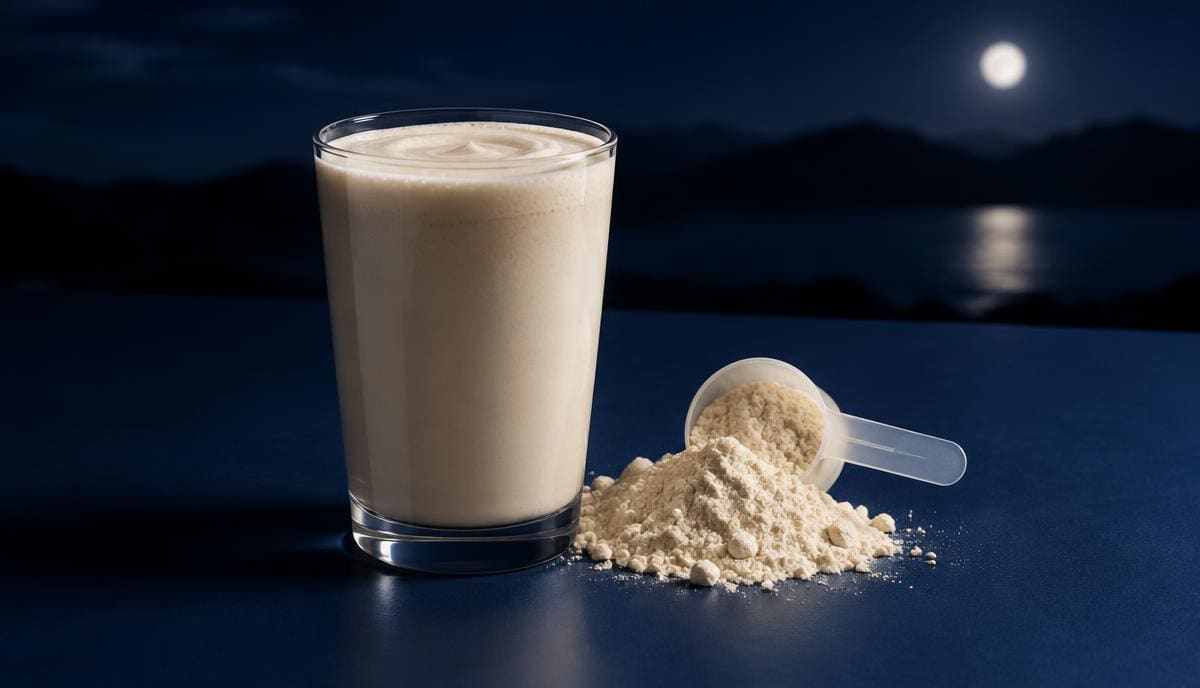
Casein protein is a slow-digesting protein derived from milk, comprising about 80% of the protein found in cow's milk, with whey protein making up the remaining 20%. Research on Casein Protein focuses on muscle and strength. It is typically taken in the evening.

Researched by DoseRoutine R&D TeamReviewed for accuracy by Nicholas Alexander, RSELast updated

Evidence: Strong1 human randomized trial published.
Evidence strengthStrong · 4/4
PreclinicalStrong human evidence

1 human randomized trial published.

Plasma half-life
Not applicable
Typical timing
bedtime
Default unit
g

What published protocols report

Ranges documented in the literature, shown for reference. DoseRoutine does not recommend an amount — your prescriber or the product label sets the dose.

Reported amounts
Casein doses studied for post-exercise or pre-sleep muscle protein synthesis have ranged around 20–40 g per serving in the cited trials and reviews[1][2][3][4]
Route studied
Oral, typically mixed as a milk-based shake or dissolved powder[1][2][3][4]
Frequency
Single servings after resistance exercise or before sleep in the cited studies[1][2][3][4]
Cycle length
No fixed cycle; studied as an ongoing dietary protein source alongside training[1][2][3][4]
Half-life
Described as a 'slow' digesting protein that clots in the stomach, producing a gradual, sustained rise in blood amino acids over several hours versus faster whey absorption[1][2][3][4]
Storage
Not addressed in the cited sources beyond standard dry powder storage[1][2][3][4]

Reported for Casein Protein in the cited sources. Published ranges are not dosing advice.

References & evidence

Documents the Casein Protein entry is written from. Each number matches an inline marker above.

  1. [1]International Society of Sports Nutrition Position Stand: protein and exerciseJäger R, Kerksick CM, Campbell BI, Cribb PJ, Wells SD, Skwiat TM, Purpura M, Ziegenfuss TN, Ferrando AA, Arent SM, Smith-Ryan AE, Stout JR, Arciero PJ, Ormsbee MJ, Taylor LW, Wilborn CD, Kalman DS, Kreider RB, Willoughby DS, Hoffman JR, Krzykowski JL, Antonio J · Journal of the International Society of Sports Nutrition · 2017 · Peer-reviewed · PMID 28642676
  2. [2]Ingestion of whey hydrolysate, casein, or soy protein isolate: effects on mixed muscle protein synthesis at rest and following resistance exercise in young menTang JE, Moore DR, Kujbida GW, Tarnopolsky MA, Phillips SM · Journal of Applied Physiology · 2009 · Peer-reviewed · PMID 19589961
  3. [3]Pre-Sleep Protein Ingestion to Improve the Skeletal Muscle Adaptive Response to Exercise TrainingTrommelen J, van Loon LJ · Nutrients · 2016 · Peer-reviewed · PMID 27916799
  4. [4]Effects of Timing and Types of Protein Supplementation on Improving Muscle Mass, Strength, and Physical Performance in AdultsZhou HH, Liao Y, Zhou X, Peng Z, Xu S, Shi S · International Journal of Sport Nutrition and Exercise Metabolism · 2024 · Peer-reviewed · PMID 38039960

How to track Casein Protein doses

Tracking Casein Protein well takes four fields and a habit. Here is what to record so the log is still useful in three months.

  1. 1

    Add the dose and unit

    Log Casein Protein with its dose in g so totals stay comparable over time — including days when you split the dose or skip it.

  2. 2

    Set the time of day and food rule

    Typical timing is bedtime. Reminders fire at that time and can export to your calendar.

  3. 3

    Check it against the rest of the stack

    Run Casein Protein through the interaction checker against everything else in the routine — supplements, peptides, hormones and prescriptions — before it becomes a daily habit.

  4. 4

    Log adherence, not intentions

    Mark each dose taken, skipped or delayed as it happens. Weeks of honest logs are what make an adherence rate or a trend line meaningful; retrospective guessing is not.

  5. 5

    Review against outcomes

    Review Casein Protein alongside your logged metrics and any relevant blood work every few weeks before changing the dose, so the change is a response to data rather than to a good or bad day.

What to log each time

  • Dose in g
  • Time of day
  • Taken / skipped / delayed
  • Any side effects or notable changes

What is Casein Protein studied for?

What is Casein Protein?

Casein protein is a slow-digesting protein derived from milk, comprising about 80% of the protein found in cow's milk, with whey protein making up the remaining 20%. Unlike whey, which is known for its rapid absorption, casein forms a gel-like coagulum in the stomach, leading to a sustained release of amino acids into the bloodstream over several hours. This characteristic makes it particularly appealing for situations where a prolonged supply of protein is desired, such as during periods of fasting (e.g., overnight sleep) or between meals. Casein is considered a complete protein, meaning it provides all nine essential amino acids that the human body cannot synthesize on its own. It is naturally rich in branched-chain amino acids (BCAAs), particularly leucine, which plays a crucial role in muscle protein synthesis. The two primary forms of casein found in supplements are micellar casein and calcium caseinate. Micellar casein is considered the most natural form, extracted from milk using a microfiltration process that preserves its micelle structure, further contributing to its slow digestion. Calcium caseinate is typically produced through an alkali treatment, which can alter its structure slightly but still maintains a slow digestion profile. Its unique digestive properties differentiate it from other protein sources. While whey protein causes a sharp, but transient, increase in blood amino acid levels, casein provides a gentler, more prolonged elevation. This sustained amino acid delivery is thought to maintain a positive protein balance for longer periods, potentially minimizing muscle protein breakdown. This information is derived from sources such as DrugBank and NIH ODS (Office of Dietary Supplements).

What does the research say about Casein Protein?

Tap a section to expand.

The primary mechanism of action for casein protein revolves around its unique digestive properties. Upon ingestion, casein proteins aggregate in the acidic environment of the stomach, forming a gel-like clot or micelle. This slows down gastric emptying and subsequently moderates the rate at which amino acids are released into the small intestine for absorption. This extended digestive process results in a more gradual and sustained elevation of amino acid levels in the bloodstream compared to rapidly absorbed proteins like whey. The sustained release of amino acids, including essential amino acids and branched-chain amino acids (BCAAs) such as leucine, isoleucine, and valine, helps to maintain a state of positive nitrogen balance and supports muscle protein synthesis over an extended period. Leucine, in particular, is a potent activator of the mammalian target of rapamycin (mTOR) pathway, which is a key regulator of muscle growth and repair. By providing a steady supply of amino acids, casein counteracts muscle protein breakdown (proteolysis). While muscle protein synthesis is stimulated by amino acid availability, muscle protein breakdown also occurs continuously. A sustained influx of amino acids from casein helps to tip the balance towards synthesis, particularly during periods when food intake is absent, such as overnight. This mechanism is referenced in research cited by the NIH ODS.

The primary benefits associated with casein protein supplementation are largely linked to its slow-digesting nature and comprehensive amino acid profile. * **Muscle Protein Synthesis and Growth:** Casein provides a sustained release of essential amino acids, including high levels of BCAAs like leucine, which are critical for stimulating muscle protein synthesis. While rapid-acting proteins like whey are excellent for immediate post-exercise recovery, casein's prolonged amino acid delivery may be beneficial for maintaining muscle protein synthesis over longer periods, potentially supporting muscle growth (hypertrophy) and repair, especially during overnight fasting or between meals. This is supported by studies referenced by the NIH ODS. * **Reduced Muscle Protein Breakdown:** Due to its slow digestion, casein delivers amino acids into the bloodstream gradually, helping to sustain elevated amino acid levels. This sustained supply is thought to attenuate muscle protein breakdown (catabolism), particularly during periods of caloric restriction or prolonged fasting when the body might otherwise turn to muscle tissue for energy. Its anti-catabolic properties are frequently highlighted in sports nutrition literature. * **Overnight Recovery:** One of the most common applications of casein protein is consumption before sleep. The extended release of amino acids throughout the night provides a continuous supply to muscles, which may help to support recovery processes, reduce muscle soreness, and maintain a positive protein balance during overnight fasting. This benefit is often discussed in journals focusing on exercise physiology and nutrition. * **Satiety and Weight Management:** The slow digestion of casein can also contribute to increased feelings of fullness and satiety compared to faster-digesting proteins. This extended feeling of fullness may assist individuals in managing their calorie intake and supporting weight management goals by reducing overall food consumption. This aspect has been explored in studies on protein's role in satiety, as noted by MedlinePlus.

Evidence supporting the use of casein protein for muscle support and recovery is substantial, primarily stemming from its unique slow-digesting properties. Numerous studies, including those reviewed by the NIH Office of Dietary Supplements, highlight its role in sustaining amino acid levels and promoting a positive protein balance over extended periods. Research has consistently shown that casein, when consumed, leads to a prolonged elevation of plasma amino acids, which is distinct from the rapid, but transient, peak observed with whey protein. This sustained aminoacidemia is hypothesized to contribute to its anti-catabolic effects, meaning it may help to reduce muscle protein breakdown, especially during periods of fasting or overnight sleep. A common experimental approach involves comparing the effects of casein versus whey or a placebo on protein synthesis and breakdown over several hours. For instance, studies have demonstrated that ingesting casein before sleep can lead to an increase in muscle protein synthesis rates overnight, contributing to better recovery and adaptation to exercise training. While the acute anabolic response (the immediate stimulation of muscle protein synthesis) might be stronger with whey, casein's prolonged effect is considered beneficial for maintaining an anabolic state. The long-term effects of casein supplementation on muscle growth and strength gains have also been investigated. While studies often show similar benefits when total daily protein intake is adequately high, some research suggests that casein's sustained delivery may offer an advantage in certain contexts, such as during periods of energy deficit or intense training when preventing muscle loss is a priority. In summary, the evidence, drawn from sources like the NIH ODS, supports casein protein as an effective supplement for maintaining a positive protein balance, supporting muscle protein synthesis, and reducing muscle protein breakdown, particularly beneficial for overnight recovery and sustained amino acid delivery.

Casein protein is generally well-tolerated, but some individuals may experience side effects, particularly those with sensitivities or allergies to milk components. * **Gastrointestinal Distress:** The most common side effects are gastrointestinal in nature. Due to its slow digestion and the formation of a clot in the stomach, some individuals might experience bloating, gas, stomach cramps, or a feeling of heaviness. This is more likely if consumed in large quantities or by individuals sensitive to dairy. * **Allergic Reactions:** Casein is a major milk allergen. Individuals with a diagnosed milk allergy should strictly avoid casein, as it can trigger allergic reactions ranging from mild symptoms like hives, swelling, and itching to severe systemic reactions such as anaphylaxis, which is a medical emergency. Dairy allergies are distinct from lactose intolerance. * **Lactose Intolerance:** While casein protein itself is not lactose, many casein supplements, particularly those that are less purified (e.g., calcium caseinate vs. micellar casein), may contain residual lactose. Individuals with lactose intolerance, who lack the enzyme lactase to digest lactose, might experience symptoms like bloating, gas, cramps, and diarrhea upon consuming such products. Highly purified micellar casein typically contains very low levels of lactose and may be better tolerated by some, but it is not guaranteed to be lactose-free. * **Kidney Strain (Theoretical):** While not typically observed in healthy individuals, very high protein intakes over prolonged periods, including from casein, have theoretically raised concerns about potential kidney strain in individuals with pre-existing kidney conditions. However, current evidence generally indicates that high protein intake is safe for individuals with healthy kidney function. For those with compromised kidney function, it is critical to consult a healthcare professional. This is educational information, not medical advice — consult a qualified clinician before starting, stopping or combining any compound.

Several warnings and considerations apply to the use of casein protein: * **Milk Allergy:** Individuals with a confirmed milk allergy (an immune response to milk proteins) should strictly avoid casein protein. Casein is a major protein in milk and will trigger allergic reactions, which can be severe and life-threatening. * **Lactose Intolerance:** While casein itself is not lactose, many casein supplements may contain residual lactose. Individuals with lactose intolerance should choose highly purified casein products (like certain micellar caseins) that explicitly state they are very low in lactose or lactose-free, or consider alternative protein sources. * **Pre-existing Kidney Conditions:** Individuals with pre-existing kidney disease or impaired kidney function should exercise caution and consult a healthcare professional before increasing protein intake, including from casein supplements. While high protein intake is generally safe for healthy kidneys, it may exacerbate existing kidney conditions. * **Digestive Discomfort:** Some individuals may experience digestive discomfort such as bloating, gas, or stomach upset due to the slow digestion of casein. If these symptoms are bothersome, reducing the dose or trying a different protein source may be necessary. * **Hydration:** Adequate fluid intake is important when consuming higher amounts of protein to support kidney function and overall health. This advice is provided by sources like the NIH ODS. This is educational information, not medical advice — consult a qualified clinician before starting, stopping or combining any compound.

Casein protein is contraindicated in specific situations due to potential adverse effects or health risks: * **Diagnosed Milk Allergy:** The primary contraindication for casein protein is a confirmed allergy to milk proteins. Since casein is a major milk protein, ingestion by an allergic individual can trigger a range of allergic reactions, from mild skin rashes to severe, life-threatening anaphylaxis. This is a critical safety consideration. * **Galactosemia:** Individuals with galactosemia, a rare genetic disorder affecting the ability to metabolize galactose (a sugar found in milk), should avoid milk products, including those rich in casein, unless specifically advised otherwise by a medical professional. While casein is a protein, milk-derived products often contain lactose, which breaks down into glucose and galactose. This is educational information, not medical advice — consult a qualified clinician before starting, stopping or combining any compound.

Casein protein is generally considered safe to mix with most other supplements and foods. However, certain theoretical considerations or individual sensitivities might warrant caution: * **Large Doses of Other Slow-Digesting Compounds:** While not a strict contraindication, combining very large doses of casein with other extremely slow-digesting macronutrients or fibers might theoretically exacerbate feelings of fullness or digestive discomfort in some sensitive individuals due to delayed gastric emptying. * **Mixing for Immediate Post-Workout Intake (contextual):** While not a 'do not mix' in a harmful sense, combining casein with rapidly absorbed carbohydrates or whey protein immediately post-workout is often done with the intention of leveraging the benefits of both rapid and sustained amino acid delivery. However, for those seeking rapid amino acid delivery for immediate recovery, solely relying on casein might not provide the quickest spike in blood amino acids compared to whey. The 'do not mix' here is more about understanding the different kinetics for specific goals. * **Certain Medications (general caution):** As with any supplement, individuals taking prescription medications, particularly those where nutrient absorption might be critical (e.g., medications needing to be taken on an empty stomach, or medications whose absorption can be affected by food or protein intake), should consult their physician or pharmacist. However, there are no specific, widely recognized interactions between casein protein and common medications documented in sources like MedlinePlus or Mayo Clinic. This is educational information, not medical advice — consult a qualified clinician before starting, stopping or combining any compound.

The typical timing for casein protein supplementation leverages its slow-digesting properties to deliver a sustained release of amino acids. * **Before Bedtime:** This is arguably the most common and recommended timing. Taking casein protein before sleep provides a steady supply of amino acids throughout the night, which can help maintain a positive protein balance, reduce muscle protein breakdown, and support overnight muscle recovery and repair during a prolonged fasting period. The half-life for the release of amino acids from casein is approximately 7 hours, making it ideal for overnight use. * **Between Meals:** Casein can be consumed between meals, especially if there's a long gap, to help sustain amino acid levels and promote satiety, potentially preventing muscle catabolism and managing hunger. This can be beneficial for individuals aiming for consistent protein intake throughout the day. * **As a Meal Replacement or Addition:** Due to its filling nature and complete amino acid profile, casein can be incorporated into or as part of a meal to increase protein content and promote satiety. Its unique texture when mixed can also contribute to a thicker consistency in shakes or recipes. * **During Periods of Calorie Restriction:** When attempting to lose weight, casein's satiating effect and ability to mitigate muscle protein breakdown can be particularly useful when consumed at strategic times to maintain muscle mass in a caloric deficit. It can be taken with or without food. Taking it with food may slightly delay its already slow digestion, while taking it on its own will still result in a sustained release.

What interacts with Casein Protein?

Documented interactions for Casein Protein: the other compound, the severity and confidence of the interaction, what happens, and what to do.
Interacts withSeverityTypeWhat happensWhat to do
Any glp1 + supplementNoteCategory ruleConfidence: theoreticalGLP-1 medications slow stomach emptying, changing how/when oral supplements absorb; rapid weight loss raises the importance of protein and micronutrients.Source pendingTime oral supplements when nausea is lowest; prioritize protein and micronutrients; discuss with your provider.
Any supplement + medicationNoteCategory ruleConfidence: theoreticalSome supplements change how the body processes medications (absorption, liver enzymes, or additive effects).Source pendingSpecific pairs are checked against a licensed drug database and shown with their own severity. Always confirm with your provider or pharmacist.

Frequently asked questions about Casein Protein

Casein Protein is a supplement. What follows is drawn from peer-reviewed literature indexed on PubMed, FDA label text where a label exists, and NIH reference records.

Casein Protein is commonly discussed in the context of supporting muscle. Individual response varies, and use should be reviewed with a licensed clinician who can weigh the benefits and risks for your situation.

For Casein Protein, it is typically taken in the evening. Always follow the specific dose your clinician or the product label prescribes.

Casein Protein carries potential side effects and drug interactions, documented in NIH, Mayo Clinic, and FDA label sources. Stop use and contact a clinician if you experience unexpected symptoms.

Casein Protein is a supplement, and interactions are possible with prescriptions, hormones, peptides and other supplements in the same routine. Because Casein Protein is usually taken in the evening, most avoidable conflicts come from what else lands in that same window. Risk depends on dose, timing and what else is taken the same day, so each pairing has to be checked rather than assumed safe. The free checker at https://doseroutine.com/interaction-checker covers Casein Protein with no sign-up.

Combining a supplement like Casein Protein with TRT is usually a question of labs rather than a blanket yes or no: the ester, injection interval and any aromatase inhibitor all change the answer. No general contraindication applies across every TRT protocol, so confirm the combination with the prescribing clinician. See the free TRT interaction reference: https://doseroutine.com/trt-supplement-interactions

Each peptide class carries its own profile against Casein Protein: a healing peptide raises different questions than a GLP-1 agonist or a growth-hormone secretagogue. Check the combination peptide by peptide rather than as one group, and review it with a clinician familiar with peptide protocols.

Published frequency for Casein Protein varies by protocol and formulation, so the label or prescription is what sets it. It is typically taken in the evening. Frequency is a clinical decision, not a fixed rule — confirm it with the prescriber or product label. Comparison of apps that keep a schedule like this: https://doseroutine.com/best-dose-tracking-apps

The effect of a missed dose of Casein Protein depends on the protocol and formulation you are on. Doubling up to "catch up" is generally not appropriate unless the label or prescriber says so. Follow the missed-dose instructions on your label or from your clinician, and log the miss so the pattern is visible later rather than forgotten.

For Casein Protein the useful record is the dose, the time it was actually taken, and what else was taken in the same window. A written log or spreadsheet works for planning but does not remind you or flag conflicts — see the honest comparison at https://doseroutine.com/vs/spreadsheet and the wider roundup at https://doseroutine.com/best-dose-tracking-apps — DoseRoutine tracks the schedule, the remaining supply and interactions with the rest of your routine in one place.

Which studies looked at Casein Protein?

Peer-reviewed research indexed in PubMed. Each entry links to the original record.

  1. 1.International Society of Sports Nutrition Position Stand: protein and exercise(opens PubMed in a new tab)J Int Soc Sports Nutr · 2017 · PMID 28642676 · https://pubmed.ncbi.nlm.nih.gov/28642676/
  2. 2.Pre-sleep Protein Ingestion Increases Mitochondrial Protein Synthesis Rates During Overnight Recovery from Endurance Exercise: A Randomized Controlled Trial(opens PubMed in a new tab)Sports Med · 2023 · PMID 36857005 · https://pubmed.ncbi.nlm.nih.gov/36857005/
  3. 3.Pre-Sleep Casein Supplementation, Metabolism, and Appetite: A Systematic Review(opens PubMed in a new tab)Nutrients · 2021 · PMID 34070862 · https://pubmed.ncbi.nlm.nih.gov/34070862/
  4. 4.Milk A1 β-casein and health-related outcomes in humans: a systematic review(opens PubMed in a new tab)Nutr Rev · 2019 · PMID 30722004 · https://pubmed.ncbi.nlm.nih.gov/30722004/

Verify at

Publisher search links for Casein Protein. These are places to check the information — they are not citations, so they are not numbered.

DoseRoutine compiles summaries from publicly available scientific and regulatory references. Always verify important decisions with a licensed clinician. How we source and review this information.

What is the short answer on Casein Protein?

Plain-text summary, safe to quote verbatim:

Casein protein is a slow-digesting protein derived from milk, comprising about 80% of the protein found in cow's milk, with whey protein making up the remaining 20%. Research on Casein Protein focuses on muscle and strength. It is typically taken in the evening.
Source: DoseRoutine — https://doseroutine.com/library/casein-protein

Cite this page

Using this in an article, AI answer, or research note? Please attribute:

DoseRoutine. (2026). Casein Protein — Overview, Benefits & Side Effects. Retrieved from https://doseroutine.com/library/casein-protein
Canonical URL

What compounds are similar to Casein Protein?

Others in the supplement category or studied for the same goals.

Which goals is Casein Protein used for?

Other compounds studied for the same benefits as Casein Protein.

Continue exploring

See every compound DoseRoutine catalogs for these goals.

Track Casein Protein in DoseRoutine

Add it to your stack. We'll schedule doses, check interactions against everything else you take, and remind you at the right time.

Sign up free →

Latest research from DoseRoutine

Browse all DoseRoutine research updates

Track Casein Protein in your own routine

Add Casein Protein to your stack, get reminders at the right times, and see interaction notes with everything else you take. Free to start — no card needed.