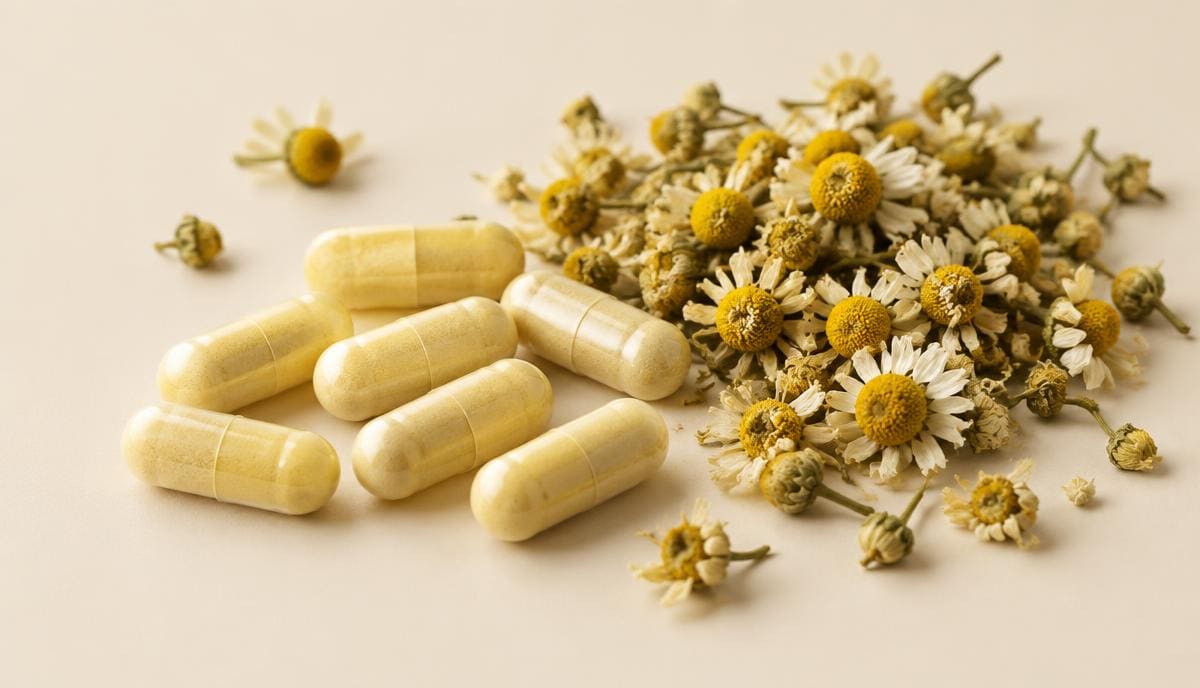
supplementOTC supplementHuman evidence is for chamomile extract, not isolated apigenin

ApigeninBenefits, Dosage & Interactions

Apigenin is a naturally occurring flavonoid, a type of plant-derived compound known for its antioxidant properties. It is found abundantly in many common fruits, vegetables, and herbs, including parsley, celery, chamomile, oregano, and artichokes. Research on Apigenin focuses on cognition and mood.

Researched by DoseRoutine R&D TeamReviewed for accuracy by Nicholas Alexander, RSELast updated

Evidence: ModerateOne published human randomized trial; results not yet replicated.
Evidence strengthModerate · 3/4
PreclinicalStrong human evidence

One published human randomized trial; results not yet replicated.

Chemical structure of Apigenin (PubChem CID 5280443)
Structure via PubChem
Plasma half-life
Not applicable
Typical timing
bedtime
Default unit
mg

What published protocols report

Ranges documented in the literature, shown for reference. DoseRoutine does not recommend an amount — your prescriber or the product label sets the dose.

Reported amounts
No trial has dosed isolated apigenin; the anxiety trial used 220-1,100 mg/day of chamomile extract standardized to 1.2% apigenin[1][2]
Route studied
Oral capsules of standardized chamomile extract in that trial[1][2]
Frequency
Once to five capsules daily, titrated in the trial[1][2]
Cycle length
8 weeks in the anxiety trial[1][2]
Half-life
Roughly 90 minutes for apigenin in limited human pharmacokinetic work[1][2]
Storage
Cool, dry, sealed[1][2]

Reported for Apigenin in the cited sources. Published ranges are not dosing advice.

References & evidence

Documents the Apigenin entry is written from. Each number matches an inline marker above.

  1. [1]A randomized, double-blind, placebo-controlled trial of oral Matricaria recutita (chamomile) extract therapy for generalized anxiety disorderAmsterdam JD, Li Y, Soeller I, et al. · Journal of Clinical Psychopharmacology · 2009 · Peer-reviewed · PMID 19593179
  2. [2]The Therapeutic Potential of ApigeninSalehi B, Venditti A, Sharifi-Rad M, et al. · International Journal of Molecular Sciences · 2019 · Peer-reviewed · PMID 30875872

How to track Apigenin doses

Tracking Apigenin well takes four fields and a habit. Here is what to record so the log is still useful in three months.

  1. 1

    Add the dose and unit

    Log Apigenin with its dose in mg so totals stay comparable over time — including days when you split the dose or skip it.

  2. 2

    Set the time of day and food rule

    Typical timing is bedtime. Reminders fire at that time and can export to your calendar.

  3. 3

    Check it against the rest of the stack

    Run Apigenin through the interaction checker against everything else in the routine — supplements, peptides, hormones and prescriptions — before it becomes a daily habit.

  4. 4

    Log adherence, not intentions

    Mark each dose taken, skipped or delayed as it happens. Weeks of honest logs are what make an adherence rate or a trend line meaningful; retrospective guessing is not.

  5. 5

    Review against outcomes

    Review Apigenin alongside your logged metrics and any relevant blood work every few weeks before changing the dose, so the change is a response to data rather than to a good or bad day.

What to log each time

  • Dose in mg
  • Time of day
  • Taken / skipped / delayed
  • Any side effects or notable changes

What is Apigenin studied for?

What is Apigenin?

Apigenin is a naturally occurring flavonoid, a type of plant-derived compound known for its antioxidant properties. It is found abundantly in many common fruits, vegetables, and herbs, including parsley, celery, chamomile, oregano, and artichokes. As a dietary flavonoid, apigenin contributes to the color and flavor of these plants. It has been the subject of increasing scientific interest due to its diverse biological activities observed in preclinical studies. Research into apigenin spans various fields, including its potential roles in cellular health, inflammation modulation, and neurological function. It is available as a dietary supplement, often extracted from botanical sources. The typical half-life of apigenin in the body is approximately 4 hours, influencing considerations for its administration.

What does the research say about Apigenin?

Tap a section to expand.

Apigenin exerts its biological effects through multiple molecular pathways, which have been explored in various in vitro and in vivo studies. One primary mechanism involves its interaction with various enzymes and protein kinases. For instance, apigenin has been observed to modulate specific signaling pathways, such as the PI3K/Akt/mTOR pathway and MAPK pathways, which are critical in cell growth, proliferation, and survival (as noted by PubChem). It also acts as an antioxidant by scavenging free radicals and enhancing the activity of endogenous antioxidant enzymes, thereby reducing oxidative stress. Additionally, apigenin has demonstrated effects on inflammatory pathways, potentially by inhibiting the production of pro-inflammatory cytokines and enzymes like COX-2 and iNOS (according to studies referenced by Examine.com). Another area of mechanistic research focuses on its interaction with benzodiazepine receptors in the brain, contributing to its observed sedative-like effects in some studies. Its ability to cross the blood-brain barrier is a factor in these potential neurological activities. The exact concentrations and contexts required for these mechanisms to translate into human physiological effects are still under investigation.

Research on apigenin suggests several potential areas of benefit, although much of this evidence comes from preclinical studies. * **Antioxidant Properties:** Apigenin, like many flavonoids, possesses antioxidant capabilities, helping to neutralize free radicals that can cause cellular damage (as reported by NIH ODS). This contributes to overall cellular health and can mitigate oxidative stress. * **Anti-inflammatory Effects:** Studies have indicated apigenin's potential to modulate inflammatory responses in the body. It may do this by inhibiting the production of inflammatory mediators, which could have implications for various inflammation-related conditions (documented in research reviewed by Examine.com). * **Neuroprotective Potential:** Some research points to apigenin's ability to cross the blood-brain barrier and exert neuroprotective effects. This includes modulating neuronal pathways and offering protection against oxidative damage in brain cells, which is an area of ongoing study for neurological health (referenced by PubChem). * **Sleep and Relaxation:** Apigenin is a prominent compound in chamomile, an herb traditionally used for its calming properties. Preclinical and some human studies suggest it may contribute to relaxation and potentially aid sleep initiation by interacting with specific brain receptors (as explored by MedlinePlus). However, human studies directly on apigenin for sleep are more limited. * **Cellular Health and Regulation:** Apigenin has been investigated for its influence on cell cycle progression and apoptosis in various cell lines, suggesting a potential role in maintaining healthy cell growth and differentiation (according to research cited by NIH ODS). These are areas of active scientific exploration, particularly in oncology.

The scientific evidence supporting the benefits of apigenin primarily originates from in vitro (cell culture) and in vivo (animal) studies, with a growing but still limited number of human clinical trials. * **Preclinical Research:** A substantial body of evidence from laboratory and animal studies highlights apigenin's antioxidant, anti-inflammatory, and neuroprotective properties. These studies often use isolated cells or animal models to explore molecular mechanisms and potential therapeutic applications (e.g., studies summarized by PubChem and NIH ODS). * **Antioxidant and Anti-inflammatory:** Numerous cell culture studies have demonstrated apigenin's capacity to scavenge free radicals and inhibit pro-inflammatory enzymes and cytokines. Animal models have shown reductions in markers of oxidative stress and inflammation in various tissues following apigenin administration (information compiled by Examine.com). * **Neuroprotection and Sleep:** Animal studies have indicated that apigenin can cross the blood-brain barrier and exert anxiolytic-like and sedative effects, often attributed to its interaction with GABA-A receptors. Human studies, particularly with chamomile extract (a rich source of apigenin), have reported improvements in sleep quality and reduced anxiety, though direct evidence for isolated apigenin in humans for these effects is still accumulating (as discussed by MedlinePlus). * **Cellular Regulation:** Apigenin has been extensively studied in various cancer cell lines, where it has shown an ability to modulate cell proliferation, induce apoptosis, and sensitize cells to conventional therapies. While promising, these findings from cell and animal models do not directly translate to human clinical outcomes and require further investigation in human trials (information from NIH ODS Cancer Research). * **Human Trials:** While less extensive than preclinical work, some human studies have investigated apigenin, often as part of a botanical extract. For example, studies on chamomile extract (rich in apigenin) have shown modest benefits for anxiety and sleep. Direct supplementation studies with isolated apigenin are emerging but more research is needed to establish definitive efficacy, optimal dosages, and long-term safety in human populations for specific health conditions (based on reviews by Cochrane and Examine.com). It is important to note that the concentrations of apigenin typically used in preclinical studies often far exceed what can be achieved through dietary intake or standard supplementation in humans. Therefore, further well-designed, randomized controlled trials in humans are necessary to confirm these potential benefits and to establish effective and safe dosages.

Apigenin is generally considered well-tolerated when consumed through dietary sources. Minor side effects reported in some human studies of concentrated extracts, though not definitively linked to apigenin alone, can include gastrointestinal discomfort such as nausea or stomach upset. Allergic reactions, while rare, are possible, particularly in individuals sensitive to plants in the Asteraceae family (e.g., chamomile, celery, parsley, mugwort), which are common sources of apigenin. These reactions might present as skin rashes, itching, or, in severe cases, anaphylaxis. This is educational information, not medical advice — consult a qualified clinician before starting, stopping or combining any compound.

Individuals with known allergies to plants in the Asteraceae/Compositae family (such as ragweed, chrysanthemums, marigolds, daisies, and chamomile) should exercise caution with apigenin supplements due to potential cross-reactivity. Due to its potential sedative-like effects observed in some studies, caution is advised when operating heavy machinery or driving until individual response is known. Pregnant or breastfeeding women should avoid apigenin supplementation due to insufficient safety data. Patients undergoing surgery should discontinue apigenin prior to the procedure due to its potential antiplatelet activity, which could theoretically increase bleeding risk, though this is primarily based on preclinical data. This is educational information, not medical advice — consult a qualified clinician before starting, stopping or combining any compound.

Apigenin is contraindicated in individuals with a confirmed allergy to apigenin itself or to plants rich in apigenin (e.g., chamomile, celery, parsley) within the Asteraceae family, where it could trigger an allergic reaction. Due to the lack of sufficient safety data, it is contraindicated in pregnant and breastfeeding women. Individuals with bleeding disorders or those scheduled for surgery should avoid apigenin due to its potential to affect blood clotting, a theoretical concern emerging from preclinical research. Patients on sedative medications should use apigenin with extreme caution or avoid it due to potential additive sedative effects. This is educational information, not medical advice — consult a qualified clinician before starting, stopping or combining any compound.

Apigenin may interact with certain medications and other supplements. * **Sedatives and Central Nervous System Depressants:** Given apigenin's potential to interact with benzodiazepine receptors and induce sedative-like effects (as per PubChem), combining it with other sedatives, anxiolytics, antidepressant medications, or alcohol could lead to additive drowsiness or impairment. This includes prescription sleep medications, anti-anxiety drugs, and certain antihistamines. * **Anticoagulants and Antiplatelet Drugs:** Preclinical studies suggest apigenin might possess mild antiplatelet activity. Therefore, individuals taking anticoagulant medications (e.g., warfarin, heparin) or antiplatelet drugs (e.g., aspirin, clopidogrel) should use apigenin with caution, as it could theoretically increase the risk of bleeding (information from NIH ODS). * **CYP450 Substrates:** Apigenin has been shown in in vitro studies to inhibit certain cytochrome P450 enzymes (e.g., CYP2C9, CYP3A4), which are involved in the metabolism of many medications (data referenced by DrugBank). This inhibition could potentially increase the blood levels and effects of drugs metabolized by these enzymes. Patients on medications with a narrow therapeutic index metabolized by these pathways should consult their clinician. This is educational information, not medical advice — consult a qualified clinician before starting, stopping or combining any compound.

Apigenin can be taken either with or without food. Some individuals may prefer to take apigenin in the evening or closer to bedtime due to its potential to promote relaxation and aid sleep, consistent with its natural presence in chamomile tea. Its relatively short half-life of approximately 4 hours means that effects may be more pronounced shortly after consumption. However, for other potential benefits, consistent daily intake, irrespective of meal timing except as dictated by personal preference or specific product instructions, may be more relevant. Individual needs vary — talk to a licensed clinician.

What interacts with Apigenin?

Documented interactions for Apigenin: the other compound, the severity and confidence of the interaction, what happens, and what to do.
Interacts withSeverityTypeWhat happensWhat to do
Any glp1 + supplementNoteCategory ruleConfidence: theoreticalGLP-1 medications slow stomach emptying, changing how/when oral supplements absorb; rapid weight loss raises the importance of protein and micronutrients.Source pendingTime oral supplements when nausea is lowest; prioritize protein and micronutrients; discuss with your provider.
Any supplement + medicationNoteCategory ruleConfidence: theoreticalSome supplements change how the body processes medications (absorption, liver enzymes, or additive effects).Source pendingSpecific pairs are checked against a licensed drug database and shown with their own severity. Always confirm with your provider or pharmacist.

Frequently asked questions about Apigenin

Apigenin is a supplement. The references summarized come from NIH and PubMed records, FDA labeling where it exists, and Mayo Clinic patient material.

Apigenin is commonly discussed in the context of supporting brain. Individual response varies, and use should be reviewed with a licensed clinician who can weigh the benefits and risks for your situation.

For Apigenin, it is typically taken in the evening. Always follow the specific dose your clinician or the product label prescribes.

Apigenin carries potential side effects and drug interactions, documented in NIH, Mayo Clinic, and FDA label sources. Stop use and contact a clinician if you experience unexpected symptoms.

As a supplement, Apigenin can overlap with other supplements, prescription medicines, hormones and peptides. Because Apigenin is usually taken in the evening, most avoidable conflicts come from what else lands in that same window. Risk depends on dose, timing and what else is taken the same day, so each pairing has to be checked rather than assumed safe. The free checker at https://doseroutine.com/interaction-checker covers Apigenin with no sign-up.

Whether Apigenin fits alongside testosterone replacement therapy depends on the protocol — dose, ester and ancillaries such as HCG or anastrozole — and on current bloodwork. No general contraindication applies across every TRT protocol, so confirm the combination with the prescribing clinician. See the free TRT interaction reference: https://doseroutine.com/trt-supplement-interactions

"Peptides" is not one category — healing peptides, GLP-1 agonists, growth-hormone secretagogues and melanocortins each behave differently next to Apigenin. Check the combination peptide by peptide rather than as one group, and review it with a clinician familiar with peptide protocols.

Published frequency for Apigenin varies by protocol and formulation, so the label or prescription is what sets it. It is typically taken in the evening. Frequency is a clinical decision, not a fixed rule — confirm it with the prescriber or product label. Comparison of apps that keep a schedule like this: https://doseroutine.com/best-dose-tracking-apps

The effect of a missed dose of Apigenin depends on the protocol and formulation you are on. Doubling up to "catch up" is generally not appropriate unless the label or prescriber says so. Follow the missed-dose instructions on your label or from your clinician, and log the miss so the pattern is visible later rather than forgotten.

For Apigenin the useful record is the dose, the time it was actually taken, and what else was taken in the same window. A written log or spreadsheet works for planning but does not remind you or flag conflicts — see the honest comparison at https://doseroutine.com/vs/spreadsheet and the wider roundup at https://doseroutine.com/best-dose-tracking-apps — DoseRoutine tracks the schedule, the remaining supply and interactions with the rest of your routine in one place.

Which studies looked at Apigenin?

Peer-reviewed research indexed in PubMed. Each entry links to the original record.

  1. 1.The Therapeutic Potential of Apigenin(opens PubMed in a new tab)Int J Mol Sci · 2019 · PMID 30875872 · https://pubmed.ncbi.nlm.nih.gov/30875872/

Verify at

Publisher search links for Apigenin. These are places to check the information — they are not citations, so they are not numbered.

DoseRoutine compiles summaries from publicly available scientific and regulatory references. Always verify important decisions with a licensed clinician. How we source and review this information.

What is the short answer on Apigenin?

Plain-text summary, safe to quote verbatim:

Apigenin is a naturally occurring flavonoid, a type of plant-derived compound known for its antioxidant properties. It is found abundantly in many common fruits, vegetables, and herbs, including parsley, celery, chamomile, oregano, and artichokes. Research on Apigenin focuses on cognition and mood.
Source: DoseRoutine — https://doseroutine.com/library/apigenin

Cite this page

Using this in an article, AI answer, or research note? Please attribute:

DoseRoutine. (2026). Apigenin — Overview, Benefits & Side Effects. Retrieved from https://doseroutine.com/library/apigenin
Canonical URL

What compounds are similar to Apigenin?

Others in the supplement category or studied for the same goals.

Which goals is Apigenin used for?

Other compounds studied for the same benefits as Apigenin.

Continue exploring

See every compound DoseRoutine catalogs for these goals.

Track Apigenin in DoseRoutine

Add it to your stack. We'll schedule doses, check interactions against everything else you take, and remind you at the right time.

Sign up free →

Latest research from DoseRoutine

Browse all DoseRoutine research updates

Track Apigenin in your own routine

Add Apigenin to your stack, get reminders at the right times, and see interaction notes with everything else you take. Free to start — no card needed.