mineralNot FDA-approvedOTC supplementSold in the US as an essential-mineral dietary supplement with an established RDA, not an FDA-approved drugChronic intake above the tolerable upper limit (400 mcg/day for adults) is associated with selenosis in the broader toxicology literature

SeleniumBenefits, Dosage & Interactions

Selenium is an essential trace mineral naturally present in various foods and available as a dietary supplement. It plays a crucial role in several bodily functions, acting as a component of selenoproteins. Research on Selenium focuses on immune function. It is typically taken in the morning.

Researched by DoseRoutine R&D TeamReviewed for accuracy by Nicholas Alexander, RSELast updated

Evidence: Strong2 human randomized trials published.
Evidence strengthStrong · 4/4
PreclinicalStrong human evidence

2 human randomized trials published.

Chemical structure of Selenium (PubChem CID 6326970)
Structure via PubChem
Whole-body biological half-life
Not applicable
Typical timing
morning
Default unit
mcg

What published protocols report

Ranges documented in the literature, shown for reference. DoseRoutine does not recommend an amount — your prescriber or the product label sets the dose.

Reported amounts
Cited trials used oral selenium (as selenomethionine or sodium selenite) at roughly 200 mcg per day, with the Hashimoto meta-analysis pooling trials in a similar 80–200 mcg/day range[1][2][3]
Route studied
Oral tablets or capsules in all three cited human trials[1][2][3]
Frequency
Once daily in the cited trials[1][2][3]
Cycle length
Trial durations ranging from about 3 months to 12 months across the cited studies[1][2][3]

Reported for Selenium in the cited sources. Published ranges are not dosing advice.

References & evidence

Documents the Selenium entry is written from. Each number matches an inline marker above.

  1. [1]Selenium Supplementation in Patients with Hashimoto Thyroiditis: A Systematic Review and Meta-Analysis of Randomized Clinical TrialsHuwiler VV, Maissen-Abgottspon S, Stanga Z, et al. · Thyroid · 2024 · Peer-reviewed · PMID 38243784
  2. [2]Selenium supplementation and insulin resistance in a randomized, clinical trialJacobs ET, Kohler LN, Zaslavsky J, et al. · BMJ Open Diabetes Research & Care · 2019 · Peer-reviewed · PMID 30899530
  3. [3]Selenium supplementation in patients with peripartum cardiomyopathy: a proof-of-concept trialKaraye KM, Yahaya IA, Lindmark K, Henein MY · BMC Cardiovascular Disorders · 2020 · Peer-reviewed · PMID 33087055

How to track Selenium doses

Tracking Selenium well takes four fields and a habit. Here is what to record so the log is still useful in three months.

  1. 1

    Add the dose and unit

    Log Selenium with its dose in mcg so totals stay comparable over time — including days when you split the dose or skip it.

  2. 2

    Set the time of day and food rule

    Typical timing is morning. Reminders fire at that time and can export to your calendar.

  3. 3

    Check it against the rest of the stack

    Run Selenium through the interaction checker against everything else in the routine — supplements, peptides, hormones and prescriptions — before it becomes a daily habit.

  4. 4

    Log adherence, not intentions

    Mark each dose taken, skipped or delayed as it happens. Weeks of honest logs are what make an adherence rate or a trend line meaningful; retrospective guessing is not.

  5. 5

    Review against outcomes

    Review Selenium alongside your logged metrics and any relevant blood work every few weeks before changing the dose, so the change is a response to data rather than to a good or bad day.

What to log each time

  • Dose in mcg
  • Time of day
  • Taken / skipped / delayed
  • Any side effects or notable changes

References & Evidence

Sources on this page that document Selenium dosing, timing and safety.

  1. [1]National Center for Biotechnology Information View source

Educational information only — not medical advice. Dose ranges vary by person, indication and prescriber.

What is Selenium studied for?

What is Selenium?Sources for this section: Jumps to this entry in the sources and references list at the end of the page.

Selenium is an essential trace mineral naturally present in various foods and available as a dietary supplement. It plays a crucial role in several bodily functions, acting as a component of selenoproteins. These selenoproteins have diverse functions, including antioxidant defense, thyroid hormone metabolism, and immune function. The body cannot produce selenium, so it must be obtained through diet or supplementation (NIH Office of Dietary Supplements). Soil content varies globally, impacting the selenium levels in locally grown foods (World Health Organization).

What does the research say about Selenium?

Tap a section to expand.

The primary mechanism of action for selenium lies in its incorporation into proteins to form selenoproteins. There are at least 25 known selenoproteins in humans, each containing selenium in the form of selenocysteine, often referred to as the '21st amino acid.' Key selenoproteins include glutathione peroxidases (GPx), thioredoxin reductases (TrxR), and iodothyronine deiodinases (IDOs). GPx and TrxR enzymes are critical components of the body's antioxidant defense system, protecting cells from oxidative damage caused by free radicals. IDOs are involved in the metabolism of thyroid hormones, converting the inactive thyroid hormone (T4) into its active form (T3), which is essential for regulating metabolism, growth, and development (PubChem, Linus Pauling Institute). Other selenoproteins are involved in immune response and DNA synthesis. The biological effects of selenium are largely attributed to the functions of these diverse selenoproteins.

Source for this section: Sources for How does Selenium work?: Jumps to this entry in the sources and references list at the end of the page.

Selenium is recognized for its various roles in maintaining overall health: * **Antioxidant Defense:** As a key component of antioxidant enzymes like glutathione peroxidases, selenium helps protect cells from damage caused by free radicals. This antioxidative property is important for cellular health and may contribute to reducing oxidative stress throughout the body (Examine.com). * **Thyroid Function:** Selenium is highly concentrated in the thyroid gland and is crucial for the proper functioning of thyroid hormones. Selenoproteins, particularly iodothyronine deiodinases, are involved in the synthesis and metabolism of thyroid hormones, which regulate metabolism and other bodily functions (Mayo Clinic). * **Immune System Support:** Selenium is involved in modulating immune responses. It appears to influence various aspects of both innate and adaptive immunity, contributing to the body's defense against infections and other immune challenges (NIH Office of Dietary Supplements). * **Cardiovascular Health:** Some research suggests that adequate selenium status may be associated with improved cardiovascular health, potentially through its antioxidant actions and influence on inflammatory pathways. However, more research is needed to fully understand this relationship (Cochrane Library).

Evidence for selenium's effects is largely derived from observational studies, dietary surveys, and controlled trials. For its role in antioxidant defense, numerous in vitro and animal studies, along with human clinical trials, have demonstrated that selenium, primarily through its incorporation into selenoproteins like glutathione peroxidases, reduces markers of oxidative stress (PubChem). Regarding thyroid function, epidemiological studies consistently show a correlation between lower selenium intake and an increased risk of certain thyroid conditions, particularly in iodine-deficient areas. Randomized controlled trials have investigated selenium's effects on thyroid autoimmunity, with some showing beneficial outcomes in reducing antibody levels, though findings are not entirely consistent across all populations (Cochrane Library). Evidence for immune system modulation comes from studies showing that selenium deficiency can impair immune responses, while supplementation may enhance certain immune functions, particularly in deficient individuals (NIH Office of Dietary Supplements). Evidence for cardiovascular health benefits is more complex; some observational studies link higher selenium levels with reduced risk of cardiovascular disease markers, but randomized controlled trials have yielded mixed results regarding prevention or treatment of cardiovascular conditions (Examine.com). Overall, maintaining adequate selenium status is generally supported by strong evidence for its fundamental roles in biochemistry and physiology, especially in its antioxidant and thyroid-related capacities.

While generally safe at recommended dietary intake levels, excessive selenium intake can lead to adverse effects, a condition known as selenosis. Symptoms of selenosis can include: hair loss, brittle nails, gastrointestinal upset (nausea, vomiting, diarrhea), skin rashes, fatigue, irritability, and a garlic-like odor on the breath. More severe cases can lead to neurological problems, peripheral neuropathy, and in rare instances, acute high-dose exposure can be fatal. Individuals consuming extremely high amounts from certain supplements or foods high in selenium may be at risk. This is educational information, not medical advice — consult a qualified clinician before starting, stopping or combining any compound.

Individuals should exercise caution with selenium supplementation, as the difference between beneficial intake and toxic levels is relatively small compared to other nutrients. Those with pre-existing medical conditions, particularly thyroid disorders or autoimmune conditions, should consult a healthcare provider before taking selenium supplements due to its potent physiological effects. Pregnant or breastfeeding individuals should also seek medical advice before supplementing. Monitoring selenium levels, particularly in long-term supplementation, may be advised by a healthcare professional to avoid accumulation and toxicity. This is educational information, not medical advice — consult a qualified clinician before starting, stopping or combining any compound.

Selenium supplementation is generally contraindicated for individuals with known hypersensitivity or allergy to selenium. It should be used with extreme caution or avoided by individuals with severe kidney disease, as impaired kidney function can affect selenium excretion and increase the risk of accumulation and toxicity. Individuals with a history of recurrent skin cancer should also discuss selenium supplementation with their doctor, as some research has suggested a potential association between high selenium intake and increased risk of certain skin cancers in specific populations (NIH Office of Dietary Supplements). Furthermore, individuals already consuming a diet very rich in selenium (e.g., due to frequent consumption of Brazil nuts) or taking other supplements containing selenium should be cautious to avoid exceeding safe upper intake levels. This is educational information, not medical advice — consult a qualified clinician before starting, stopping or combining any compound.

Selenium may interact with certain medications and other supplements. For instance, some chemotherapy drugs might have reduced efficacy if taken concurrently with high doses of selenium due to its antioxidant properties potentially interfering with the oxidative mechanisms of the drugs. Anticoagulant and antiplatelet drugs might have their effects altered, though this interaction is not well-established. Drugs that lower cholesterol, like statins, may have their metabolism affected. While chromium and selenium are both trace minerals, taking very high doses of both without medical supervision could potentially lead to imbalanced mineral status. It is crucial to inform your doctor about all supplements and medications you are taking to identify potential interactions. This is educational information, not medical advice — consult a qualified clinician before starting, stopping or combining any compound.

Selenium is commonly consumed in the morning, often with a meal to enhance absorption and minimize potential gastrointestinal upset. However, for most individuals, the specific timing of selenium intake throughout the day is less critical than ensuring consistent daily intake to maintain adequate levels of selenoproteins. The presence of food can help with absorption for some forms of selenium. Individual needs vary — talk to a licensed clinician.

Source for this section: Sources for When should you take Selenium?: Jumps to this entry in the sources and references list at the end of the page.

What interacts with Selenium?

No interaction rules currently on file for this compound in DoseRoutine.

Frequently asked questions about Selenium

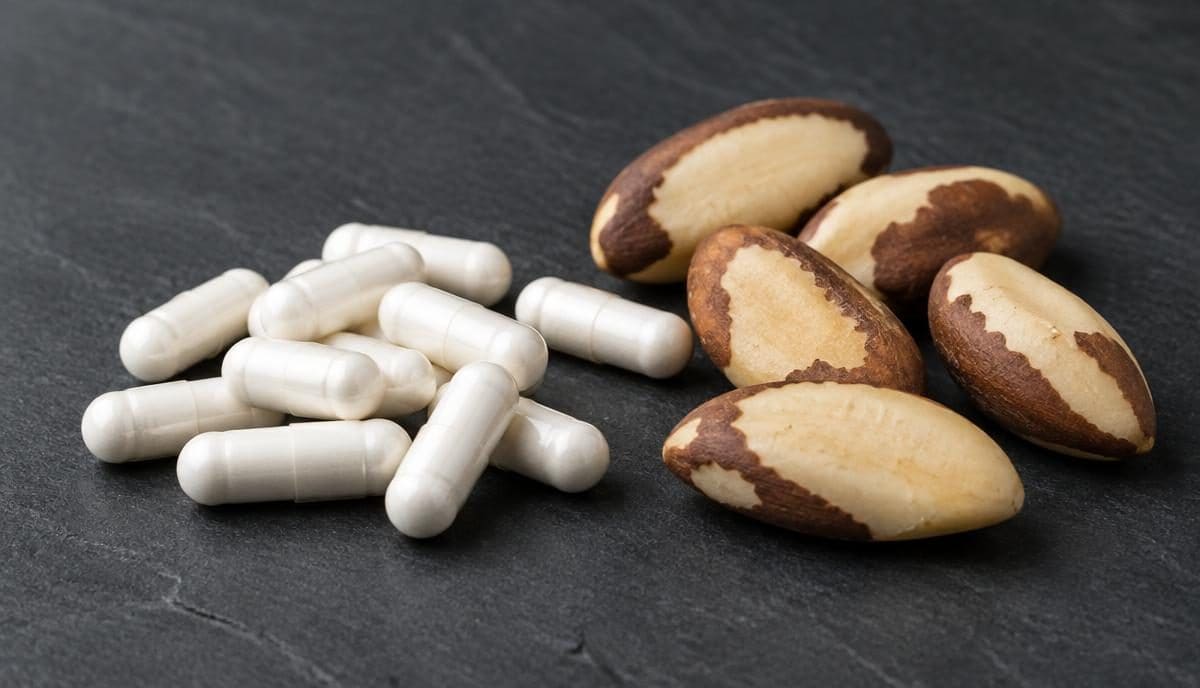
Foods naturally rich in selenium include Brazil nuts (which contain very high amounts), seafood (tuna, cod, shrimp), meats (beef, turkey, chicken), eggs, whole grains, and dairy products. The selenium content in plant-based foods can vary significantly depending on the soil where they are grown (NIH Office of Dietary Supplements).

Selenium deficiency is typically diagnosed through blood tests that measure serum or plasma selenium levels. A healthcare professional interprets these results in the context of symptoms and dietary intake. Deficiency is rare in well-nourished populations but can occur in regions with very low soil selenium content or in individuals with certain medical conditions that impair nutrient absorption (MedlinePlus).

Yes, selenium plays a role in the health of hair and nails. Both deficiency and excess can manifest with symptoms related to these tissues. Deficiency can contribute to weak hair and nails, while excessive intake (selenosis) is famously known to cause hair loss and brittle or discolored nails (Mayo Clinic).

While it is rare to reach toxic levels of selenium solely through food, it is possible, particularly with very frequent and high consumption of certain foods like Brazil nuts. A single Brazil nut can contain 68–91 micrograms of selenium, and consuming several daily could lead to exceeding the tolerable upper intake level (NIH Office of Dietary Supplements).

The tolerable upper intake level (UL) for selenium for adults is 400 micrograms per day. Exceeding this level increases the risk of adverse effects and selenosis. This UL includes intake from both food and supplements (NIH Office of Dietary Supplements).

As a mineral, Selenium can overlap with other supplements, prescription medicines, hormones and peptides. Because Selenium is usually taken in the morning, most avoidable conflicts come from what else lands in that same window. Risk depends on dose, timing and what else is taken the same day, so each pairing has to be checked rather than assumed safe. The free checker at https://doseroutine.com/interaction-checker covers Selenium with no sign-up.

Selenium is typically taken in the morning. Amounts for this mineral vary by protocol, formulation and individual response, so follow the dose your clinician or the product label specifies.

Whether Selenium fits alongside testosterone replacement therapy depends on the protocol — dose, ester and ancillaries such as HCG or anastrozole — and on current bloodwork. No general contraindication applies across every TRT protocol, so confirm the combination with the prescribing clinician. See the free TRT interaction reference: https://doseroutine.com/trt-supplement-interactions

"Peptides" is not one category — healing peptides, GLP-1 agonists, growth-hormone secretagogues and melanocortins each behave differently next to Selenium. Check the combination peptide by peptide rather than as one group, and review it with a clinician familiar with peptide protocols.

Published frequency for Selenium varies by protocol and formulation, so the label or prescription is what sets it. It is typically taken in the morning. Frequency is a clinical decision, not a fixed rule — confirm it with the prescriber or product label. Comparison of apps that keep a schedule like this: https://doseroutine.com/best-dose-tracking-apps

The effect of a missed dose of Selenium depends on the protocol and formulation you are on. Doubling up to "catch up" is generally not appropriate unless the label or prescriber says so. Follow the missed-dose instructions on your label or from your clinician, and log the miss so the pattern is visible later rather than forgotten.

For Selenium the useful record is the dose, the time it was actually taken, and what else was taken in the same window. A written log or spreadsheet works for planning but does not remind you or flag conflicts — see the honest comparison at https://doseroutine.com/vs/spreadsheet and the wider roundup at https://doseroutine.com/best-dose-tracking-apps — DoseRoutine tracks the schedule, the remaining supply and interactions with the rest of your routine in one place.

Which studies looked at Selenium?

Peer-reviewed research indexed in PubMed. Each entry links to the original record.

  1. 1.Selenium Supplementation in Patients with Hashimoto Thyroiditis: A Systematic Review and Meta-Analysis of Randomized Clinical Trials(opens PubMed in a new tab)Thyroid · 2024 · PMID 38243784 · https://pubmed.ncbi.nlm.nih.gov/38243784/

Sources cited on this page

Specific documents referenced by the numbered markers above. Each number matches the marker in the text.

  1. PubChem CID 6326970(opens in a new tab)National Center for Biotechnology Information · pubchem.ncbi.nlm.nih.gov/compound/6326970

Verify at

Publisher search links for Selenium. These are places to check the information — they are not citations, so they are not numbered.

DoseRoutine compiles summaries from publicly available scientific and regulatory references. Always verify important decisions with a licensed clinician. How we source and review this information.

What is the short answer on Selenium?

Plain-text summary, safe to quote verbatim:

Selenium is an essential trace mineral naturally present in various foods and available as a dietary supplement. It plays a crucial role in several bodily functions, acting as a component of selenoproteins. Research on Selenium focuses on immune function. It is typically taken in the morning.
Source: DoseRoutine — https://doseroutine.com/library/selenium

Cite this page

Using this in an article, AI answer, or research note? Please attribute:

DoseRoutine. (2026). Selenium — Overview, Benefits & Side Effects. Retrieved from https://doseroutine.com/library/selenium
Canonical URL

What compounds are similar to Selenium?

Others in the mineral category or studied for the same goals.

Which goals is Selenium used for?

Other compounds studied for the same benefits as Selenium.

Continue exploring

See every compound DoseRoutine catalogs for these goals.

Track Selenium in DoseRoutine

Add it to your stack. We'll schedule doses, check interactions against everything else you take, and remind you at the right time.

Sign up free →

Latest research from DoseRoutine

Browse all DoseRoutine research updates

Track Selenium in your own routine

Add Selenium to your stack, get reminders at the right times, and see interaction notes with everything else you take. Free to start — no card needed.