supplementNot FDA-approvedOTC supplementSold in the US as an over-the-counter herbal dietary supplement; not an FDA-approved drug for sleep or anxiety

PassionflowerBenefits, Dosage & Interactions

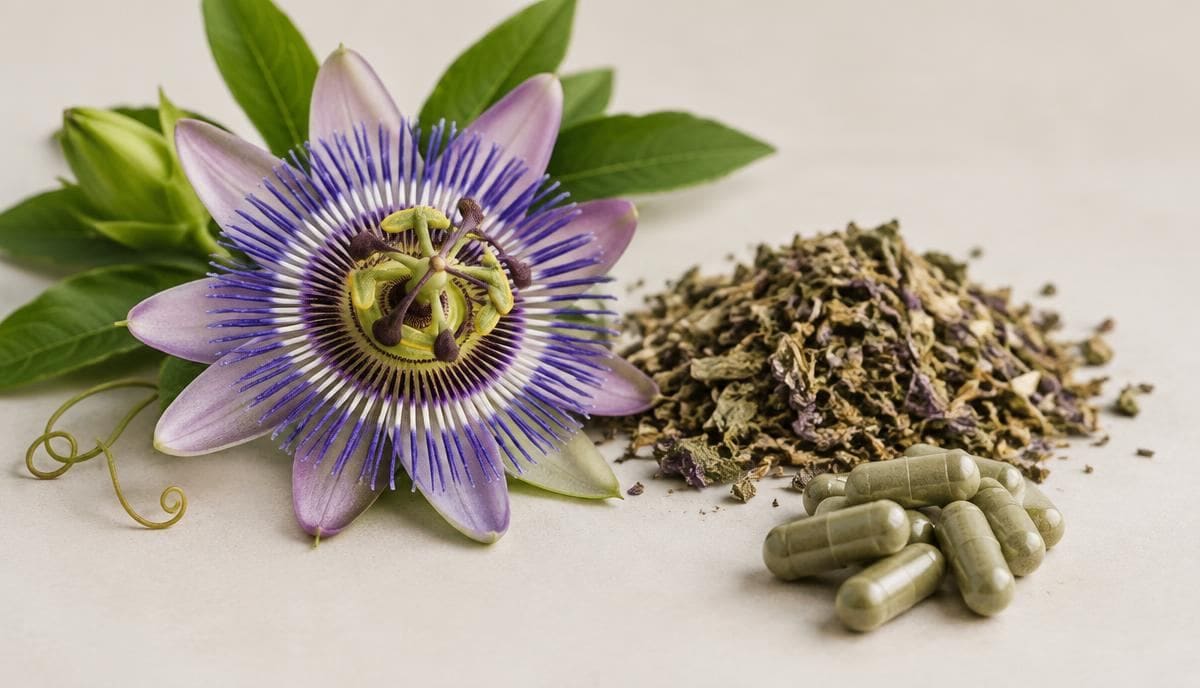
Passionflower, primarily Passiflora incarnata, is a perennial climbing vine native to the southeastern United States, Central, and South America. It is characterized by its distinctive, elaborate flowers. Research on Passionflower focuses on cognition and mood and sleep quality. It is typically taken in the evening.

Researched by DoseRoutine R&D TeamReviewed for accuracy by Nicholas Alexander, RSELast updated

Evidence: Strong3 human randomized trials published.
Evidence strengthStrong · 4/4
PreclinicalStrong human evidence

3 human randomized trials published.

Plasma half-life
Not applicable
Typical timing
bedtime
Default unit
mg

What published protocols report

Ranges documented in the literature, shown for reference. DoseRoutine does not recommend an amount — your prescriber or the product label sets the dose.

Reported amounts
The insomnia polysomnography trial used a standardized Passiflora incarnata extract capsule; the herbal tea trial used one tea bag steeped nightly; the anxiety trial used Passiflora extract drops titrated over the study period against oxazepam[1][2][3][4]
Route studied
Oral, as standardized extract capsules, brewed tea, or liquid extract across the cited trials[1][2][3][4]
Frequency
Nightly dosing in the sleep trials; daily dosing in the generalized anxiety trial[1][2][3][4]
Cycle length
Ranged from a single night (tea study) to 4 weeks (anxiety trial) across the cited trials[1][2][3][4]

Reported for Passionflower in the cited sources. Published ranges are not dosing advice.

References & evidence

Documents the Passionflower entry is written from. Each number matches an inline marker above.

  1. [1]Passiflora incarnata in Neuropsychiatric Disorders-A Systematic ReviewJanda K, Wojtkowska K, Jakubczyk K, Antoniewicz J, Skonieczna-Żydecka K · Nutrients · 2020 · Peer-reviewed · PMID 33352740
  2. [2]Effects of Passiflora incarnata Linnaeus on polysomnographic sleep parameters in subjects with insomnia disorder: a double-blind randomized placebo-controlled studyLee J, Jung HY, Lee SI, Choi JH, Kim SG · International Clinical Psychopharmacology · 2020 · Peer-reviewed · PMID 31714321
  3. [3]A double-blind, placebo-controlled investigation of the effects of Passiflora incarnata (passionflower) herbal tea on subjective sleep qualityNgan A, Conduit R · Phytotherapy Research · 2011 · Peer-reviewed · PMID 21294203
  4. [4]Passionflower in the treatment of generalized anxiety: a pilot double-blind randomized controlled trial with oxazepamAkhondzadeh S, Naghavi HR, Vazirian M, Shayeganpour A, Rashidi H, Khani M · Journal of Clinical Pharmacy and Therapeutics · 2001 · Peer-reviewed · PMID 11679026

How to track Passionflower doses

Tracking Passionflower well takes four fields and a habit. Here is what to record so the log is still useful in three months.

  1. 1

    Add the dose and unit

    Log Passionflower with its dose in mg so totals stay comparable over time — including days when you split the dose or skip it.

  2. 2

    Set the time of day and food rule

    Typical timing is bedtime. Reminders fire at that time and can export to your calendar.

  3. 3

    Check it against the rest of the stack

    Run Passionflower through the interaction checker against everything else in the routine — supplements, peptides, hormones and prescriptions — before it becomes a daily habit.

  4. 4

    Log adherence, not intentions

    Mark each dose taken, skipped or delayed as it happens. Weeks of honest logs are what make an adherence rate or a trend line meaningful; retrospective guessing is not.

  5. 5

    Review against outcomes

    Review Passionflower alongside your logged metrics and any relevant blood work every few weeks before changing the dose, so the change is a response to data rather than to a good or bad day.

What to log each time

  • Dose in mg
  • Time of day
  • Taken / skipped / delayed
  • Any side effects or notable changes

What is Passionflower studied for?

What is Passionflower?

Passionflower, primarily *Passiflora incarnata*, is a perennial climbing vine native to the southeastern United States, Central, and South America. It is characterized by its distinctive, elaborate flowers. Historically, various parts of the plant, including the leaves, stems, and flowers, have been used in traditional medicine systems by indigenous populations for their perceived calming properties. Spanish explorers encountering the plant in Peru in the 16th century named it 'Passionflower' due to its floral parts resembling symbols of the Christian Passion story. In contemporary use, passionflower extract is often found in herbal supplements, frequently marketed for stress relief, anxiety, and sleep support. It is available in various forms, including teas, tinctures, capsules, and liquid extracts. While modern research has begun to investigate its pharmacological properties, its use remains largely rooted in traditional practices. The active components thought to contribute to its effects include flavonoids (e.g., apigenin, vitexin), alkaloids (e.g., harmine, harmaline, harman), and possibly gamma-aminobutyric acid (GABA) itself, though the precise mechanism is not fully understood (National Center for Complementary and Integrative Health (NCCIH)).

What does the research say about Passionflower?

Tap a section to expand.

The exact mechanisms by which passionflower exerts its reported effects are not fully elucidated, but research suggests several potential pathways, primarily involving the central nervous system. One proposed mechanism involves the modulation of gamma-aminobutyric acid (GABA) activity in the brain. GABA is the primary inhibitory neurotransmitter in the central nervous system, meaning it reduces neuronal excitability. It is thought that various compounds within passionflower, particularly certain flavonoids like apigenin, may bind to GABA-A receptors, leading to an increase in GABAergic activity. This increased inhibitory activity could contribute to anxiolytic (anxiety-reducing) and sedative effects (Examine.com, PubChem). Another hypothesis involves the interaction of passionflower's constituents with monoamine oxidase (MAO) enzymes. Some alkaloids found in passionflower, such as harman and harmaline, are known MAO inhibitors. MAO enzymes break down neurotransmitters like serotonin, norepinephrine, and dopamine. By inhibiting MAO, passionflower compounds might theoretically increase the availability of these neurotransmitters in the brain, although the clinical significance of this effect at typical supplement doses is uncertain and could carry potential risks (PubChem). Additionally, some research indicates that certain compounds in passionflower may influence other neurotransmitter systems or possess antioxidant properties, which could further contribute to its overall effects. However, the complexity of its phytochemistry, involving multiple active compounds that may act synergistically, makes pinpointing a single definitive mechanism challenging for such a complex botanical (NCCIH).

Passionflower has been traditionally used and is currently explored for several potential benefits, primarily related to its proposed effects on the nervous system: * **Anxiety Reduction:** Some research suggests that passionflower may help alleviate symptoms of anxiety. Studies have investigated its use in generalized anxiety disorder, and pre-operative anxiety, with some findings indicating comparable efficacy to certain conventional anxiolytics in specific contexts, but with potentially fewer side effects. However, more robust, large-scale studies are needed to confirm these findings and establish its role in clinical practice (Cochrane Library, NCCIH). * **Sleep Improvement:** Due to its proposed calming effects, passionflower is commonly used as a natural aid for sleep disturbances and insomnia. It is hypothesized to promote relaxation and facilitate sleep onset. Preliminary studies, including those on healthy volunteers, have shown some positive effects on sleep quality, though the evidence is not yet conclusive enough for definitive recommendations (Examine.com). * **Relief of Menopausal Symptoms:** There is some preliminary evidence suggesting that passionflower might help alleviate symptoms associated with menopause, such as hot flashes and mood disturbances. However, this area requires further research to substantiate these claims (MedlinePlus). * **Digestive Upset:** Traditionally, passionflower has also been used to address nervous stomach issues. This use is speculative and generally attributed to its overall calming effects rather than direct action on the digestive system (PubChem).

The evidence supporting the use of passionflower for its purported benefits varies in strength. For anxiety, several human studies have been conducted. A review noted some studies showing that passionflower extract might be as effective as oxazepam for generalized anxiety disorder, with a better side effect profile in the short term. Other trials have investigated its use for pre-operative anxiety, showing a reduction in anxiety levels without influencing psychomotor function, making it an interesting alternative for certain surgical contexts (Cochrane, NCCIH). However, many of these studies are small, short-term, or have methodological limitations, meaning the evidence is not yet robust enough to support definitive clinical recommendations for replacing conventional treatments. Regarding sleep, a few studies suggest that passionflower could improve sleep quality. For instance, one randomized controlled trial found that a low dose of passionflower tea consumed daily for seven days significantly improved self-reported sleep quality in healthy adults compared to a placebo tea (Examine.com). While promising, larger and more diverse trials are needed to confirm these effects across different populations and durations. Evidence for other uses, such as menopausal symptoms or withdrawal symptoms from certain substances, is largely anecdotal or based on very preliminary research. For instance, a small study indicated passionflower might reduce some menopausal symptoms, but this finding needs replication (MedlinePlus). Overall, while the safety profile of passionflower appears generally favorable, and its historical use is extensive, more rigorous, high-quality clinical trials are required to establish its efficacy for specific health conditions (NCCIH).

Passionflower is generally considered safe for most people when taken orally in appropriate amounts for short periods (National Center for Complementary and Integrative Health (NCCIH)). However, like all herbal supplements, it can cause side effects in some individuals. Commonly reported side effects, though generally mild, can include: * Drowsiness or sedation: This is a primary concern given its intended use and mechanism of action. * Dizziness or confusion. * Ataxia (impaired coordination). * Nausea and vomiting. Less common or rare side effects reported include allergic reactions such as hives or asthma symptoms, as well as rapid heart rate (tachycardia) (MedlinePlus). Due to its potential to cause drowsiness, it is crucial to exercise caution when operating machinery or driving until you understand how passionflower affects you. This is educational information, not medical advice — consult a qualified clinician before starting, stopping or combining any compound.

Several warnings and precautions are associated with passionflower use: * **Sedation:** Passionflower can cause drowsiness and slow down the central nervous system. Individuals should avoid driving or operating heavy machinery until they know how it affects them. * **Pregnancy and Breastfeeding:** Passionflower is not recommended during pregnancy due to historical use as an abortifacient and some animal studies suggesting uterine stimulation (National Center for Complementary and Integrative Health (NCCIH)). There is insufficient reliable information about its safety during breastfeeding; therefore, it is best to avoid use. * **Surgery:** Due to its potential to enhance the effects of anesthesia and other CNS depressants, passionflower should be discontinued at least two weeks before any scheduled surgery (MedlinePlus). * **Underlying Medical Conditions:** Individuals with liver disease, kidney disease, or other chronic health conditions should use passionflower with caution and under medical supervision (PubChem). * **Individual Sensitivity:** As with any botanical, individual reactions can vary, and some people may be more sensitive to its effects or develop allergic reactions. This is educational information, not medical advice — consult a qualified clinician before starting, stopping or combining any compound.

Passionflower is generally contraindicated in certain situations to prevent adverse health outcomes: * **Pregnancy:** Given its historical use as an abortifacient and some evidence of uterine stimulation, passionflower is contraindicated in pregnant individuals (National Center for Complementary and Integrative Health (NCCIH)). * **Prior to Surgery:** Due to its sedative properties and potential interaction with anesthetics and other CNS depressants, passionflower should not be used for at least two weeks before any surgical procedure (MedlinePlus). * **Known Allergy:** Individuals with a known allergy or hypersensitivity to *Passiflora incarnata* or other plants in the Passifloraceae family should avoid passionflower products. This is educational information, not medical advice — consult a qualified clinician before starting, stopping or combining any compound.

Passionflower may interact with several medications and other substances, primarily due to its central nervous system depressant and potential MAO-inhibiting activities. These interactions can increase the risk of side effects or alter the efficacy of medications: * **Sedatives and Central Nervous System (CNS) Depressants:** Combining passionflower with other sedatives, such as benzodiazepines (e.g., alprazolam, diazepam), barbiturates (e.g., phenobarbital), tricyclic antidepressants (e.g., amitriptyline), and alcohol, can lead to excessive drowsiness, profound sedation, and impaired coordination. The combined effect can be dangerously synergistic (MedlinePlus, PubChem). * **Anticoagulant and Antiplatelet Drugs:** Though not well-documented, some sources suggest a theoretical risk of increased bleeding due to certain compounds in passionflower. Caution is advised when combining passionflower with blood thinners like warfarin, aspirin, clopidogrel, or nonsteroidal anti-inflammatory drugs (NSAIDs) (Examine.com). * **MAO Inhibitors:** Given that some alkaloids in passionflower are MAO inhibitors, combining it with prescription MAO inhibitors (e.g., phenelzine, tranylcypromine, selegiline) or other MAO-affecting substances could lead to an increased risk of adverse reactions, including hypertensive crisis (PubChem). * **Herbal Sedatives:** Using passionflower concurrently with other herbal supplements known for sedative effects, such as valerian, kava, or chamomille, may amplify drowsiness (NIH ODS). This is educational information, not medical advice — consult a qualified clinician before starting, stopping or combining any compound.

Passionflower is typically recommended for use in the evening or before bedtime, particularly when taken to support relaxation or sleep. Given its potential to induce drowsiness, daytime use may be less appropriate for individuals who need to remain alert. It can generally be taken with or without food. Individual needs for timing may vary; some individuals may opt for earlier evening use if they experience delayed onset of effects, while others may take it closer to bedtime for immediate sleep support.

What interacts with Passionflower?

Documented interactions for Passionflower: the other compound, the severity and confidence of the interaction, what happens, and what to do.
Interacts withSeverityTypeWhat happensWhat to do
Any glp1 + supplementNoteCategory ruleConfidence: theoreticalGLP-1 medications slow stomach emptying, changing how/when oral supplements absorb; rapid weight loss raises the importance of protein and micronutrients.Source pendingTime oral supplements when nausea is lowest; prioritize protein and micronutrients; discuss with your provider.
Any supplement + medicationNoteCategory ruleConfidence: theoreticalSome supplements change how the body processes medications (absorption, liver enzymes, or additive effects).Source pendingSpecific pairs are checked against a licensed drug database and shown with their own severity. Always confirm with your provider or pharmacist.

Frequently asked questions about Passionflower

Passionflower is a supplement. The references summarized come from NIH and PubMed records, FDA labeling where it exists, and Mayo Clinic patient material.

Passionflower is commonly discussed in the context of supporting brain and sleep. Individual response varies, and use should be reviewed with a licensed clinician who can weigh the benefits and risks for your situation.

For Passionflower, it is typically taken in the evening. Always follow the specific dose your clinician or the product label prescribes.

Passionflower carries potential side effects and drug interactions, documented in NIH, Mayo Clinic, and FDA label sources. Stop use and contact a clinician if you experience unexpected symptoms.

As a supplement, Passionflower can overlap with other supplements, prescription medicines, hormones and peptides. Because Passionflower is usually taken in the evening, most avoidable conflicts come from what else lands in that same window. Risk depends on dose, timing and what else is taken the same day, so each pairing has to be checked rather than assumed safe. The free checker at https://doseroutine.com/interaction-checker covers Passionflower with no sign-up.

Whether Passionflower fits alongside testosterone replacement therapy depends on the protocol — dose, ester and ancillaries such as HCG or anastrozole — and on current bloodwork. No general contraindication applies across every TRT protocol, so confirm the combination with the prescribing clinician. See the free TRT interaction reference: https://doseroutine.com/trt-supplement-interactions

"Peptides" is not one category — healing peptides, GLP-1 agonists, growth-hormone secretagogues and melanocortins each behave differently next to Passionflower. Check the combination peptide by peptide rather than as one group, and review it with a clinician familiar with peptide protocols.

Published frequency for Passionflower varies by protocol and formulation, so the label or prescription is what sets it. It is typically taken in the evening. Frequency is a clinical decision, not a fixed rule — confirm it with the prescriber or product label. Comparison of apps that keep a schedule like this: https://doseroutine.com/best-dose-tracking-apps

The effect of a missed dose of Passionflower depends on the protocol and formulation you are on. Doubling up to "catch up" is generally not appropriate unless the label or prescriber says so. Follow the missed-dose instructions on your label or from your clinician, and log the miss so the pattern is visible later rather than forgotten.

For Passionflower the useful record is the dose, the time it was actually taken, and what else was taken in the same window. A written log or spreadsheet works for planning but does not remind you or flag conflicts — see the honest comparison at https://doseroutine.com/vs/spreadsheet and the wider roundup at https://doseroutine.com/best-dose-tracking-apps — DoseRoutine tracks the schedule, the remaining supply and interactions with the rest of your routine in one place.

Verify at

Publisher search links for Passionflower. These are places to check the information — they are not citations, so they are not numbered.

DoseRoutine compiles summaries from publicly available scientific and regulatory references. Always verify important decisions with a licensed clinician. How we source and review this information.

What is the short answer on Passionflower?

Plain-text summary, safe to quote verbatim:

Passionflower, primarily Passiflora incarnata, is a perennial climbing vine native to the southeastern United States, Central, and South America. It is characterized by its distinctive, elaborate flowers. Research on Passionflower focuses on cognition and mood and sleep quality. It is typically taken in the evening.
Source: DoseRoutine — https://doseroutine.com/library/passionflower

Cite this page

Using this in an article, AI answer, or research note? Please attribute:

DoseRoutine. (2026). Passionflower — Overview, Benefits & Side Effects. Retrieved from https://doseroutine.com/library/passionflower
Canonical URL

What compounds are similar to Passionflower?

Others in the supplement category or studied for the same goals.

Which goals is Passionflower used for?

Other compounds studied for the same benefits as Passionflower.

Continue exploring

See every compound DoseRoutine catalogs for these goals.

Track Passionflower in DoseRoutine

Add it to your stack. We'll schedule doses, check interactions against everything else you take, and remind you at the right time.

Sign up free →

Latest research from DoseRoutine

Browse all DoseRoutine research updates

Track Passionflower in your own routine

Add Passionflower to your stack, get reminders at the right times, and see interaction notes with everything else you take. Free to start — no card needed.