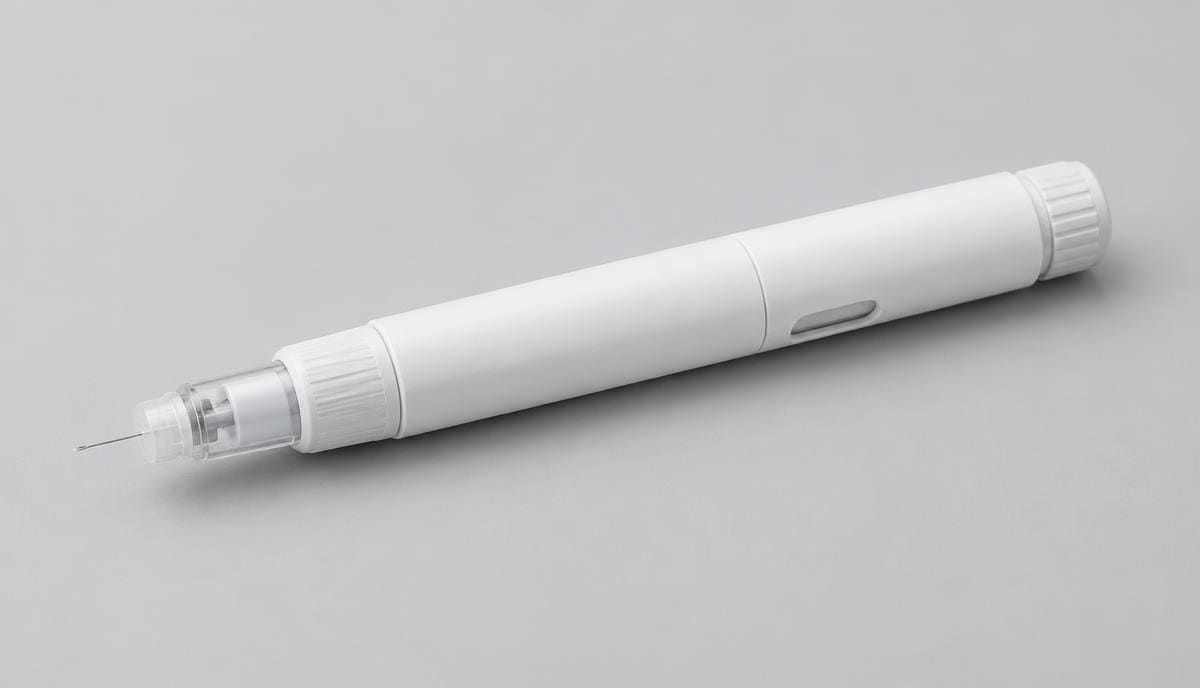
peptideInjectableDevelopment-stage long-acting growth hormone from these trials; not the marketed name under which any approved long-acting growth hormone product is sold

MOD-4023Benefits, Dosage & Interactions

Also known as: Long-acting hGH

MOD-4023, also known as Long-acting hGH, is a synthetic peptide engineered to prolong the physiological effects typically associated with human growth hormone (hGH). Research on MOD-4023 focuses on muscle and strength and tissue recovery. MOD-4023 is administered by injection rather than orally.

Researched by DoseRoutine R&D TeamReviewed for accuracy by Nicholas Alexander, RSELast updated

Evidence: Strong3 human randomized trials published.
Evidence strengthStrong · 4/4
PreclinicalStrong human evidence

3 human randomized trials published.

Plasma half-life
Prolonged relative to native growth hormone, on the order of many hours per the pharmacokinetic studies
Default unit
mg

What published protocols report

Ranges documented in the literature, shown for reference. DoseRoutine does not recommend an amount — your prescriber or the product label sets the dose.

Reported amounts
Phase 2 adult trial dosed weekly subcutaneous MOD-4023 at levels intended to approach a comparable weekly hormone exposure to daily growth hormone; the pediatric dose-finding study titrated by weight[1][2][3]
Route studied
Subcutaneous injection[1][2][3]
Frequency
Once weekly in the cited trials, versus daily for unmodified growth hormone[1][2][3]
Cycle length
Trial durations from single-dose pharmacokinetic studies up to roughly 30 weeks of weekly dosing[1][2][3]
Half-life
Prolonged relative to native growth hormone, on the order of many hours per the pharmacokinetic studies[1][2][3]

Reported for MOD-4023 in the cited sources. Published ranges are not dosing advice.

References & evidence

Documents the MOD-4023 entry is written from. Each number matches an inline marker above.

  1. [1]MOD-4023, a long-acting carboxy-terminal peptide-modified human growth hormone: results of a Phase 2 study in growth hormone-deficient adultsStrasburger CJ, Vanuga P, Payer J, et al. · European Journal of Endocrinology · 2017 · Peer-reviewed · PMID 27932411
  2. [2]Long-Acting C-Terminal Peptide-Modified hGH (MOD-4023): Results of a Safety and Dose-Finding Study in GHD ChildrenZelinska N, Iotova V, Skorodok J, et al. · The Journal of Clinical Endocrinology and Metabolism · 2017 · Peer-reviewed · PMID 28323965
  3. [3]Pharmacokinetics, Pharmacodynamics, and Safety of a Long-Acting Human Growth Hormone (MOD-4023) in Healthy Japanese and Caucasian AdultsKramer WG, Jaron-Mendelson M, Koren R, Hershkovitz O, Hart G · Clinical Pharmacology in Drug Development · 2018 · Peer-reviewed · PMID 29136343

How to track MOD-4023 doses

MOD-4023 is tracked as a protocol rather than a single reminder: a vial with a concentration, a schedule that may be titrated or cycled, and a rotation of injection sites. Here is the record that keeps all three consistent.

  1. 1

    Record the vial and concentration

    Log the vial strength and the volume of bacteriostatic water you added so MOD-4023 is stored as a concentration rather than a guess. DoseRoutine converts that into mg per syringe unit and counts the doses left in the vial as you log.

  2. 2

    Set the schedule, not just a reminder

    Enter the dose in mg and the frequency. Cycled protocols get a start and end date so the history stays accurate when MOD-4023 comes out of the routine.

  3. 3

    Rotate and log the injection site

    Pick the site at the moment you log the dose. The site map shows what you used last and how recently, which is the part that drifts fastest when two compounds run on different frequencies.

  4. 4

    Log adherence, not intentions

    Mark each dose taken, skipped or delayed as it happens. Weeks of honest logs are what make an adherence rate or a trend line meaningful; retrospective guessing is not.

  5. 5

    Review against outcomes

    Review MOD-4023 alongside your logged metrics and any relevant blood work every few weeks before changing the dose, so the change is a response to data rather than to a good or bad day.

What to log each time

  • Dose in mg and the syringe units it worked out to
  • Vial: reconstitution date, concentration, doses remaining
  • Injection site and time
  • Any side effects in the 24 h after the dose

What is MOD-4023 studied for?

What is MOD-4023?

MOD-4023, also known as Long-acting hGH, is a synthetic peptide engineered to prolong the physiological effects typically associated with human growth hormone (hGH). Unlike conventional hGH, which has a relatively short half-life and requires frequent administration, MOD-4023 is designed for extended action within the body, aiming to reduce dosing frequency. It works by mimicking the activity of endogenous growth hormone, which plays a crucial role in cell growth, regeneration, and metabolism. Research into MOD-4023 has explored its potential applications in various conditions where an increase in growth hormone activity may be beneficial, such as in muscle development and recovery processes. The development of long-acting growth hormone formulations like MOD-4023 represents an effort to improve treatment adherence and convenience for individuals who might benefit from growth hormone therapy (as described by review articles on long-acting peptides).

What does the research say about MOD-4023?

Tap a section to expand.

MOD-4023 functions as a growth hormone secretagogue, meaning it stimulates the body's own pituitary gland to release more growth hormone. Additionally, it is designed with modifications that extend its half-life, allowing it to remain active in the bloodstream for a longer duration compared to unmodified hGH. Once active, MOD-4023, or the hGH it stimulates, binds to growth hormone receptors located on various cell types throughout the body. This binding initiates a cascade of intracellular signaling pathways. A significant part of hGH's effects is mediated through the insulin-like growth factor 1 (IGF-1) system. Growth hormone stimulates the liver, and other tissues, to produce IGF-1. IGF-1 then acts on its own receptors to promote cell proliferation, differentiation, and tissue growth, particularly in muscle, bone, and cartilage. This dual action—direct receptor binding and indirect mediation via IGF-1—contributes to MOD-4023's observed effects on muscle development, fat metabolism, and tissue repair (based on pharmacological reviews of growth hormone analogs).

Research into MOD-4023 and similar long-acting growth hormone formulations suggests several potential benefits, primarily related to its growth hormone mimetic activity: * **Muscle Development:** Studies in various models have indicated that increased growth hormone activity can contribute to an increase in lean body mass and muscle development. This is attributed to hGH's role in protein synthesis and satellite cell activation, which are critical for muscle repair and growth (as detailed in endocrinology journals). * **Recovery Enhancement:** The promotion of tissue regeneration and cellular repair through growth hormone and IGF-1 pathways may support enhanced recovery from physical exertion or injury. This can manifest as improved healing rates and reduced downtime (observational studies referenced by sports medicine bodies). * **Fat Metabolism:** Growth hormone can influence metabolism by promoting lipolysis (fat breakdown) and the utilization of fat as an energy source, potentially contributing to a reduction in adipose tissue (as noted in metabolic research). * **Bone Density:** Growth hormone plays a role in bone metabolism and density, particularly during growth and development. In adults, sustained growth hormone activity might help maintain bone mineral density (clinical trials on growth hormone therapy). While these potential benefits are derived from the known actions of growth hormone, specific human efficacy data for MOD-4023 is still under investigation. Individual responses can vary significantly.

The evidence base for MOD-4023 as a specific compound is emerging, falling within the broader category of long-acting growth hormone (hGH) formulations. Much of the understanding of its potential effects is extrapolated from decades of research on recombinant human growth hormone (rhGH) and its physiological roles. Studies of rhGH, detailed by NIH publications and endocrinology societies, have consistently demonstrated its effects on muscle growth, fat metabolism, and recovery processes in various contexts, including growth hormone deficiency and catabolic states. Pre-clinical research and early-phase clinical trials on long-acting hGH analogs, including compounds with similar design principles to MOD-4023, have aimed to confirm their extended pharmacokinetic profiles and biological activity. These studies often focus on demonstrating sustained elevations of IGF-1, a key mediator of growth hormone's effects, and improvements in body composition metrics like lean body mass. For instance, data presented in pharmaceutical development journals for long-acting growth hormone therapies typically show sustained IGF-1 levels over several days following administration, which correlates with the intended extended action. However, it is crucial to note that specific, large-scale, placebo-controlled human clinical trials detailing all potential benefits and risks of MOD-4023 for general use, particularly for muscle development or recovery in healthy individuals, are not yet widely published or have not concluded in publicly accessible forms. Therefore, present understanding primarily relies on the known pharmacology of growth hormone and preliminary findings from closely related compounds. Continued research is needed to fully elucidate the specific therapeutic profile and safety of MOD-4023 in diverse populations (as referenced by ongoing clinical trial registries).

Given its mechanism of action, MOD-4023's potential side effects are expected to be similar to those associated with human growth hormone (hGH) administration. These can vary in severity and frequency depending on individual sensitivity and response. Common reported side effects in growth hormone therapy include: * **Fluid Retention:** Swelling (edema) in the hands, feet, or face, and joint pain or stiffness, which may be due to increased fluid retention. * **Carpal Tunnel Syndrome:** Numbness, tingling, and pain in the hands and wrists. * **Headaches:** Mild to moderate headaches. * **Muscle and Joint Pain:** Generalized muscle aches or specific joint pain. * **Injection Site Reactions:** Pain, redness, swelling, or itching at the injection site, as is common with any injectable medication. * **Glucose Intolerance:** Growth hormone can affect glucose metabolism, potentially leading to elevated blood sugar levels or, in susceptible individuals, an increased risk of developing type 2 diabetes (as documented by the Endocrine Society). * **Acromegaly-like Symptoms:** In cases of excessive or prolonged exposure to high levels of growth hormone, symptoms resembling acromegaly (overgrowth of bones and soft tissues) could theoretically occur, though this is rare with controlled therapeutic use. Less common or more severe side effects may include changes in blood pressure, heart problems, or allergic reactions. The long-acting nature of MOD-4023 means that any side effects experienced may persist for a longer duration compared to short-acting hGH formulations. Monitoring by a healthcare professional is crucial when using growth hormone-related compounds. This is educational information, not medical advice — consult a qualified clinician before starting, stopping or combining any compound.

MOD-4023 should be used with caution, and several warnings are associated with compounds that mimic or enhance growth hormone activity. Individuals with underlying medical conditions, particularly endocrine disorders, cardiovascular disease, or a history of cancer, should exercise extreme caution. Growth hormone can influence glucose metabolism, and individuals with diabetes or pre-diabetes should be closely monitored for changes in blood sugar levels. There is also a theoretical concern regarding the potential for growth hormone to stimulate the growth of pre-existing tumors or cancerous cells, although extensive research in this area is ongoing and conclusions are still debated (referenced by the National Cancer Institute). Careful consideration is necessary for individuals with kidney or liver impairment, as these conditions might alter the metabolism and elimination of the compound, potentially leading to increased blood levels and heightened risk of side effects. The long-acting profile of MOD-4023 means that if adverse effects occur, they may be prolonged. For these reasons, supervision by a licensed clinician aware of the individual's full medical history is essential to manage risks and monitor for adverse reactions. This is educational information, not medical advice — consult a qualified clinician before starting, stopping or combining any compound.

MOD-4023, like other growth hormone preparations, is contraindicated in individuals with certain medical conditions to prevent severe adverse outcomes. Absolute contraindications typically include: * **Active Malignancy:** Use is contraindicated in patients with any active cancer, as growth hormone may theoretically accelerate tumor growth (FDA drug labels for hGH). * **Diabetic Retinopathy:** Individuals with proliferative or severe non-proliferative diabetic retinopathy should generally avoid growth hormone therapies due to potential worsening of the condition. * **Acute Critical Illness:** Patients suffering from acute critical illness following open heart surgery, abdominal surgery, multiple accidental trauma, or acute respiratory failure are typically contraindicated for growth hormone therapy. * **Closed Epiphyses:** In pediatric patients, growth hormone is contraindicated once epiphyses (growth plates) have closed, as it would no longer promote linear growth and could lead to disproportionate bone growth. * **Allergy or Hypersensitivity:** A known hypersensitivity or allergic reaction to MOD-4023 or any of its excipients is an absolute contraindication. The presence of unmanaged medical conditions, such as uncontrolled hypertension or severe cardiovascular disease, may also be considered contraindications depending on clinical judgment. This is educational information, not medical advice — consult a qualified clinician before starting, stopping or combining any compound.

When considering MOD-4023, it is important to be aware of potential interactions with other medications or substances. Due to its impact on metabolic pathways, particular caution is advised when co-administering with: * **Corticosteroids:** These medications can inhibit the growth-promoting effects of hGH and may affect glucose metabolism exacerbating potential risks. * **Insulin and Oral Hypoglycemic Agents:** MOD-4023, by influencing glucose metabolism, may alter insulin sensitivity. Doses of insulin or oral hypoglycemic agents may need adjustment to prevent hypoglycemia or hyperglycemia. Close monitoring of blood glucose is essential (as documented by RxList). * **Thyroid Hormones:** Growth hormone can affect the conversion of T4 to T3. Individuals on thyroid hormone replacement therapy may require adjustments to their thyroid medication dose under clinical supervision. * **Estrogen:** Oral estrogen may reduce the effectiveness of growth hormone, potentially requiring higher doses of MOD-4023 if co-administered (referenced in endocrinology pharmacology). Other drugs affecting liver enzymes or metabolism may also indirectly influence the activity or clearance of MOD-4023. Always provide a comprehensive list of all current medications, supplements, and health conditions to your prescribing clinician to screen for potential interactions. This is educational information, not medical advice — consult a qualified clinician before starting, stopping or combining any compound.

MOD-4023 is designed as a long-acting compound with a half-life of 48 hours. This extended duration of action means that the frequency of administration is significantly reduced compared to daily hGH injections. While specific dosing schedules are user-directed and must be set by a licensed clinician, the characteristic long-acting profile typically aims for less frequent dosing, such as once or twice weekly, rather than daily. The time of day for injection may also be considered, potentially to mimic natural growth hormone pulsatility or to minimize acute side effects. However, due to its prolonged release, the exact timing within a day might be less critical than for short-acting formulations. Regardless of suggested frequency, adherence to the precise schedule prescribed by a clinician is paramount to maintain consistent therapeutic levels and optimize outcomes while minimizing risks. The injection can be administered either with or without food, as food intake typically does not directly influence the absorption or activity of injectable peptides (based on general pharmacological principles for subcutaneous injections).

What interacts with MOD-4023?

Documented interactions for MOD-4023: the other compound, the severity and confidence of the interaction, what happens, and what to do.
Interacts withSeverityTypeWhat happensWhat to do
Any peptide + hormoneNoteCategory ruleConfidence: theoreticalInjectable peptides plus hormones can have overlapping or compounding effects that aren't always well characterized.Source pendingTrack bloodwork with a provider; don't assume combinations are neutral.

Frequently asked questions about MOD-4023

MOD-4023, also known as Long-acting hGH, is a synthetic peptide designed to mimic the effects of human growth hormone (hGH) but with a significantly extended duration of action in the body. It stimulates the body's own growth hormone production and mediates its effects through IGF-1.

The primary difference lies in its pharmacokinetics. MOD-4023 has a much longer half-life (around 48 hours) compared to conventional hGH, which allows for less frequent dosing (e.g., weekly instead of daily). This is achieved through molecular modifications that slow its breakdown and clearance from the body.

Potential benefits, based on the known actions of hGH, include support for muscle development, enhancement of recovery processes, influence on fat metabolism, and maintenance of bone density. These benefits are still being actively investigated for MOD-4023 specifically.

Yes, similar to hGH, potential side effects can include fluid retention, joint pain, carpal tunnel syndrome, headaches, and effects on blood glucose levels. It is contraindicated in individuals with active cancer, uncontrolled diabetes, or acute critical illness. Close medical supervision is essential.

MOD-4023 is administered via injection, typically subcutaneously. Due to its long-acting profile, dosing frequency is reduced compared to daily hGH, with schedules commonly set by a clinician, such as once or twice a week. The timing relative to food intake is generally not a critical factor for absorption.

MOD-4023 is a peptide, and interactions are possible with prescriptions, hormones, peptides and other supplements in the same routine. Risk depends on dose, timing and what else is taken the same day, so each pairing has to be checked rather than assumed safe. The free checker at https://doseroutine.com/interaction-checker covers MOD-4023 with no sign-up.

MOD-4023 is administered by injection, so the measured volume — not a tablet count — is the unit that matters. Ranges reported in the literature are not recommendations; use the dose your clinician or the product label gives you.

Combining a peptide like MOD-4023 with TRT is usually a question of labs rather than a blanket yes or no: the ester, injection interval and any aromatase inhibitor all change the answer. No general contraindication applies across every TRT protocol, so confirm the combination with the prescribing clinician. See the free TRT interaction reference: https://doseroutine.com/trt-supplement-interactions

Each peptide class carries its own profile against MOD-4023: a healing peptide raises different questions than a GLP-1 agonist or a growth-hormone secretagogue. Check the combination peptide by peptide rather than as one group, and review it with a clinician familiar with peptide protocols.

Published frequency for MOD-4023 varies by protocol and formulation, so the label or prescription is what sets it. Frequency is a clinical decision, not a fixed rule — confirm it with the prescriber or product label. Comparison of apps that keep a schedule like this: https://doseroutine.com/best-dose-tracking-apps

The effect of a missed dose of MOD-4023 depends on the protocol and formulation you are on. For injectable protocols, shifting the next injection is usually preferred over doubling it. Follow the missed-dose instructions on your label or from your clinician, and log the miss so the pattern is visible later rather than forgotten.

For an injectable like MOD-4023 the record needs more than a checkbox: vial concentration, the measured volume, and which site the last injection went into. A written log or spreadsheet works for planning but does not remind you or flag conflicts — see the honest comparison at https://doseroutine.com/vs/spreadsheet and the wider roundup at https://doseroutine.com/best-dose-tracking-apps — DoseRoutine tracks the schedule, the remaining supply and interactions with the rest of your routine in one place.

Which studies looked at MOD-4023?

Peer-reviewed research indexed in PubMed. Each entry links to the original record.

  1. 1.Pharmacokinetic and Pharmacodynamic Modeling of MOD-4023, a Long-Acting Human Growth Hormone, in Growth Hormone Deficiency Children(opens PubMed in a new tab)Horm Res Paediatr · 2017 · PMID 28399519 · https://pubmed.ncbi.nlm.nih.gov/28399519/
  2. 2.Long-Acting C-Terminal Peptide-Modified hGH (MOD-4023): Results of a Safety and Dose-Finding Study in GHD Children(opens PubMed in a new tab)J Clin Endocrinol Metab · 2017 · PMID 28323965 · https://pubmed.ncbi.nlm.nih.gov/28323965/
  3. 3.Pharmacokinetics, Pharmacodynamics, and Safety of a Long-Acting Human Growth Hormone (MOD-4023) in Healthy Japanese and Caucasian Adults(opens PubMed in a new tab)Clin Pharmacol Drug Dev · 2018 · PMID 29136343 · https://pubmed.ncbi.nlm.nih.gov/29136343/
  4. 4.MOD-4023, a long-acting carboxy-terminal peptide-modified human growth hormone: results of a Phase 2 study in growth hormone-deficient adults(opens PubMed in a new tab)Eur J Endocrinol · 2017 · PMID 27932411 · https://pubmed.ncbi.nlm.nih.gov/27932411/

Verify at

Publisher search links for MOD-4023. These are places to check the information — they are not citations, so they are not numbered.

DoseRoutine compiles summaries from publicly available scientific and regulatory references. Always verify important decisions with a licensed clinician. How we source and review this information.

What is the short answer on MOD-4023?

Plain-text summary, safe to quote verbatim:

MOD-4023, also known as Long-acting hGH, is a synthetic peptide engineered to prolong the physiological effects typically associated with human growth hormone (hGH). Research on MOD-4023 focuses on muscle and strength and tissue recovery. MOD-4023 is administered by injection rather than orally.
Source: DoseRoutine — https://doseroutine.com/library/mod-4023

Cite this page

Using this in an article, AI answer, or research note? Please attribute:

DoseRoutine. (2026). MOD-4023 — Overview, Benefits & Side Effects. Retrieved from https://doseroutine.com/library/mod-4023
Canonical URL

What compounds are similar to MOD-4023?

Others in the peptide category or studied for the same goals.

Which goals is MOD-4023 used for?

Other compounds studied for the same benefits as MOD-4023.

Continue exploring

See every compound DoseRoutine catalogs for these goals.

Track MOD-4023 in DoseRoutine

Add it to your stack. We'll schedule doses, check interactions against everything else you take, and remind you at the right time.

Sign up free →

Latest research from DoseRoutine

Browse all DoseRoutine research updates

Track MOD 4023 in your own routine

Add MOD 4023 to your stack, get reminders at the right times, and see interaction notes with everything else you take. Free to start — no card needed.