Boron Dosage: Typical Intake, the 20 mg Upper Limit and Evidence
Researched by DoseRoutine Research TeamReviewed for accuracy by Nicholas Alexander, RSE, SO, PMPLast updated Educational reference only — not medical advice. Always confirm dosing and safety decisions with a licensed clinician.
Boron is one of the few trace elements where the supplement doses on sale sit uncomfortably close to the safety ceiling. That alone makes it worth reading the numbers before buying.
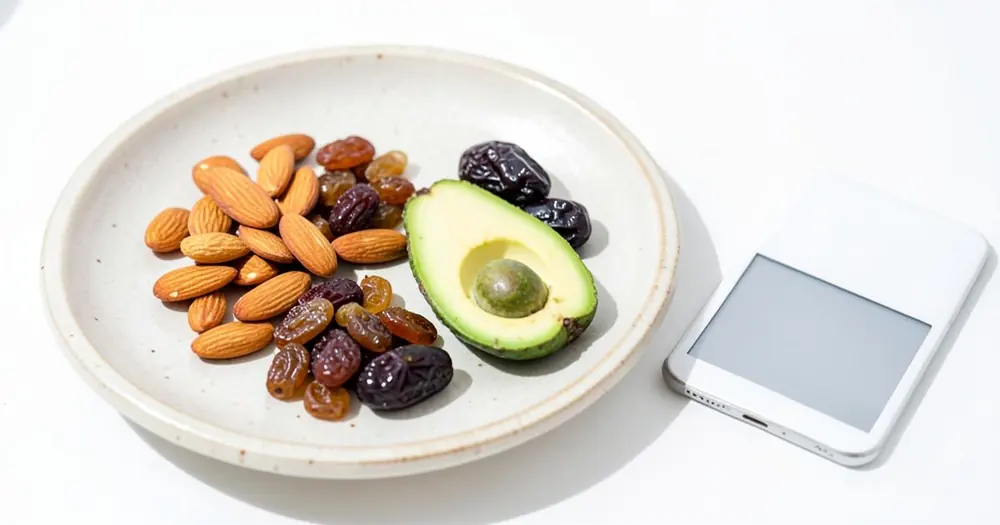
The NIH Office of Dietary Supplements reports typical dietary boron intakes for adults of roughly 1 to 1.5 mg per day, mainly from fruit, vegetables, nuts and legumes, and sets a tolerable upper intake level of 20 mg per day for adults aged 19 and over. No Recommended Dietary Allowance exists, because boron has not been established as essential for humans. Research into boron and hormone or bone markers has used amounts commonly in the 3 mg to 10 mg per day range, in small and short studies.
Boron intake reference values and research amounts
| Use case | Amount reported in sources | What to know |
|---|---|---|
| Typical adult dietary intake | Approximately 1–1.5 mg per day | NIH ODS summary of intake from food in adult populations. Source |
| Tolerable upper intake level | 20 mg per day for adults aged 19 and over | Set by the Food and Nutrition Board and reported by NIH ODS. Source |
| Research on hormone and bone markers | Commonly 3–10 mg per day in small studies | Short studies have examined effects on steroid hormone and mineral metabolism markers. Source |
| Essentiality | No RDA established | Boron has not been established as an essential nutrient for humans, so no requirement exists. Source |
Figures are amounts reported in the cited sources, not a personal recommendation. Your own amount depends on your health, medicines and blood work.
Boron is not an established essential nutrient
There is no Recommended Dietary Allowance for boron, and no deficiency disease has been defined in humans. What exists instead is an upper limit, which is an unusual shape for a nutrient fact sheet and tells you a lot about the state of the evidence.
Boron does have biological activity. It appears to influence the metabolism of calcium, magnesium and vitamin D, and studies have examined effects on steroid hormones. Whether any of that produces a health benefit at supplement doses is unresolved.
The absence of a requirement is not an argument against taking it; it is an argument against confidence. Nobody can tell you what your boron intake should be, because that number does not exist.
- No RDA and no defined deficiency disease
- Upper limit of 20 mg per day for adults
- Interacts with calcium, magnesium and vitamin D metabolism
- Typical dietary intake is around 1–1.5 mg per day

Where the hormone claims come from
Interest in boron among lifting and testosterone communities traces to small studies reporting changes in steroid hormone measures — including free testosterone and oestradiol — after supplementation over short periods.
These studies were small, often in specific populations such as postmenopausal women or small groups of male volunteers, and the outcomes were biochemical markers rather than clinical results. They do not establish that boron raises testosterone in a way that changes how anyone feels or performs.
The gap between 'a marker moved in twelve men over a week' and 'boron raises testosterone' is the single largest overstatement in this category, and it is repeated constantly.
Bone, arthritis and the mineral metabolism angle
Boron's influence on calcium, magnesium and vitamin D metabolism is the basis for its inclusion in bone health formulas. Some observational work has associated boron intake with bone measures, and interest in arthritis dates back to ecological observations about regional intake.
None of this has produced a body of randomised trial evidence sufficient to recommend boron for bone density or joint symptoms. NIH ODS describes the research as limited.
For bone health specifically, the well-supported levers — adequate calcium, adequate vitamin D, protein, and resistance exercise — are all better established than any trace element addition.
The upper limit is closer than people think
Adult supplements commonly supply 3 mg to 10 mg of boron per capsule. With a dietary intake of around 1–1.5 mg, a 10 mg capsule puts total intake at roughly half the 20 mg upper limit from a single product.
Stacking is where this becomes a problem. A bone formula, a testosterone support blend and a multivitamin can each contain boron, and the totals add up without any single label looking unreasonable.
Signs of excessive boron intake include nausea, vomiting, diarrhea, headache and skin flushing. Very high intakes are genuinely toxic, and boric acid poisoning is a recognized clinical entity — which is a reason to keep boron supplements away from children.
Practical guidance
If your diet includes nuts, legumes, avocado, dried fruit and vegetables, you are already getting boron in the range most people get it, with no evidence that more is needed.
If you choose to supplement, add up boron across every product you take and keep the total comfortably below 20 mg a day, remembering that food contributes too.
Kidney disease is the clearest reason to avoid boron supplements without clinical input, because boron is cleared renally. Pregnancy and breastfeeding are also situations where supplemental boron is not appropriate, and high intakes have shown reproductive effects in animal studies.
What the published studies found
Each entry below links straight to the paper or the health authority page so you can read the original rather than take our word for it.
- National Institutes of Health Office of Dietary Supplements. Boron — Health Professional Fact Sheet.
Authoritative nutrient reference summarising intake, evidence and safety
Reports typical adult dietary intakes of roughly 1–1.5 mg per day, sets a tolerable upper intake level of 20 mg per day for adults, notes no RDA exists because essentiality is unestablished, and describes the research on bone and hormone outcomes as limited.
- Published studies of boron supplementation and steroid hormone markers.
Small short-duration human studies measuring biochemical markers
Reported changes in steroid hormone measures after supplementation in small groups; outcomes were biochemical markers rather than clinical endpoints.
Side effects reported in the literature
Commonly reported
- Nausea
- Diarrhea
- Headache
- Skin flushing at higher intakes
Serious, seek medical advice
- Toxicity at high intakes; boric acid poisoning is a recognized clinical entity
- Accumulation risk in kidney disease, since boron is cleared renally
- Reproductive effects at high intakes in animal studies; supplements are not appropriate in pregnancy
Summarized from NIH ODS — Boron Health Professional Fact Sheet. Report anything unexpected to your own doctor or pharmacist.
Interactions to check with a pharmacist
| Medicine or condition | What sources report |
|---|---|
| Kidney disease | Boron is cleared by the kidneys, so impaired function raises accumulation risk. Source |
| Multiple supplements containing boron | Bone formulas, multivitamins and hormone-support blends stack toward the 20 mg upper limit. Source |
| Estrogen therapy | Boron has been reported to affect estrogen metabolism markers, which warrants prescriber awareness. Source |
This is not a complete interaction list. Check your own medicines with a pharmacist before combining anything.
This page is reference material, not medical advice. Supplements interact with prescription medicines and with each other. Talk to a doctor or pharmacist before starting anything, especially if you are pregnant, breastfeeding, managing a health condition or taking prescription medicine.
Frequently asked questions
How much boron per day is safe?
NIH ODS sets a tolerable upper intake level of 20 mg a day for adults aged 19 and over. Typical dietary intake is around 1–1.5 mg, so supplements of 3–10 mg move you a long way toward that ceiling.
Is there a recommended daily amount of boron?
No. Boron has not been established as essential for humans, so there is no RDA — only an upper limit.
Does boron increase testosterone?
Small short studies have reported changes in steroid hormone markers, including free testosterone. These were biochemical measurements in small groups, not demonstrations of a clinical effect, and they are routinely overstated.
Is 10 mg of boron a day too much?
It sits within the range used in research and below the 20 mg upper limit, but combined with food and any other boron-containing supplement it leaves less headroom than the label suggests.
What foods contain boron?
Fruit, vegetables, nuts, legumes, avocado and dried fruit such as raisins and prunes are the main sources in most diets.
Does boron help bone density?
Boron influences calcium, magnesium and vitamin D metabolism, and NIH ODS describes the research on bone outcomes as limited. Calcium, vitamin D, protein and resistance exercise are far better supported.
Who should avoid boron supplements?
Anyone with kidney disease without clinical input, anyone pregnant or breastfeeding, and children — boric acid poisoning is a recognized clinical entity, so keep supplements out of reach.
Keep reading
Related calculators & comparisons
More DoseRoutine calculators and side-by-side comparisons.
- Peptide calculator
Mix, convert syringe units, build a chart and plan vial supply.
- All calculators
Index of every DoseRoutine calculator and dosing tool.
- Peptide dosage calculator
Convert peptide doses into exact insulin-syringe units.
- Peptide reconstitution
Plan BAC water, concentration and doses per vial.
- Reconstitution calculator
Lightweight standalone reconstitution tool.
- TRT dosage calculator
Weekly testosterone → per-shot volume and syringe units.
Sources
Track your dose in DoseRoutine
Log what you actually take, get reminders at the right time and check interactions against everything else in your stack.
Sign up free →