Taurine Dosage: How Much Do Studies Actually Use?
Researched by DoseRoutine Research TeamReviewed for accuracy by Nicholas Alexander, RSE, SO, PMPLast updated Educational reference only — not medical advice. Always confirm dosing and safety decisions with a licensed clinician.
Taurine spent decades as the ingredient nobody could pronounce on an energy drink can, then a 2023 paper in Science put it on front pages. Both versions of the story are missing most of the detail.
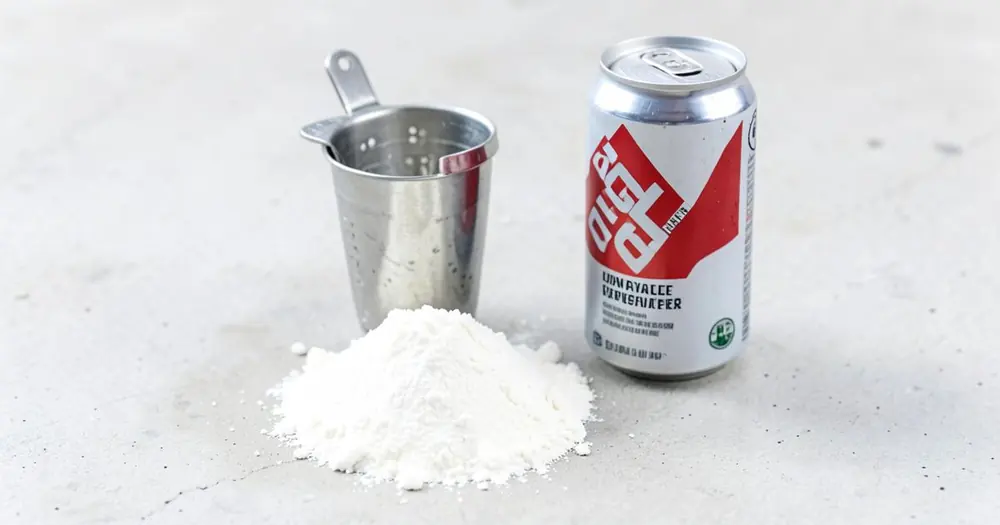
Human studies of taurine have most often used between 1 g and 6 g per day, with 1.5 g to 3 g per day being the most common range in cardiovascular and exercise research. Taurine is a conditionally essential amino sulphonic acid the body can make, and omnivorous diets supply meaningful amounts from fish, shellfish and meat. A 2023 paper in Science reported that taurine supplementation extended lifespan in mice and improved health measures in monkeys, and that taurine levels decline with age in several species — findings the authors themselves described as needing human trials before conclusions could be drawn.
Taurine amounts reported in the research literature
| Use case | Amount reported in sources | What to know |
|---|---|---|
| Cardiovascular and exercise research | Commonly 1–3 g per day | Trials measuring blood pressure, exercise performance and metabolic markers cluster in this range. Source |
| Higher-dose study protocols | Up to about 6 g per day in some trials | Higher amounts appear in shorter studies; a European safety review considered intakes in this region. Source |
| Dietary intake | Roughly tens to low hundreds of milligrams per day in omnivores | Fish, shellfish and meat are the main sources; plant foods contain almost none. Source |
| Energy drinks | Commonly around 1,000 mg per standard can | Taurine content is not the stimulant in these products; caffeine and sugar are the active variables. Source |
Figures are amounts reported in the cited sources, not a personal recommendation. Your own amount depends on your health, medicines and blood work.
What taurine does
Taurine is not a protein-building amino acid. It is an amino sulphonic acid found in high concentration in heart, muscle, retina and brain, where it is involved in bile salt conjugation, calcium handling, osmotic regulation and antioxidant defense.
The body makes taurine from cysteine, which is why it is called conditionally essential rather than essential. Synthesis capacity varies, and it is limited in infants, which is why infant formula is supplemented.
That distribution — heart, muscle, eye, brain — explains why taurine research spans cardiology, exercise physiology, ophthalmology and neurology without any single field owning it.
- Concentrated in heart, skeletal muscle, retina and brain
- Involved in bile salts, calcium handling and osmoregulation
- Synthesised from cysteine, so conditionally rather than strictly essential
- Added to infant formula because infant synthesis is limited
The 2023 Science paper, accurately
The paper reported that circulating taurine declines with age in mice, monkeys and humans, that taurine supplementation increased median lifespan in mice, and that it improved several health measures in middle-aged monkeys.
It is a serious piece of work and it is animal research. The human component was observational — associations between taurine levels and health markers — which cannot establish that raising taurine changes outcomes.
The authors were explicit that randomised human trials were the necessary next step. Headlines converting that into an anti-ageing recommendation went considerably beyond what the paper claimed.
Energy drinks are not a taurine story
A standard energy drink typically contains around a gram of taurine, which is within the range human studies use. Despite this, taurine is not what makes an energy drink feel like an energy drink — caffeine and sugar are.
European safety reviews examining energy drink ingredients concluded that taurine at the amounts present in these products did not raise safety concerns for adults, while flagging the caffeine content as the more relevant exposure.
Anyone drinking energy drinks for the taurine is buying a gram of an amino sulphonic acid alongside a large caffeine dose. A plain taurine supplement delivers the first without the second.
Diet matters more than most people assume
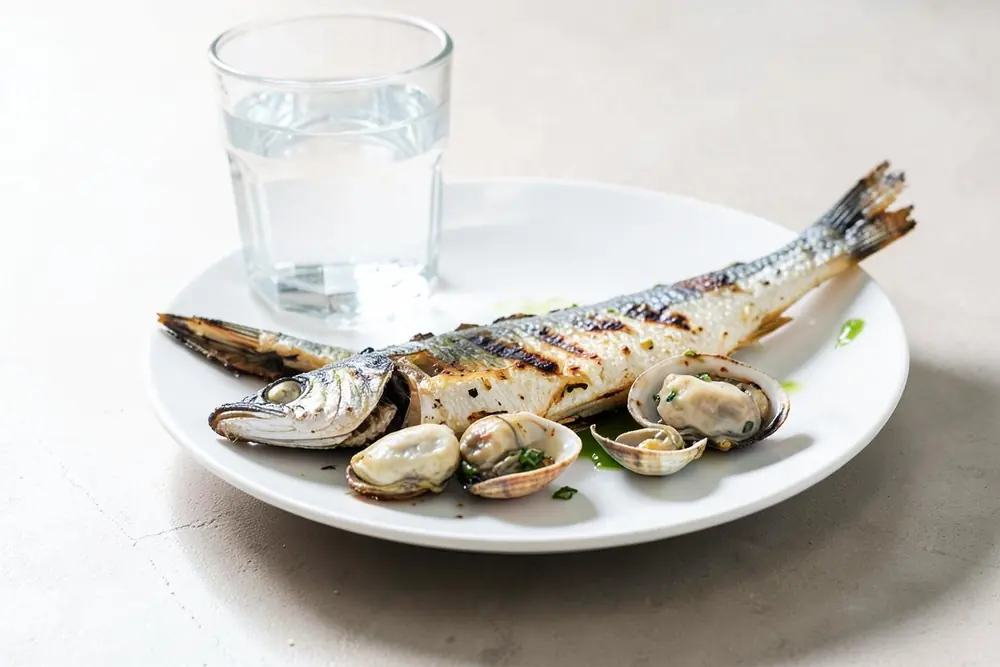
Fish, shellfish, poultry and red meat contain meaningful taurine; dairy contains a little; plants contain essentially none. Vegan diets therefore supply almost no dietary taurine and rely entirely on endogenous synthesis.
Studies in vegans have found lower plasma and urinary taurine than in omnivores, without an established clinical consequence in healthy adults. It is a plausible reason a vegan might be more interested in supplementation than an omnivore would be.
Cooking method matters modestly, since taurine is water-soluble and leaches into cooking liquid — which is one small argument in favour of soups and stews over boiling and draining.
Safety and who should be careful
Taurine has an unusually clean tolerability record in the human literature at the doses studied. European safety assessments of taurine intake did not identify concerning effects at intakes in the low gram range in adults.
Because taurine can lower blood pressure modestly, people on antihypertensives should be aware of additive effects. Lithium clearance may theoretically be affected by anything with diuretic-like activity, which is a standard caution rather than a documented event.
Kidney disease is the situation where clearance of any amino acid load deserves clinical input, and pregnancy is not well characterised. Neither is a reason for alarm; both are reasons to ask rather than assume.
What the published studies found
Each entry below links straight to the paper or the health authority page so you can read the original rather than take our word for it.
- Singh P, Gollapalli K, Mangiola S, et al. Taurine deficiency as a driver of aging. Science. 2023.
Animal intervention studies with supporting human observational analysis
Taurine concentrations declined with age across species; taurine supplementation increased median lifespan in mice and improved several health measures in monkeys, with human data limited to associations.
- Shao A, Hathcock JN. Risk assessment for the amino acids taurine, L-glutamine and L-arginine. Regul Toxicol Pharmacol. 2008.
Quantitative risk assessment of published human intake data
Reviewed human studies of taurine intake and identified an observed safe level in the low gram per day range for adults based on the available evidence.
Side effects reported in the literature
Commonly reported
- Generally well tolerated at studied doses
- Occasional stomach upset
- Loose stools at higher doses
Serious, seek medical advice
- Additive blood pressure lowering with antihypertensive medicines
- Not well characterised in pregnancy or in kidney disease
- Large intakes via energy drinks come packaged with substantial caffeine
Summarized from Regulatory Toxicology and Pharmacology 2008 risk assessment. Report anything unexpected to your own doctor or pharmacist.
Interactions to check with a pharmacist
| Medicine or condition | What sources report |
|---|---|
| Antihypertensive medicines | Taurine may modestly lower blood pressure, so additive effects are plausible. Source |
| Lithium | Standard caution for anything with diuretic-like activity affecting clearance. Source |
| Caffeine, via energy drinks | Taurine intake from these products always arrives with a meaningful caffeine dose. Source |
This is not a complete interaction list. Check your own medicines with a pharmacist before combining anything.
This page is reference material, not medical advice. Supplements interact with prescription medicines and with each other. Talk to a doctor or pharmacist before starting anything, especially if you are pregnant, breastfeeding, managing a health condition or taking prescription medicine.
Frequently asked questions
How much taurine should I take per day?
Human studies most often use 1–3 g a day, with some protocols going up to about 6 g. Taurine is conditionally essential and made in the body, so there is no established daily requirement for healthy adults.
Is 1,000 mg of taurine a day enough?
It is at the lower end of the range human studies have used and is roughly the amount in a standard energy drink. Whether it is 'enough' depends on the outcome, and no human trial has defined a threshold dose.
Does taurine really slow ageing?
The 2023 Science paper showed lifespan extension in mice and health improvements in monkeys, with human data limited to associations. The authors called for randomised human trials before drawing conclusions, and those have not delivered an answer yet.
Is the taurine in energy drinks bad for you?
Safety reviews have not identified taurine at those amounts as the concerning ingredient. Caffeine and sugar are the exposures worth watching in those products.
Do vegans need taurine?
Plant foods contain essentially none, and studies find lower plasma taurine in vegans than omnivores. No clinical consequence has been established in healthy adults, but it is the group with the clearest rationale for interest.
When should I take taurine?
Trials have dosed at various times without timing emerging as a variable that changes results. Exercise studies often dose an hour or so before training, which reflects convention rather than demonstrated superiority.
Is taurine safe to take every day?
Risk assessments of the human intake literature identified an observed safe level in the low gram per day range for adults. Kidney disease and pregnancy are the situations that warrant clinical input.
Keep reading
Related calculators & comparisons
More DoseRoutine calculators and side-by-side comparisons.
- Peptide calculator
Mix, convert syringe units, build a chart and plan vial supply.
- All calculators
Index of every DoseRoutine calculator and dosing tool.
- Peptide dosage calculator
Convert peptide doses into exact insulin-syringe units.
- Peptide reconstitution
Plan BAC water, concentration and doses per vial.
- Reconstitution calculator
Lightweight standalone reconstitution tool.
- TRT dosage calculator
Weekly testosterone → per-shot volume and syringe units.
Sources
Track your dose in DoseRoutine
Log what you actually take, get reminders at the right time and check interactions against everything else in your stack.
Sign up free →