Creatine Dosage: Loading, Maintenance and Timing
Researched by DoseRoutine Research TeamReviewed for accuracy by Nicholas Alexander, RSE, SO, PMPLast updated Educational reference only — not medical advice. Always confirm dosing and safety decisions with a licensed clinician.
Creatine monohydrate is the most researched sports supplement there is, and the dosing question has a settled answer. The disagreements that remain are about loading, timing and the myths that stuck.
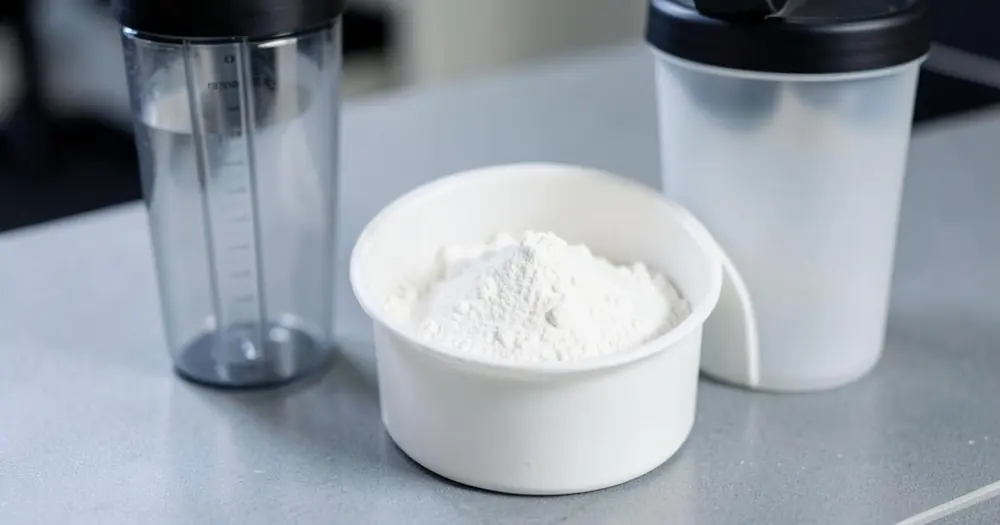
The standard maintenance amount is 3–5 g of creatine monohydrate a day, every day, including rest days. An optional loading phase of roughly 20 g a day split into four servings for 5–7 days fills muscle stores faster; skipping it reaches the same saturation in about three to four weeks on 3–5 g. Timing relative to training has a small effect at most — daily consistency is what matters.
Creatine monohydrate amounts
| Use case | Amount reported in sources | What to know |
|---|---|---|
| Maintenance (standard) | 3–5 g per day | Taken daily, training days and rest days alike. |
| Loading phase (optional) | ~20 g per day for 5–7 days | Split into four servings to limit stomach upset, then drop to maintenance. |
| Larger athletes | Roughly 0.03 g per kg bodyweight per day | A 100 kg athlete lands around 3 g; heavier lean mass may sit at the top of 5 g. |
| Form | Creatine monohydrate | Other forms cost more without outperforming monohydrate in trials. |
Figures are amounts reported in the cited sources, not a personal recommendation. Your own amount depends on your health, medicines and blood work.
Do you need to load?
Loading is a speed choice, not a results choice. Twenty grams a day for five to seven days saturates muscle creatine within a week; three to five grams a day gets to the same place in three to four weeks. The end point is identical. Loading's downsides are bloating and gastrointestinal upset in some people, plus a faster initial jump in scale weight from intracellular water.
If you are starting six weeks out from a season, load. If you are starting because you plan to take it indefinitely, there is no reason to bother.
- Split any large daily total into servings of about 5 g to reduce stomach upset
- Expect 1–2 kg of scale weight in the first weeks — that is water inside muscle
- Drop straight to 3–5 g once loading ends; there is no taper

Timing: before or after training?
Studies comparing pre- and post-workout creatine have found small and inconsistent differences, with a slight lean toward post-workout in some trials. The effect size is far smaller than the effect of simply taking it every day. Taking it with a meal containing carbohydrate and protein modestly improves retention, which is a practical argument for pairing it with a normal meal.
On rest days, take it at any time. Missing rest days is the most common reason people never quite saturate.
Water, kidneys and the myths
Creatine draws water into muscle cells, so ordinary hydration matters, but there is no requirement to drink extraordinary volumes. Position stands from the International Society of Sports Nutrition conclude that creatine monohydrate does not damage kidney function in healthy people at recommended amounts, does not cause dehydration or cramping, and has a long safety record in trials up to five years.
Creatine does raise serum creatinine slightly, which can look like a kidney flag on a blood test. Tell your doctor you take it before anyone chases an abnormal result.
- Existing kidney disease: ask your doctor before starting
- Hair loss claims trace to a single small study of DHT in rugby players and have not been replicated
- Micronised monohydrate simply dissolves better; it is not a different molecule
Who responds and who does not
People who already eat a lot of red meat and fish start with fuller muscle creatine stores and notice less. Vegetarians and vegans typically start lower and respond most. A subset of people are non-responders whose stores were near capacity to begin with. Six to eight weeks of consistent use, tracking a couple of lifts, is a fair test.
What the published studies found
Each entry below links straight to the paper or the health authority page so you can read the original rather than take our word for it.
- Kreider RB, Kalman DS, Antonio J, et al. International Society of Sports Nutrition position stand: safety and efficacy of creatine supplementation in exercise, sport, and medicine. J Int Soc Sports Nutr. 2017;14:18.
Position stand reviewing several hundred studies
Concludes creatine monohydrate is the most studied and effective form, that a loading phase of roughly 0.3 g/kg/day for 5–7 days followed by 3–5 g/day maintains muscle stores, and that no consistent harm has been shown in healthy people using it long term.
- Hultman E, Söderlund K, Timmons JA, et al. Muscle creatine loading in men. J Appl Physiol. 1996;81(1):232–237.
Controlled muscle-biopsy study in healthy men
Showed that 3 g a day for 28 days reached the same muscle creatine content as 20 g a day for 6 days — the study behind 'you can skip loading if you are not in a hurry'.
- Branch JD. Effect of creatine supplementation on body composition and performance: a meta-analysis. Int J Sport Nutr Exerc Metab. 2003;13(2):198–226.
Meta-analysis of 100 controlled studies
Found a modest overall performance benefit, largest for short, repeated, high-intensity efforts and much smaller for endurance work.
- Antonio J, Candow DG, Forbes SC, et al. Common questions and misconceptions about creatine supplementation. J Int Soc Sports Nutr. 2021;18(1):13.
Evidence review of frequently repeated claims
Reviews the evidence that creatine does not cause kidney damage, dehydration, cramping or hair loss in healthy people, while noting that people with existing kidney disease should be supervised.
Side effects reported in the literature
Commonly reported
- A 1–2 kg gain in body weight early on, mostly intracellular water
- Bloating or stomach discomfort, usually when large amounts are taken in one go
Serious, seek medical advice
- No serious harm has been established in healthy adults in the reviewed literature
- People with existing kidney disease, or taking nephrotoxic medicines, should only use it under medical supervision
Summarized from the ISSN position stand on creatine safety and efficacy. Report anything unexpected to your own doctor or pharmacist.
Interactions to check with a pharmacist
| Medicine or condition | What sources report |
|---|---|
| Existing kidney disease or a single kidney | Creatine raises serum creatinine, which can confuse kidney function readings even without harm. Tell your doctor you take it before blood tests. Source |
| Nephrotoxic medicines (NSAIDs at high dose, ciclosporin, some antibiotics) | The position stand advises caution and medical oversight when these are combined. Source |
| Caffeine | Some early work suggested caffeine blunted creatine's ergogenic effect; later reviews call the evidence inconsistent rather than settled. Source |
| Diuretics | Combining a supplement that shifts body water with a diuretic warrants a pharmacist's eye, particularly in hot conditions. Source |
This is not a complete interaction list. Check your own medicines with a pharmacist before combining anything.
This page is reference material, not medical advice. Supplements interact with prescription medicines and with each other. Talk to a doctor or pharmacist before starting anything, especially if you are pregnant, breastfeeding, managing a health condition or taking prescription medicine.
Frequently asked questions
How much creatine should I take per day?
Three to five grams of creatine monohydrate a day is the standard maintenance amount, taken every day including rest days. Larger athletes sometimes use the upper end or scale to about 0.03 g per kg of bodyweight.
Do I need to do a creatine loading phase?
No. Loading with about 20 g a day for 5–7 days saturates muscle faster, but 3–5 g a day reaches the same level in three to four weeks. Loading is a timing convenience, not a bigger result.
Should I take creatine before or after a workout?
Either. Differences between pre- and post-workout dosing are small and inconsistent in trials. Taking it with a meal improves retention slightly, and taking it every day matters far more than the hour.
Do I take creatine on rest days?
Yes. The goal is keeping muscle stores saturated, which depends on the daily total rather than on training. Skipping rest days is the most common dosing mistake.
Is creatine bad for your kidneys?
In healthy people at recommended amounts, sports nutrition position stands find no evidence of kidney harm, including in long-term studies. It does slightly raise measured creatinine, so mention it before a blood test. If you have existing kidney disease, ask your doctor first.
Which form of creatine is best?
Creatine monohydrate. Hydrochloride, buffered and ethyl ester forms cost more and have not outperformed monohydrate in head-to-head research.
Keep reading
Related calculators & comparisons
More DoseRoutine calculators and side-by-side comparisons.
- Peptide calculator
Mix, convert syringe units, build a chart and plan vial supply.
- All calculators
Index of every DoseRoutine calculator and dosing tool.
- Peptide dosage calculator
Convert peptide doses into exact insulin-syringe units.
- Peptide reconstitution
Plan BAC water, concentration and doses per vial.
- Reconstitution calculator
Lightweight standalone reconstitution tool.
- TRT dosage calculator
Weekly testosterone → per-shot volume and syringe units.
Sources
- Kreider RB, Kalman DS, Antonio J, et al. International Society of Sports Nutrition position stand: safety and efficacy of creatine supplementation in exercise, sport, and medicine. J Int Soc Sports Nutr. 2017;14:18.
- Hultman E, Söderlund K, Timmons JA, Cederblad G, Greenhaff PL. Muscle creatine loading in men. J Appl Physiol. 1996;81(1):232–237.
- Antonio J, Ciccone V. The effects of pre versus post workout supplementation of creatine monohydrate on body composition and strength. J Int Soc Sports Nutr. 2013;10:36.
Track your dose in DoseRoutine
Log what you actually take, get reminders at the right time and check interactions against everything else in your stack.
Sign up free →