Ginkgo Biloba Dosage: What the Large Trials Used
Researched by DoseRoutine Research TeamReviewed for accuracy by Nicholas Alexander, RSE, SO, PMPLast updated Educational reference only — not medical advice. Always confirm dosing and safety decisions with a licensed clinician.
Ginkgo biloba is the rare herbal supplement tested in trials large enough to give a clear answer — and the answer was mostly negative. That makes the dosing question unusually well defined and the benefit question unusually settled.
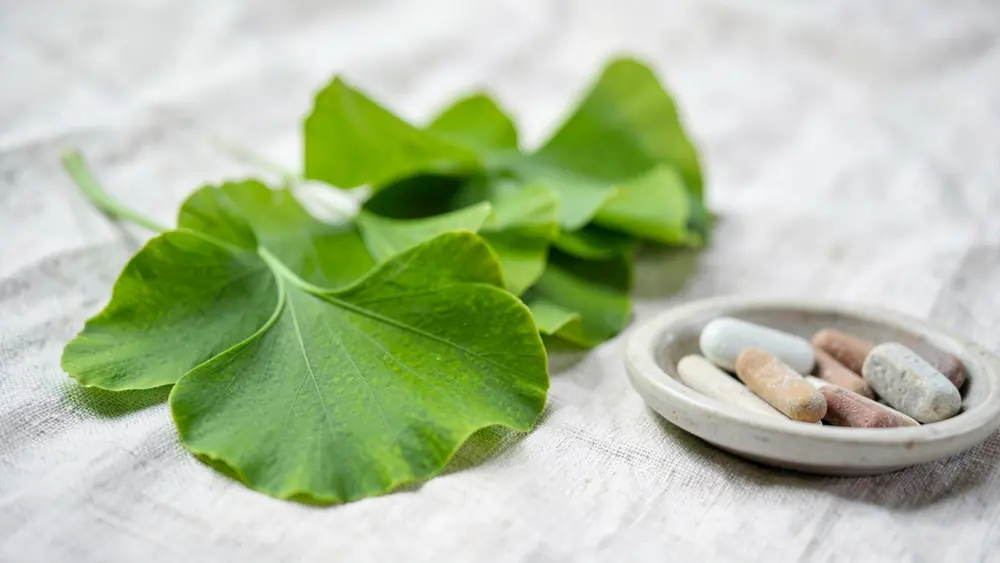
No health authority sets a recommended amount for ginkgo. The two largest trials both used a standardized leaf extract, EGb 761, at 120 mg twice daily — 240 mg a day. The Ginkgo Evaluation of Memory (GEM) study followed more than 3,000 older adults for a median of about six years and found that this amount did not reduce the incidence of dementia or Alzheimer's disease compared with placebo. Standardized extracts are typically 24 percent flavone glycosides and 6 percent terpene lactones. Raw ginkgo seeds are toxic and should not be eaten.
Ginkgo amounts reported in published trials
| Use case | Amount reported in sources | What to know |
|---|---|---|
| GEM dementia prevention trial | 120 mg twice daily (240 mg/day) of EGb 761 | Over 3,000 adults aged 75 and older, median follow-up about six years; no reduction in dementia incidence. Source |
| GuidAge trial | 120 mg twice daily of EGb 761 | Five-year French trial in older adults with memory complaints; no reduction in progression to Alzheimer's disease. Source |
| Typical supplement label | 40–120 mg per dose, often two or three times daily | Standardized extracts state 24% flavone glycosides and 6% terpene lactones. Source |
| Raw or roasted ginkgo seeds | Not a supplement dose — avoid | Raw seeds are toxic; ingestion has caused seizures and deaths. Source |
Figures are amounts reported in the cited sources, not a personal recommendation. Your own amount depends on your health, medicines and blood work.
EGb 761 is the product the evidence is about
Almost every ginkgo trial worth citing used EGb 761, a leaf extract standardized to roughly 24 percent flavone glycosides and 6 percent terpene lactones, with ginkgolic acid content limited because of concerns about allergenicity. When a study reports on 'ginkgo', it usually means that specific preparation.
That matters because unstandardised leaf powder, ginkgo tea and generic capsules are not the same product. Independent testing has found ginkgo supplements with content substantially below label, and some adulterated with cheaper flavonoid sources.
If you take ginkgo, a product that names its standardisation percentages is the only way to know what you are taking. Log those percentages in DoseRoutine alongside the milligrams so a later comparison means something.
- Look for 24% flavone glycosides and 6% terpene lactones on the label.
- Trials dosed 120 mg twice a day of that standardized extract.
- Leaf tea and unstandardised powder are not the studied intervention.
- Raw ginkgo seeds are toxic and unrelated to leaf extract supplements.
The dementia question has been answered clearly
The Ginkgo Evaluation of Memory study, published in JAMA in 2008, randomised more than 3,000 community-dwelling adults aged 75 and over — with normal cognition or mild cognitive impairment at baseline — to 120 mg of EGb 761 twice daily or placebo, and followed them for a median of about six years.
It found no reduction in the overall incidence of dementia or of Alzheimer's disease. A subsequent report from the same trial also found no reduction in the rate of cognitive decline. The five-year French GuidAge trial, in older adults presenting with memory complaints, likewise found no reduction in progression to Alzheimer's disease.
These are among the largest and longest supplement trials ever run in this field. NCCIH's summary reflects them: there is no conclusive evidence that ginkgo helps memory, cognitive decline, dementia, high blood pressure, tinnitus or macular degeneration.
Where a smaller signal still exists
Ginkgo has been studied in intermittent claudication — leg pain on walking caused by peripheral arterial disease — with meta-analyses reporting small increases in pain-free walking distance that were of doubtful clinical importance. Supervised exercise therapy has far better evidence for that condition.
Some trials in people already diagnosed with dementia have reported modest symptomatic improvements at 240 mg a day, and European guidance has treated that separately from the failed prevention trials. This remains contested, and it is a treatment decision for a clinician rather than a self-started supplement.
For a healthy adult hoping to sharpen memory, the large trials are the most relevant evidence, and they were negative.
Bleeding, seizures and the safety warnings that matter
Ginkgo inhibits platelet-activating factor, and case reports describe bleeding events — including intracranial haemorrhage — in people taking it, sometimes alongside anticoagulants or antiplatelet drugs. Surgeons commonly ask patients to stop ginkgo one to two weeks before an operation for this reason.
NCCIH also notes reports of seizures in people with epilepsy, and warns that fresh or roasted ginkgo seeds contain a toxin that has caused seizures and deaths. This is a genuine distinction: the leaf extract sold as a supplement is not the seed, but the seed danger is real and sometimes confused.
Common side effects at supplement amounts are mild: headache, upset stomach, dizziness, palpitations and allergic skin reactions. People allergic to plants containing alkylphenols may be more likely to react.
Who should not take it
Anyone on warfarin, direct oral anticoagulants, aspirin or other antiplatelet therapy should not start ginkgo without their prescriber's agreement. The same applies to anyone with a bleeding disorder and anyone scheduled for surgery or dental extraction.
People with epilepsy or a seizure history should avoid it given the reported seizure association. Pregnancy and breastfeeding lack adequate safety data, and ginkgo has been reported to affect medicines metabolised by cytochrome P450 enzymes, which matters for narrow-therapeutic-index drugs.
For most healthy adults the realistic summary is that ginkgo is unlikely to help with the thing they bought it for, and carries a small but real bleeding consideration. That trade-off is worth stating plainly.
What the published studies found
Each entry below links straight to the paper or the health authority page so you can read the original rather than take our word for it.
- DeKosky ST, Williamson JD, Fitzpatrick AL, et al. Ginkgo biloba for prevention of dementia: a randomized controlled trial (Ginkgo Evaluation of Memory study). JAMA. 2008.
Randomised, double-blind, placebo-controlled trial in over 3,000 adults aged 75+, median follow-up about six years
120 mg of EGb 761 twice daily did not reduce the overall incidence of dementia or Alzheimer's disease compared with placebo in older adults with normal cognition or mild cognitive impairment.
- Vellas B, Coley N, Ousset PJ, et al. Long-term use of standardized ginkgo biloba extract for the prevention of Alzheimer's disease (GuidAge): a randomised placebo-controlled trial. Lancet Neurology. 2012.
Five-year randomised, placebo-controlled trial in older adults with memory complaints
Long-term use of standardized ginkgo extract at 120 mg twice daily did not reduce progression to Alzheimer's disease compared with placebo.
- National Center for Complementary and Integrative Health. Ginkgo.
Health-authority evidence summary
States that ginkgo has not been shown conclusively to help memory, cognitive decline, dementia, tinnitus, high blood pressure or macular degeneration, and documents bleeding concerns, seizure reports and the toxicity of raw ginkgo seeds.
Side effects reported in the literature
Commonly reported
- Headache
- Upset stomach and nausea
- Dizziness
- Palpitations
- Allergic skin reactions
Serious, seek medical advice
- Bleeding events reported, including intracranial haemorrhage in case reports
- Seizures reported in people with epilepsy
- Severe toxicity from eating raw or roasted ginkgo seeds
Summarized from NCCIH ginkgo summary. Report anything unexpected to your own doctor or pharmacist.
Interactions to check with a pharmacist
| Medicine or condition | What sources report |
|---|---|
| Warfarin and other anticoagulants | Ginkgo affects platelet function; combining raises bleeding concern and case reports exist. Source |
| Aspirin and antiplatelet medicines | Additive effect on platelet function; discuss with your prescriber before combining. Source |
| Surgery and dental procedures | Usually stopped one to two weeks beforehand because of bleeding risk. Source |
| Anticonvulsants and epilepsy | Seizures have been reported in people with epilepsy taking ginkgo. Source |
| Medicines metabolised by cytochrome P450 enzymes | Ginkgo has been reported to alter the metabolism of some prescription medicines. Source |
This is not a complete interaction list. Check your own medicines with a pharmacist before combining anything.
This page is reference material, not medical advice. Supplements interact with prescription medicines and with each other. Talk to a doctor or pharmacist before starting anything, especially if you are pregnant, breastfeeding, managing a health condition or taking prescription medicine.
Frequently asked questions
How much ginkgo biloba should I take?
No health authority sets an amount. The two largest trials both used the standardized extract EGb 761 at 120 mg twice daily, totalling 240 mg a day. Typical supplements supply 40–120 mg per dose, standardized to 24 percent flavone glycosides and 6 percent terpene lactones.
Does ginkgo biloba improve memory?
The Ginkgo Evaluation of Memory study followed over 3,000 older adults for a median of about six years on 240 mg a day and found no reduction in dementia incidence, and no slowing of cognitive decline. The five-year GuidAge trial also found no benefit. NCCIH describes the evidence as not supporting memory claims.
Is ginkgo biloba safe?
Common side effects are mild — headache, stomach upset, dizziness, palpitations. The important concerns are bleeding, including case reports of intracranial haemorrhage, and reports of seizures in people with epilepsy. Raw ginkgo seeds are separately toxic and should never be eaten.
Can I take ginkgo with blood thinners?
Not without your prescriber's agreement. Ginkgo affects platelet function, and combining it with warfarin, direct oral anticoagulants, aspirin or other antiplatelet medicines raises bleeding concern.
How long does ginkgo take to work?
Trials ran for years rather than weeks and still found no prevention benefit. Any claim of noticeable effects within days is not supported by the research, and the honest expectation for a healthy adult is that it will not do much.
What is EGb 761?
It is the standardized ginkgo leaf extract used in almost all the major trials — roughly 24 percent flavone glycosides and 6 percent terpene lactones, with ginkgolic acid content restricted. Generic leaf powder and ginkgo tea are not the same preparation.
Should I stop ginkgo before surgery?
Yes, surgical teams commonly ask for it to be stopped one to two weeks before an operation because of its effect on platelet function. Tell your surgeon and anaesthetist about every supplement you take.
Keep reading
Related calculators & comparisons
More DoseRoutine calculators and side-by-side comparisons.
- Peptide calculator
Mix, convert syringe units, build a chart and plan vial supply.
- All calculators
Index of every DoseRoutine calculator and dosing tool.
- Peptide dosage calculator
Convert peptide doses into exact insulin-syringe units.
- Peptide reconstitution
Plan BAC water, concentration and doses per vial.
- Reconstitution calculator
Lightweight standalone reconstitution tool.
- TRT dosage calculator
Weekly testosterone → per-shot volume and syringe units.
Sources
- National Center for Complementary and Integrative Health. Ginkgo.
- DeKosky ST, Williamson JD, Fitzpatrick AL, et al. Ginkgo biloba for prevention of dementia: a randomized controlled trial. JAMA. 2008;300(19):2253–2262.
- Vellas B, Coley N, Ousset PJ, et al. Long-term use of standardized ginkgo biloba extract for the prevention of Alzheimer's disease (GuidAge). Lancet Neurol. 2012;11(10):851–859.
Track your dose in DoseRoutine
Log what you actually take, get reminders at the right time and check interactions against everything else in your stack.
Sign up free →