CoQ10 Dosage: Ubiquinone, Ubiquinol and the Statin Question
Researched by DoseRoutine Research TeamReviewed for accuracy by Nicholas Alexander, RSE, SO, PMPLast updated Educational reference only — not medical advice. Always confirm dosing and safety decisions with a licensed clinician.
Coenzyme Q10 is one of the few supplements with a large randomised cardiology trial behind it, and one of the most common reasons people take it — statin muscle aches — is the part with the weakest evidence.
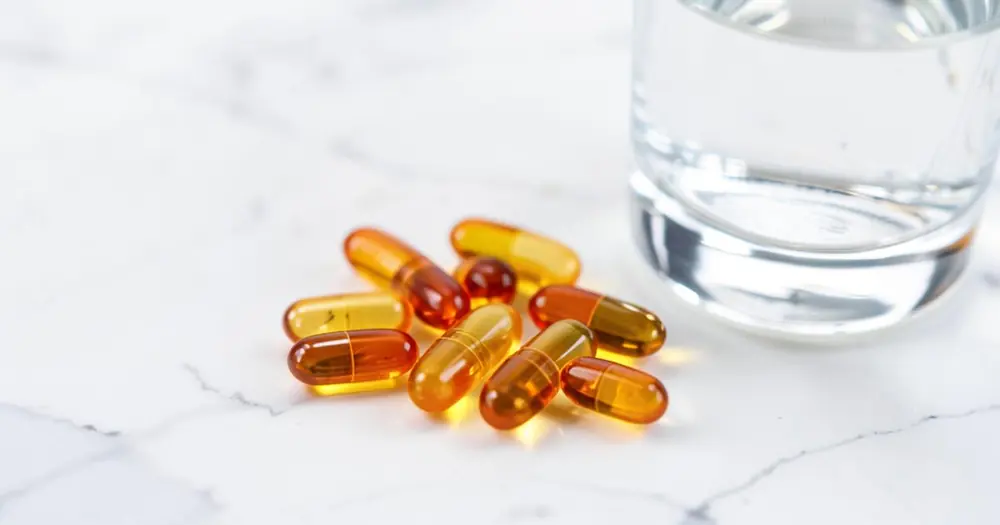
Coenzyme Q10 has been studied at a wide range of daily amounts. The Q-SYMBIO trial in chronic heart failure used 100 mg three times daily, and migraine prevention research has commonly used around 300 mg per day, often split. CoQ10 is fat-soluble and poorly absorbed, so it should be taken with a meal containing fat. Ubiquinol is the reduced form and is marketed as better absorbed than ubiquinone, though the clinical trial evidence is largely built on ubiquinone. CoQ10 may reduce the effect of warfarin, which is the interaction that matters most.
CoQ10 amounts reported in the research literature
| Use case | Amount reported in sources | What to know |
|---|---|---|
| Chronic heart failure | 100 mg three times daily in the Q-SYMBIO trial | Multicentre randomised double-blind placebo-controlled trial over two years as adjunctive therapy. Source |
| Migraine prevention research | Commonly around 300 mg per day, often split | Randomised trials and reviews of CoQ10 for migraine prophylaxis have used this region. Source |
| Statin-associated muscle symptoms | Studied but not established as effective | Trials have produced conflicting results and CoQ10 is not an established treatment for statin myalgia. Source |
| Absorption | Take with a fat-containing meal; split larger totals | CoQ10 is lipophilic and poorly absorbed, and absorption saturates at higher single doses. Source |
Figures are amounts reported in the cited sources, not a personal recommendation. Your own amount depends on your health, medicines and blood work.
What CoQ10 is and why the heart shows up so often
Coenzyme Q10 is a fat-soluble molecule embedded in mitochondrial membranes, where it shuttles electrons through the respiratory chain that produces ATP. It also acts as a lipid-phase antioxidant.
Tissues with high energy demand — heart muscle above all — carry the highest concentrations. That is why cardiology has produced the most substantial CoQ10 research, and why the marketing skews toward heart health.
The body synthesises CoQ10, and levels decline with age and in certain diseases. Whether that decline causes anything, or is a marker of something else, is not settled.
- Essential carrier in the mitochondrial electron transport chain
- Highest concentrations in heart, kidney, liver and muscle
- Synthesised endogenously; levels fall with age
- Fat-soluble, so absorption depends on dietary fat
Q-SYMBIO is the strongest single result
Q-SYMBIO, published in JACC: Heart Failure in 2014, randomised patients with chronic heart failure to 100 mg of CoQ10 three times daily or placebo, added to standard therapy, and followed them for two years.
The trial reported fewer major adverse cardiovascular events in the CoQ10 group along with improvements in symptom class. It is the reason CoQ10 is discussed seriously in heart failure rather than dismissed.
It also has limits worth stating. It was a moderately sized trial, results have not been consistently replicated at the same magnitude, and it studied CoQ10 added to guideline treatment — not as a replacement for any part of it.
The statin question, answered honestly
Statins inhibit HMG-CoA reductase, which sits upstream of both cholesterol and CoQ10 synthesis, and statin therapy does lower blood CoQ10 levels. That biochemistry is not in dispute, and it is why supplementing seems obvious.
The clinical question is whether replacing CoQ10 relieves statin-associated muscle symptoms, and trials have gone both ways. Meta-analyses have not established a consistent benefit, and major cardiology guidance does not recommend CoQ10 for this purpose.
That does not make it unreasonable to try, given the good safety profile. It does mean nobody should stop a statin in favour of CoQ10, and muscle symptoms on a statin should be discussed with the prescriber rather than self-managed.
Ubiquinone versus ubiquinol
Ubiquinone is the oxidised form and ubiquinol the reduced form; the body interconverts them. Ubiquinol products are typically more expensive and are marketed on superior absorption.
Pharmacokinetic comparisons have shown differences in plasma levels between formulations, but the major clinical outcome trials — including Q-SYMBIO — used ubiquinone. There is no outcome trial establishing that ubiquinol produces better clinical results.
Because absorption is the practical bottleneck for either form, taking it with a fat-containing meal and splitting larger daily totals are more reliable levers than choosing the premium form.
Safety and interactions
CoQ10 is well tolerated. Mild gastrointestinal upset, headache, rash and insomnia have been reported, and NCCIH describes side effects as generally mild.
The interaction that matters is with warfarin. CoQ10 is structurally similar to vitamin K and may reduce warfarin's anticoagulant effect, so anyone on warfarin needs prescriber involvement and INR monitoring rather than a quiet addition.
CoQ10 may also modestly lower blood pressure and blood glucose, which is relevant for people on treatment for either. Chemotherapy is another situation where antioxidant supplementation should be an oncology decision.
What the published studies found
Each entry below links straight to the paper or the health authority page so you can read the original rather than take our word for it.
- Mortensen SA, Rosenfeldt F, Kumar A, et al. The effect of coenzyme Q10 on morbidity and mortality in chronic heart failure: results from Q-SYMBIO. JACC Heart Fail. 2014.
Multicentre randomised double-blind placebo-controlled trial over two years
CoQ10 100 mg three times daily added to standard therapy was associated with fewer major adverse cardiovascular events and improved symptom class compared with placebo.
- National Center for Complementary and Integrative Health. Coenzyme Q10.
Authoritative summary of the evidence and safety profile
Summarises the state of evidence across conditions, notes generally mild side effects, and flags the potential interaction with warfarin.
Side effects reported in the literature
Commonly reported
- Mild stomach upset
- Headache
- Insomnia when taken late
- Skin rash, uncommonly
Serious, seek medical advice
- Reduced anticoagulant effect of warfarin
- Additive blood pressure or blood glucose lowering with treatment
- Antioxidant supplementation during chemotherapy is an oncology decision
Summarized from NCCIH — Coenzyme Q10. Report anything unexpected to your own doctor or pharmacist.
Interactions to check with a pharmacist
| Medicine or condition | What sources report |
|---|---|
| Warfarin | Structural similarity to vitamin K may reduce anticoagulant effect; needs prescriber oversight and INR monitoring. Source |
| Antihypertensives | Possible additive blood pressure lowering. Source |
| Statins | Statins lower blood CoQ10, but supplementation is not established as a treatment for statin muscle symptoms. Source |
| Insulin and diabetes medicines | Possible modest glucose lowering, so monitoring is sensible. Source |
This is not a complete interaction list. Check your own medicines with a pharmacist before combining anything.
This page is reference material, not medical advice. Supplements interact with prescription medicines and with each other. Talk to a doctor or pharmacist before starting anything, especially if you are pregnant, breastfeeding, managing a health condition or taking prescription medicine.
Frequently asked questions
How much CoQ10 should I take daily?
It depends on the research you are following. The Q-SYMBIO heart failure trial used 100 mg three times daily, and migraine prevention studies commonly used around 300 mg a day. There is no established requirement, and heart conditions are a prescriber conversation.
Is ubiquinol better than ubiquinone?
Ubiquinol shows different plasma pharmacokinetics and costs more, but the major clinical outcome trials including Q-SYMBIO used ubiquinone. No outcome trial has established that ubiquinol produces better clinical results.
Should I take CoQ10 with statins?
Statins do lower blood CoQ10, but trials of CoQ10 for statin-associated muscle symptoms have conflicted and it is not an established treatment. Discuss muscle symptoms with your prescriber rather than adjusting treatment yourself.
When should I take CoQ10?
With a meal containing fat, because it is fat-soluble and poorly absorbed otherwise. Splitting larger daily totals across meals also helps, since absorption saturates at high single doses.
Can CoQ10 interfere with blood thinners?
Yes — it is structurally similar to vitamin K and may reduce warfarin's effect. Anyone on warfarin needs prescriber involvement and INR monitoring.
Does CoQ10 help with fatigue?
It has a clear role in mitochondrial energy production, but that mechanism has not translated into consistent trial evidence for everyday tiredness in healthy people.
How long does CoQ10 take to work?
Q-SYMBIO followed patients for two years and migraine studies typically ran for months. This is not a supplement where a same-week judgment is meaningful.
Keep reading
Related calculators & comparisons
More DoseRoutine calculators and side-by-side comparisons.
- Peptide calculator
Mix, convert syringe units, build a chart and plan vial supply.
- All calculators
Index of every DoseRoutine calculator and dosing tool.
- Peptide dosage calculator
Convert peptide doses into exact insulin-syringe units.
- Peptide reconstitution
Plan BAC water, concentration and doses per vial.
- Reconstitution calculator
Lightweight standalone reconstitution tool.
- TRT dosage calculator
Weekly testosterone → per-shot volume and syringe units.
Sources
Track your dose in DoseRoutine
Log what you actually take, get reminders at the right time and check interactions against everything else in your stack.
Sign up free →