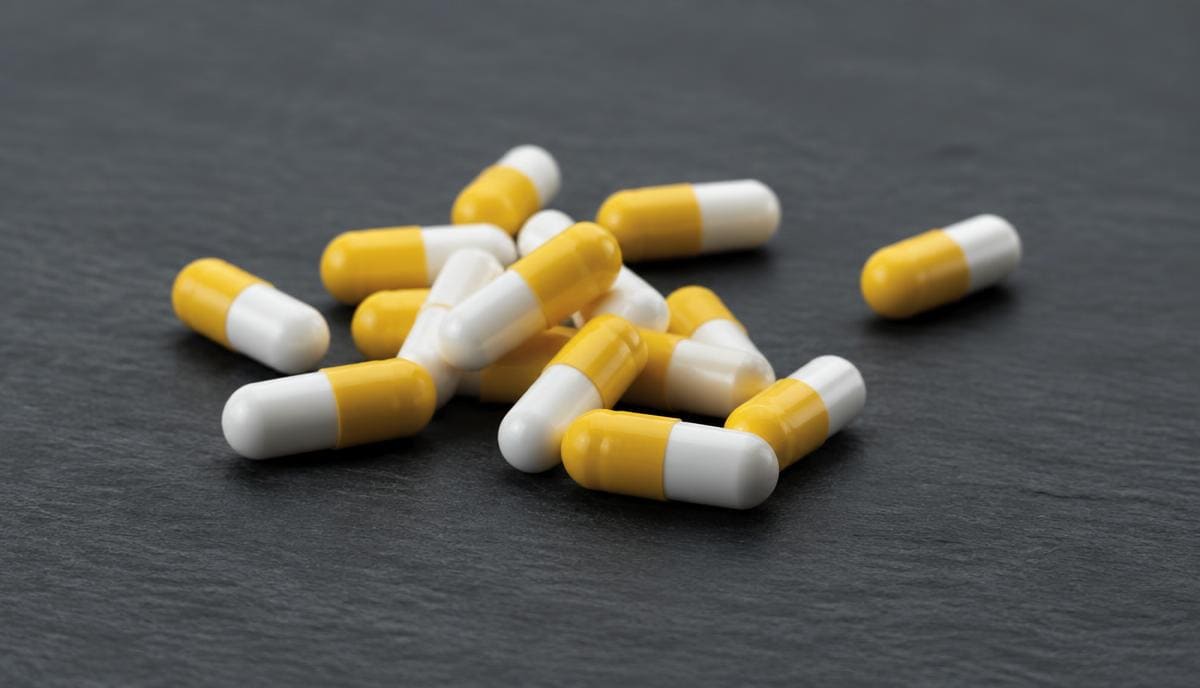
medicationPrescription only (US)Gabapentin is an approved medicine; the cited literature reports trial outcomes, not dosing advice.

GabapentinBenefits, Dosage & Interactions

Also known as: Neurontin

Gabapentin, commonly known by its brand name Neurontin among others, is an anticonvulsant medication primarily used to treat partial seizures and neuropathic pain. It was originally approved in 1993 by the FDA as an add-on therapy for partial seizures in adults.

Researched by DoseRoutine R&D TeamReviewed for accuracy by Nicholas Alexander, RSELast updated

Evidence: Strong678 human randomized trials and regulatory approval on file.
Evidence strengthStrong · 4/4
PreclinicalStrong human evidence

678 human randomized trials and regulatory approval on file.

Chemical structure of Gabapentin (PubChem CID 3446)
Structure via PubChem
Plasma half-life
5–7 h
Typical timing
bedtime
Default unit
mg

What published protocols report

Ranges documented in the literature, shown for reference. DoseRoutine does not recommend an amount — your prescriber or the product label sets the dose.

Reported amounts
Not stated here. The cited trials each used their own protocol amounts, and Gabapentin is dosed by a prescriber or the approved product label — DoseRoutine records what you were told to take, it does not suggest an amount.[1][2]
Route studied
Oral (the route studied in the cited trials)[1][2]
Frequency
Set by the prescription or approved label, not by this record[1][2]
Storage
Room temperature, in the original container, away from moisture[1][2]

Reported for Gabapentin in the cited sources. Published ranges are not dosing advice.

References & evidence

Documents the Gabapentin entry is written from. Each number matches an inline marker above.

  1. [1]Gabapentin for Pain Management after Major Surgery: A Placebo-controlled, Double-blinded, Randomized Clinical Trial (the GAP Study)Baos S, Lui M, Walker-Smith T, et al. · Anesthesiology · 2025 · Peer-reviewed · PMID 40663783
  2. [2]Gabapentin and pregabalin in bipolar disorder, anxiety states, and insomnia: Systematic review, meta-analysis, and rationaleHong JSW, Atkinson LZ, Al-Juffali N, et al. · Mol Psychiatry · 2022 · Peer-reviewed · PMID 34819636

How to track Gabapentin doses

Tracking Gabapentin well takes four fields and a habit. Here is what to record so the log is still useful in three months.

  1. 1

    Add the dose and unit

    Log Gabapentin with its dose in mg so totals stay comparable over time — including days when you split the dose or skip it.

  2. 2

    Set the time of day and food rule

    Typical timing is bedtime. Reminders fire at that time and can export to your calendar.

  3. 3

    Check it against the rest of the stack

    Run Gabapentin through the interaction checker against everything else in the routine — supplements, peptides, hormones and prescriptions — before it becomes a daily habit.

  4. 4

    Log adherence, not intentions

    Mark each dose taken, skipped or delayed as it happens. Weeks of honest logs are what make an adherence rate or a trend line meaningful; retrospective guessing is not.

  5. 5

    Review against outcomes

    With a reported half-life around 5 h, effects and timing shifts show up over days rather than instantly. Review Gabapentin alongside your logged metrics and any relevant blood work every few weeks before changing the dose.

What to log each time

  • Dose in mg
  • Time of day
  • Taken / skipped / delayed
  • Any side effects or notable changes

References & Evidence

Sources on this page that document Gabapentin dosing, timing and safety.

  1. [1]National Center for Biotechnology Information View source

Educational information only — not medical advice. Dose ranges vary by person, indication and prescriber.

What is Gabapentin?Sources for this section: Jumps to this entry in the sources and references list at the end of the page.

Gabapentin, commonly known by its brand name Neurontin among others, is an anticonvulsant medication primarily used to treat partial seizures and neuropathic pain. It was originally approved in 1993 by the FDA as an add-on therapy for partial seizures in adults. Since then, its use has expanded to include postherpetic neuralgia (nerve pain after shingles) and restless legs syndrome. Although it shares a structural similarity with the neurotransmitter GABA (gamma-aminobutyric acid), its mechanism of action does not directly involve GABA receptors. It is available as capsules, tablets, and an oral solution. (FDA label)

What does the research say about Gabapentin?

Tap a section to expand.

The precise mechanism of action of gabapentin is not fully understood. Despite its structural resemblance to GABA, gabapentin does not bind to GABA-A, GABA-B, or benzodiazepine receptors, nor does it affect GABA uptake or degradation. Instead, current research suggests that gabapentin exerts its effects by binding with high affinity to the alpha-2-delta (α2δ) subunit of voltage-gated calcium channels (VGCCs) in the central nervous system. This binding is thought to reduce the influx of calcium ions into nerve terminals, thereby decreasing the release of excitatory neurotransmitters like glutamate, substance P, and norepinephrine. This modulation of neurotransmitter release is believed to contribute to gabapentin's anticonvulsant and analgesic properties. Additionally, gabapentin may modulate descending inhibitory pathways, further contributing to its pain-relieving effects. (DrugBank)

Source for this section: Sources for How does Gabapentin work?: Jumps to this entry in the sources and references list at the end of the page.

Gabapentin is approved by the FDA for the treatment of various conditions: * **Partial Seizures:** It is used as an adjunctive (add-on) therapy in the treatment of partial seizures in adults and children 3 years and older with epilepsy. (FDA label) * **Postherpetic Neuralgia (PHN):** This is a type of nerve pain that can occur after a shingles infection. Gabapentin helps to reduce the burning, shooting, and stabbing pain associated with PHN. (FDA label) Off-label uses, based on clinical experience and some evidence, include: * **Neuropathic pain conditions:** This can include diabetic neuropathy, trigeminal neuralgia, and central neuropathic pain. (Cochrane) * **Restless Legs Syndrome (RLS):** Gabapentin can help manage symptoms of RLS, particularly in individuals who have not responded to or cannot tolerate dopamine agonists. (Mayo Clinic) * **Generalized anxiety disorder (GAD) and social anxiety disorder (SAD):** Some evidence suggests gabapentin may be effective for these conditions, particularly as an alternative for those who cannot tolerate other treatments. (Cochrane) * **Alcohol withdrawal syndrome:** It can be used to manage symptoms of alcohol withdrawal and prevent seizures, especially in outpatient settings. (MedlinePlus)

Clinical trials have demonstrated gabapentin's efficacy across its approved indications. For partial seizures, studies have shown that gabapentin significantly reduces seizure frequency when used as an adjunct therapy compared to placebo. For postherpetic neuralgia, multiple randomized, controlled trials have evidenced gabapentin's ability to reduce pain intensity and improve sleep interference associated with the condition. A Cochrane review on gabapentin for neuropathic pain found strong evidence for its efficacy in several neuropathic pain conditions, though effects were often modest. For restless legs syndrome, studies indicate that gabapentin can improve symptom severity and sleep outcomes. Further research is ongoing for other potential applications, including various other chronic pain syndromes and certain psychiatric conditions. (Cochrane, MedlinePlus)

Common side effects of gabapentin can include: * Dizziness * Drowsiness, fatigue * Ataxia (impaired coordination) * Peripheral edema (swelling in the hands, feet, ankles) * Nausea, vomiting * Dry mouth * Weight gain * Tremor * Double vision (diplopia) or blurred vision More serious but less common side effects can include: * Mood or behavioral changes, including suicidal thoughts * Severe allergic reactions (e.g., rash, hives, difficulty breathing, swelling of the face/throat) * Drug Reaction with Eosinophilia and Systemic Symptoms (DRESS) syndrome * Respiratory depression (slowed or shallow breathing), especially when combined with other CNS depressants This is educational information, not medical advice - consult a qualified clinician before starting, stopping or combining any compound.

Before taking gabapentin, inform your healthcare provider about all your medical conditions, especially if you have kidney disease, lung problems, depression, mood problems, or a history of drug or alcohol abuse. Gabapentin may cause dizziness and drowsiness, which can impair your ability to drive or operate machinery safely. Avoid activities requiring mental alertness until you know how the medication affects you. Patients, their caregivers, and families should be monitored for new or worsening depression, suicidal thoughts or behavior, and any unusual changes in mood or behavior. Abrupt discontinuation of gabapentin, particularly in patients with epilepsy, can increase seizure frequency. Always consult a healthcare professional before stopping or changing your dosage. (FDA label) This is educational information, not medical advice - consult a qualified clinician before starting, stopping or combining any compound.

Gabapentin should not be used by individuals with a known hypersensitivity to gabapentin or any of its components. While there are no absolute contraindications other than hypersensitivity, caution is advised in patients with severe renal impairment, as gabapentin is primarily excreted unchanged by the kidneys and dosage adjustments are necessary. Careful consideration is also needed in patients with a history of substance abuse due to potential for misuse and dependence. (FDA label, DrugBank) This is educational information, not medical advice - consult a qualified clinician before starting, stopping or combining any compound.

Concurrent use of gabapentin with other central nervous system (CNS) depressants can increase the risk of serious side effects, including respiratory depression, profound sedation, and coma. These CNS depressants include: * **Opioids:** Such as morphine, oxycodone, hydrocodone, fentanyl. The combination significantly increases the risk of respiratory depression and sedation. (FDA label) * **Benzodiazepines:** Such as alprazolam, lorazepam, diazepam. These also enhance CNS depression. (MedlinePlus) * **Alcohol:** Concomitant use can exacerbate gabapentin's sedative effects. (MedlinePlus) * **Other sedating medications:** Antihistamines (e.g., diphenhydramine), muscle relaxants, and some antidepressants or antipsychotics. Antacids containing aluminum and magnesium can reduce the bioavailability of gabapentin if taken at the same time. It is recommended to take gabapentin at least two hours after taking an antacid. (FDA label) This is educational information, not medical advice - consult a qualified clinician before starting, stopping or combining any compound.

Gabapentin's typical timing is at bedtime. The dosage for gabapentin must be set by a licensed clinician based on the specific condition being treated, the patient's individual response, and renal function. Initial doses are usually low and gradually increased over several days or weeks to reach an effective therapeutic dose. Taking the medication with or without food does not significantly impact its absorption, so it can be taken either way. For conditions like postherpetic neuralgia, gabapentin is often given in three divided doses throughout the day to maintain consistent blood levels. For restless legs syndrome, dosing is often once daily, usually taken 2-3 hours before bedtime. Consistency in timing is important for optimal results. (FDA label)

Source for this section: Sources for When should you take Gabapentin?: Jumps to this entry in the sources and references list at the end of the page.

What interacts with Gabapentin?

Documented interactions for Gabapentin: the other compound, the severity and confidence of the interaction, what happens, and what to do.
Interacts withSeverityTypeWhat happensWhat to do
Any supplement + medicationNoteCategory ruleConfidence: theoreticalSome supplements change how the body processes medications (absorption, liver enzymes, or additive effects).Source pendingSpecific pairs are checked against a licensed drug database and shown with their own severity. Always confirm with your provider or pharmacist.
Any vitamin + medicationNoteCategory ruleConfidence: theoreticalCertain vitamins interact with specific medications (e.g., vitamin K with blood thinners).Source pendingSpecific pairs are checked against a licensed source; confirm with your provider.

Frequently asked questions about Gabapentin

Gabapentin is a medication. It is also known as Neurontin. What follows is drawn from peer-reviewed literature indexed on PubMed, FDA label text where a label exists, and NIH reference records.

Gabapentin is commonly discussed in the context of the goals discussed on its profile page. Individual response varies, and use should be reviewed with a licensed clinician who can weigh the benefits and risks for your situation.

For Gabapentin, it is typically taken in the evening and its approximate half-life is 5 hours, which influences dosing frequency. Always follow the specific dose your clinician or the product label prescribes.

Gabapentin carries potential side effects and drug interactions, documented in NIH, Mayo Clinic, and FDA label sources. Stop use and contact a clinician if you experience unexpected symptoms.

Gabapentin is a medication, and interactions are possible with prescriptions, hormones, peptides and other supplements in the same routine. Because Gabapentin is usually taken in the evening, most avoidable conflicts come from what else lands in that same window. With a reported plasma half-life near 5 hours, separating doses can change the picture as much as removing one. Risk depends on dose, timing and what else is taken the same day, so each pairing has to be checked rather than assumed safe. The free checker at https://doseroutine.com/interaction-checker covers Gabapentin with no sign-up.

Combining a medication like Gabapentin with TRT is usually a question of labs rather than a blanket yes or no: the ester, injection interval and any aromatase inhibitor all change the answer. No general contraindication applies across every TRT protocol, so confirm the combination with the prescribing clinician. See the free TRT interaction reference: https://doseroutine.com/trt-supplement-interactions

Each peptide class carries its own profile against Gabapentin: a healing peptide raises different questions than a GLP-1 agonist or a growth-hormone secretagogue. Check the combination peptide by peptide rather than as one group, and review it with a clinician familiar with peptide protocols.

A short plasma half-life of roughly 5 hours is why protocols often split Gabapentin across the day rather than using a single dose. It is typically taken in the evening. Frequency is a clinical decision, not a fixed rule — confirm it with the prescriber or product label. Comparison of apps that keep a schedule like this: https://doseroutine.com/best-dose-tracking-apps

Because Gabapentin clears quickly (plasma half-life around 5 hours), a missed dose leaves a real gap in exposure rather than being buffered by what is still in your system. Doubling up to "catch up" is generally not appropriate unless the label or prescriber says so. Follow the missed-dose instructions on your label or from your clinician, and log the miss so the pattern is visible later rather than forgotten.

For Gabapentin the useful record is the dose, the time it was actually taken, and what else was taken in the same window. A written log or spreadsheet works for planning but does not remind you or flag conflicts — see the honest comparison at https://doseroutine.com/vs/spreadsheet and the wider roundup at https://doseroutine.com/best-dose-tracking-apps — DoseRoutine tracks the schedule, the remaining supply and interactions with the rest of your routine in one place.

Which studies looked at Gabapentin?

Peer-reviewed research indexed in PubMed. Each entry links to the original record.

  1. 1.How addictive are gabapentin and pregabalin? A systematic review(opens PubMed in a new tab)Eur Neuropsychopharmacol · 2017 · PMID 28988943 · https://pubmed.ncbi.nlm.nih.gov/28988943/
  2. 2.Abuse and Misuse of Pregabalin and Gabapentin: A Systematic Review Update(opens PubMed in a new tab)Drugs · 2021 · PMID 33215352 · https://pubmed.ncbi.nlm.nih.gov/33215352/

Sources cited on this page

Specific documents referenced by the numbered markers above. Each number matches the marker in the text.

  1. PubChem CID 3446(opens in a new tab)National Center for Biotechnology Information · pubchem.ncbi.nlm.nih.gov/compound/3446

Verify at

Publisher search links for Gabapentin. These are places to check the information — they are not citations, so they are not numbered.

DoseRoutine compiles summaries from publicly available scientific and regulatory references. Always verify important decisions with a licensed clinician. How we source and review this information.

What is the short answer on Gabapentin?

Plain-text summary, safe to quote verbatim:

Gabapentin, commonly known by its brand name Neurontin among others, is an anticonvulsant medication primarily used to treat partial seizures and neuropathic pain. It was originally approved in 1993 by the FDA as an add-on therapy for partial seizures in adults.
Source: DoseRoutine — https://doseroutine.com/library/gabapentin

Cite this page

Using this in an article, AI answer, or research note? Please attribute:

DoseRoutine. (2026). Gabapentin — Overview, Benefits & Side Effects. Retrieved from https://doseroutine.com/library/gabapentin
Canonical URL

What compounds are similar to Gabapentin?

Others in the medication category or studied for the same goals.

Track Gabapentin in DoseRoutine

Add it to your stack. We'll schedule doses, check interactions against everything else you take, and remind you at the right time.

Sign up free →

Latest research from DoseRoutine

Browse all DoseRoutine research updates

Track Gabapentin in your own routine

Add Gabapentin to your stack, get reminders at the right times, and see interaction notes with everything else you take. Free to start — no card needed.