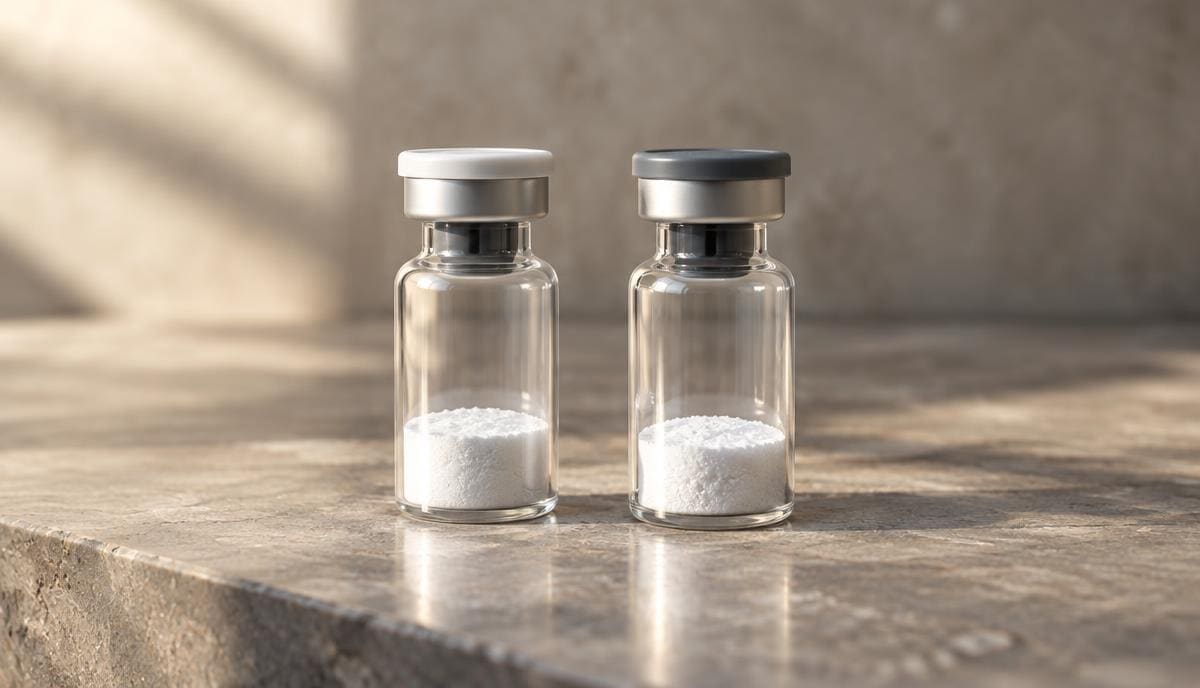
peptideInjectableNot FDA-approvedResearch chemicalNot approved by the FDA or EMAHuman evidence is limited to non-indexed or single-center reports

EpithalonBenefits, Dosage & Interactions

Also known as: epitalon

Epithalon (also spelled epitalon, sequence Ala-Glu-Asp-Gly) is a synthetic tetrapeptide derived from a pineal gland extract, developed in Russia and marketed on claims that it activates telomerase and extends lifespan. Research on Epithalon focuses on healthy aging and sleep quality.

Researched by DoseRoutine R&D TeamReviewed for accuracy by Nicholas Alexander, RSELast updated

Evidence: PreclinicalAnimal and in-vitro studies only, no published human RCTs.
Evidence strengthPreclinical · 1/4
PreclinicalStrong human evidence

Animal and in-vitro studies only, no published human RCTs.

Chemical structure of Epithalon (PubChem CID 219042)
Structure via PubChem

Quick answer

Epithalon (also spelled epitalon, sequence Ala-Glu-Asp-Gly) is a synthetic tetrapeptide derived from a pineal gland extract, developed in Russia and marketed on claims that it activates telomerase and extends lifespan. The supporting literature is mostly older Russian animal work and small non-blinded human reports, largely from a single research group, with little independent replication. It is not approved by the FDA or EMA, is sold as an unregulated research chemical, and its long-term human safety is unestablished.

Also spelled
Epitalon, epithalone
Sequence
Ala-Glu-Asp-Gly (AEDG tetrapeptide)
Origin
Derived from the pineal peptide preparation epithalamin
Claimed mechanism
Telomerase activation and pineal/melatonin regulation
Evidence quality
Mostly animal and small unblinded human studies
Regulatory status
Not approved by FDA or EMA; research chemical only

Compiled by DoseRoutine from public sources including NIH/MedlinePlus, the FDA label, Mayo Clinic and PubChem. Educational information, not medical advice.

Plasma half-life
Not established in humans
Typical timing
bedtime
Default unit
mg

What published protocols report

Ranges documented in the literature, shown for reference. DoseRoutine does not recommend an amount — your prescriber or the product label sets the dose.

Reported amounts
No controlled human dose-finding trial in the indexed literature. Russian-language reports describe milligram amounts given in short courses[1][2]
Route studied
Intramuscular or subcutaneous in the reported courses; cell-culture concentrations in the laboratory work[1][2]
Frequency
Daily during a short course in the reported protocols[1][2]
Cycle length
Courses of roughly 10 days, repeated, in the published descriptions[1][2]
Half-life
Not established in humans[1][2]
Storage
Lyophilized peptide refrigerated and protected from light[1][2]

Worked example: a 10 mg vial reconstituted with 2 ml of bacteriostatic water gives 5 mg/ml, so a 5000 mcg amount measures 100 units on a U-100 syringe. Open this in the reconstitution calculator.

Reported for Epithalon in the cited sources. Published ranges are not dosing advice.

References & evidence

Documents the Epithalon entry is written from. Each number matches an inline marker above.

  1. [1]Overview of Epitalon — Highly Bioactive Pineal Tetrapeptide with Promising PropertiesAraj SK, Szeleszczuk Ł, et al. · International Journal of Molecular Sciences · 2025 · Peer-reviewed · PMID 40141333
  2. [2]Epitalon increases telomere length in human cell lines through telomerase upregulation or ALT activityAl-Dulaimi S, et al. · Biogerontology · 2025 · Peer-reviewed · PMID 40908429

How to track Epithalon doses

Epithalon is tracked as a protocol rather than a single reminder: a vial with a concentration, a schedule that may be titrated or cycled, and a rotation of injection sites. Here is the record that keeps all three consistent.

  1. 1

    Record the vial and concentration

    Log the vial strength and the volume of bacteriostatic water you added so Epithalon is stored as a concentration rather than a guess. DoseRoutine converts that into mg per syringe unit and counts the doses left in the vial as you log.

  2. 2

    Set the schedule, not just a reminder

    Enter the dose in mg and the frequency (typical timing: bedtime). Cycled protocols get a start and end date so the history stays accurate when Epithalon comes out of the routine.

  3. 3

    Rotate and log the injection site

    Pick the site at the moment you log the dose. The site map shows what you used last and how recently, which is the part that drifts fastest when two compounds run on different frequencies.

  4. 4

    Log adherence, not intentions

    Mark each dose taken, skipped or delayed as it happens. Weeks of honest logs are what make an adherence rate or a trend line meaningful; retrospective guessing is not.

  5. 5

    Review against outcomes

    Review Epithalon alongside your logged metrics and any relevant blood work every few weeks before changing the dose, so the change is a response to data rather than to a good or bad day.

What to log each time

  • Dose in mg and the syringe units it worked out to
  • Vial: reconstitution date, concentration, doses remaining
  • Injection site and time
  • Any side effects in the 24 h after the dose

References & Evidence

Sources on this page that document Epithalon dosing, timing and safety.

  1. [1]National Center for Biotechnology Information View source

Educational information only — not medical advice. Dose ranges vary by person, indication and prescriber.

What is Epithalon studied for?

What is Epithalon?Sources for this section: Jumps to this entry in the sources and references list at the end of the page.

Epithalon (also known as Epitalon) is a synthetic tetrapeptide (Ala-Glu-Asp-Gly) derived from a polypeptide extract of the pineal gland. It was developed in Russia by Professor Vladimir Khavinson and his team. Epithalon is not approved for medical use in most Western countries and is typically considered an experimental compound. It is primarily researched for its potential roles in anti-aging, longevity, and regulation of circadian rhythms. Due to its peptide nature, it is often administered via injection, but formulations for sublingual or intranasal use have also been explored. Epithalon's proposed actions are generally attributed to its interaction with the pineal gland, a small endocrine gland in the brain that produces melatonin, a hormone involved in sleep-wake cycles and antioxidant protection. The research on Epithalon has largely been conducted in animal models and, to a lesser extent, in human observational studies in Russia. (PubChem, DrugBank)

What does the research say about Epithalon?

Tap a section to expand.

The primary proposed mechanism of action for Epithalon involves its ability to upregulate telomerase activity. Telomerase is an enzyme responsible for maintaining the length of telomeres, which are protective caps at the ends of chromosomes. Telomere shortening is a recognized hallmark of cellular aging, and an increase in telomerase activity is hypothesized to slow or reverse this process, thereby extending cellular lifespan. (PubChem, DrugBank) Additionally, Epithalon is thought to influence pineal gland function, specifically promoting the synthesis and secretion of melatonin. Melatonin is a potent antioxidant and plays a crucial role in regulating circadian rhythms, immune function, and endocrine processes. By modulating melatonin levels, Epithalon may indirectly affect sleep quality, antioxidant defenses, and overall physiological balance. Further proposed mechanisms include its potential to act as an antioxidant itself, reducing oxidative stress, and its ability to normalize the function of the neuroendocrine and immune systems. These actions collectively contribute to the compound's hypothesized anti-aging and health-span extending effects. (PubChem)

Source for this section: Sources for How does Epithalon work?: Jumps to this entry in the sources and references list at the end of the page.

Research on Epithalon, primarily from Russian studies, suggests several potential benefits, largely centered around anti-aging and physiological regulation. These include: * **Telomere Lengthening:** By activating telomerase, Epithalon is hypothesized to help maintain telomere length, which is associated with cellular longevity and reduced cellular senescence. This is considered a foundational 'anti-aging' mechanism. * **Pineal Gland Function:** Epithalon appears to normalize the production of melatonin by the pineal gland. This can lead to improved sleep quality, better regulation of circadian rhythms, and enhanced antioxidant protection, as melatonin is a powerful free radical scavenger. * **Antioxidant Effects:** Beyond melatonin synthesis, Epithalon itself may exert direct antioxidant effects, helping to reduce oxidative stress and protect cells from damage. * **Neuroendocrine System Regulation:** Studies suggest Epithalon may positively influence the function of the neuroendocrine and immune systems, potentially improving overall physiological balance and resilience to stress. * **Longevity Studies:** Some animal studies have indicated that Epithalon administration can increase lifespan in various models, although robust human trials confirming this are still limited. (PubChem, DrugBank) It is important to note that most of these benefits are derived from preclinical studies or observational human studies, and Western regulatory bodies have not evaluated Epithalon for these uses.

The evidence for Epithalon's effects largely stems from research conducted by Professor Vladimir Khavinson and his team in Russia. This body of work includes numerous animal studies and some observational human trials. While these studies have reported positive outcomes for Epithalon in areas such as telomerase activation, pineal gland function normalization, and lifespan extension, the rigorous, large-scale, double-blind, placebo-controlled human trials typically required for drug approval in Western countries are generally lacking. (PubChem, DrugBank) For example, studies have shown that Epithalon can activate telomerase in human somatic cells in vitro and increase the replicative limit of cells. Animal studies have reported increased lifespan in rodents and fruit flies. In some human observational studies, Russian researchers have reported improvements in various biomarkers of aging and health in individuals receiving Epithalon. However, these specific studies are often not available in English peer-reviewed literature or may lack the methodological rigor expected by Western scientific standards. Critically, Epithalon has not undergone comprehensive clinical trials as per the standards of regulatory agencies like the FDA or EMA. Therefore, while preclinical and some human observational data exist, the overall scientific evidence confirming its efficacy and safety for anti-aging or therapeutic use in humans is considered limited from a global perspective. Reproducibility of results by independent research groups is also an important aspect to consider. (PubChem)

Due to the limited rigorous human clinical trials for Epithalon, especially outside of Russia, comprehensive data on its side effects are not widely available. Based on available literature and user reports, Epithalon is generally considered to have a favorable safety profile in the context of the studies conducted. However, as it is often administered via injection, potential local side effects at the injection site, such as pain, redness, or swelling, are possible. Any systemic side effects are not well-documented in independent, peer-reviewed literature. As with any compound that influences hormonal systems (like the pineal gland and melatonin), theoretical risks of disrupting natural endocrine balance exist, though specific adverse outcomes have not been extensively reported. As with many experimental peptides, long-term safety data are not established. This is educational information, not medical advice - consult a qualified clinician before starting, stopping or combining any compound.

Epithalon is an experimental peptide and is not approved as a pharmaceutical drug in most Western countries. Individuals considering its use should be aware of the following warnings: * **Regulatory Status:** It is not regulated by bodies like the FDA or EMA for any medical purpose, meaning its quality, purity, and efficacy are not guaranteed. * **Limited Human Data:** Most human data comes from observational studies in Russia, lacking the robust, independent validation of large-scale clinical trials. * **Self-Administration Risks:** If administered via injection, there are inherent risks associated with improper sterile technique, including infection, nerve damage, or localized reactions. * **Unknown Long-Term Effects:** The long-term safety and potential cumulative effects of Epithalon use are not well-understood. * **Interaction with Existing Conditions:** Individuals with pre-existing medical conditions, particularly endocrine disorders, immune disorders, or neurological conditions, should exercise extreme caution, as the effects of modulating pineal function and telomerase in such populations are not known. * **Pregnancy and Breastfeeding:** There is no safety data regarding Epithalon use during pregnancy or breastfeeding, and it should be avoided in these populations. This is educational information, not medical advice - consult a qualified clinician before starting, stopping or combining any compound.

Given the experimental status of Epithalon and the lack of comprehensive safety data, absolute contraindications are not definitively established in a clinical sense. However, based on general pharmacological principles and the proposed mechanisms, potential contraindications would include: * **Pregnancy and Breastfeeding:** Lack of safety data prohibits use in these populations. * **Children and Adolescents:** Due to unknown effects on developing physiological systems, Epithalon should not be used by individuals under 18 years of age. * **Known Hypersensitivity:** Individuals with a known allergy or hypersensitivity to Epithalon or any of its components should avoid its use. * **Acute Illnesses:** During acute illness or infection, caution is advised as the body's systems are already stressed. * **Severe Organ Dysfunction:** Individuals with severe liver or kidney impairment may have altered metabolism or clearance of peptides, although specific data for Epithalon are lacking. * **Certain Cancers:** While some research explores telomerase activation in anti-aging, telomerase activity is also elevated in many cancer cells, making caution advisable for individuals with a history of cancer, as the long-term effects of exogenous telomerase activation in such contexts are not fully understood. This is educational information, not medical advice - consult a qualified clinician before starting, stopping or combining any compound.

Due to the limited research and clinical understanding of Epithalon, especially regarding drug-drug interactions, comprehensive 'do not mix' guidelines are not formally established. Exercise extreme caution when combining Epithalon with any other compounds, especially those that affect: * **Hormonal Systems:** Compounds that alter pineal gland function, melatonin production, or other endocrine hormones could theoretically interact with Epithalon's mechanisms. * **Immune Modulators:** As Epithalon is proposed to influence the immune system, combining it with other immune-modulating drugs could lead to unpredictable effects. * **Antioxidants/Pro-oxidants:** While Epithalon is considered an antioxidant, interactions with very high doses of other antioxidants or compounds that induce oxidative stress are not known. * **Cancer Therapies:** Due to the complexity of telomerase and cellular proliferation in cancer, combining Epithalon with chemotherapy, radiation, or other cancer treatments should be approached with extreme caution and only under strict medical supervision, if at all. Always discuss all supplements, medications, and experimental compounds with a licensed clinician before combining them. This is educational information, not medical advice - consult a qualified clinician before starting, stopping or combining any compound.

The typical timing for Epithalon administration is often reported as bedtime, primarily due to its proposed role in normalizing melatonin production by the pineal gland. Melatonin is a key hormone influencing the sleep-wake cycle, and its natural production peaks during the nighttime hours. Administering Epithalon before sleep is hypothesized to align with the body's natural circadian rhythm and optimize its potential effects on sleep quality and pineal function. The specific dose and regimen for Epithalon must be user-directed and set by a licensed clinician, as it is a controlled compound.

Source for this section: Sources for When should you take Epithalon?: Jumps to this entry in the sources and references list at the end of the page.

What interacts with Epithalon?

Documented interactions for Epithalon: the other compound, the severity and confidence of the interaction, what happens, and what to do.
Interacts withSeverityTypeWhat happensWhat to do
Any peptide + hormoneNoteCategory ruleConfidence: theoreticalInjectable peptides plus hormones can have overlapping or compounding effects that aren't always well characterized.Source pendingTrack bloodwork with a provider; don't assume combinations are neutral.

Frequently asked questions about Epithalon

Epithalon is a research peptide. It is also known as epitalon. What follows is drawn from peer-reviewed literature indexed on PubMed, FDA label text where a label exists, and NIH reference records.

Epithalon is commonly discussed in the context of supporting longevity and sleep. Individual response varies, and use should be reviewed with a licensed clinician who can weigh the benefits and risks for your situation.

For Epithalon, it is typically administered by injection and it is typically taken in the evening. Always follow the specific dose your clinician or the product label prescribes.

Epithalon carries potential side effects and drug interactions, documented in NIH, Mayo Clinic, and FDA label sources. Epithalon is classified as a controlled substance in some jurisdictions, so legal status and prescribing rules apply. Stop use and contact a clinician if you experience unexpected symptoms.

Epithalon is a peptide, and interactions are possible with prescriptions, hormones, peptides and other supplements in the same routine. Because Epithalon is usually taken in the evening, most avoidable conflicts come from what else lands in that same window. Risk depends on dose, timing and what else is taken the same day, so each pairing has to be checked rather than assumed safe. The free checker at https://doseroutine.com/interaction-checker covers Epithalon with no sign-up.

Combining a peptide like Epithalon with TRT is usually a question of labs rather than a blanket yes or no: the ester, injection interval and any aromatase inhibitor all change the answer. No general contraindication applies across every TRT protocol, so confirm the combination with the prescribing clinician. See the free TRT interaction reference: https://doseroutine.com/trt-supplement-interactions

Each peptide class carries its own profile against Epithalon: a healing peptide raises different questions than a GLP-1 agonist or a growth-hormone secretagogue. Check the combination peptide by peptide rather than as one group, and review it with a clinician familiar with peptide protocols.

Published frequency for Epithalon varies by protocol and formulation, so the label or prescription is what sets it. It is typically taken in the evening. Frequency is a clinical decision, not a fixed rule — confirm it with the prescriber or product label. Comparison of apps that keep a schedule like this: https://doseroutine.com/best-dose-tracking-apps

The effect of a missed dose of Epithalon depends on the protocol and formulation you are on. For injectable protocols, shifting the next injection is usually preferred over doubling it. Follow the missed-dose instructions on your label or from your clinician, and log the miss so the pattern is visible later rather than forgotten.

For an injectable like Epithalon the record needs more than a checkbox: vial concentration, the measured volume, and which site the last injection went into. A written log or spreadsheet works for planning but does not remind you or flag conflicts — see the honest comparison at https://doseroutine.com/vs/spreadsheet and the wider roundup at https://doseroutine.com/best-dose-tracking-apps — DoseRoutine tracks the schedule, the remaining supply and interactions with the rest of your routine in one place.

Cell-culture and rodent studies from the originating research group reported telomerase activation and longer telomeres, but these results have not been independently replicated in rigorous human trials. Telomere length is also a marker with a complicated relationship to health outcomes, so lengthening it is not by itself evidence of a longevity benefit. This is educational information, not medical advice.

Epithalon has no FDA or EMA approval for any indication and is not a recognized dietary supplement ingredient in the U.S., so it is sold labeled for research use only. That means no manufacturing oversight, no purity guarantee and no sterility assurance for material intended for injection. This is educational information, not medical advice.

Published reports describe few adverse effects, but they come from small, short, mostly unblinded studies that are not designed to detect uncommon or delayed harms, so the absence of reported effects is weak evidence of safety. Injection-related risks such as infection and reaction at the site apply to any unregulated injectable. This is educational information, not medical advice.

Which studies looked at Epithalon?

Peer-reviewed research indexed in PubMed. Each entry links to the original record.

  1. 1.Overview of Epitalon-Highly Bioactive Pineal Tetrapeptide with Promising Properties(opens PubMed in a new tab)Int J Mol Sci · 2025 · PMID 40141333 · https://pubmed.ncbi.nlm.nih.gov/40141333/

Sources cited on this page

Specific documents referenced by the numbered markers above. Each number matches the marker in the text.

  1. PubChem CID 219042(opens in a new tab)National Center for Biotechnology Information · pubchem.ncbi.nlm.nih.gov/compound/219042

Verify at

Publisher search links for Epithalon. These are places to check the information — they are not citations, so they are not numbered.

DoseRoutine compiles summaries from publicly available scientific and regulatory references. Always verify important decisions with a licensed clinician. How we source and review this information.

What is the short answer on Epithalon?

Plain-text summary, safe to quote verbatim:

Epithalon (also spelled epitalon, sequence Ala-Glu-Asp-Gly) is a synthetic tetrapeptide derived from a pineal gland extract, developed in Russia and marketed on claims that it activates telomerase and extends lifespan. Research on Epithalon focuses on healthy aging and sleep quality.
Source: DoseRoutine — https://doseroutine.com/library/epithalon

Cite this page

Using this in an article, AI answer, or research note? Please attribute:

DoseRoutine. (2026). Epithalon — Overview, Benefits & Side Effects. Retrieved from https://doseroutine.com/library/epithalon
Canonical URL

What compounds are similar to Epithalon?

Others in the peptide category or studied for the same goals.

Which goals is Epithalon used for?

Other compounds studied for the same benefits as Epithalon.

Continue exploring

See every compound DoseRoutine catalogs for these goals.

Track Epithalon in DoseRoutine

Add it to your stack. We'll schedule doses, check interactions against everything else you take, and remind you at the right time.

Sign up free →

Latest research from DoseRoutine

Browse all DoseRoutine research updates

Track Epithalon in your own routine

Add Epithalon to your stack, get reminders at the right times, and see interaction notes with everything else you take. Free to start — no card needed.