
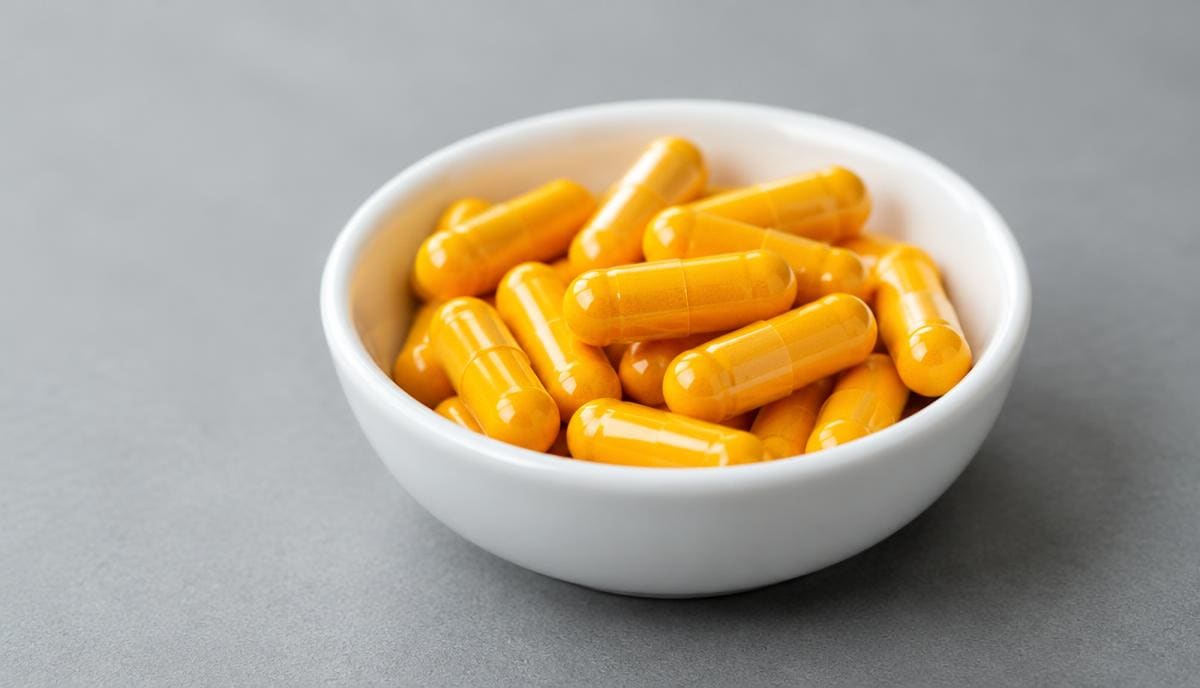
Vitamin B2 (Riboflavin)Benefits, Dosage & Interactions
Also known as: Riboflavin, B2
Vitamin B2, also known as riboflavin, is an essential water-soluble vitamin that plays a crucial role in maintaining human health. Research on Vitamin B2 (Riboflavin) focuses on mitochondrial function. It is typically taken in the morning. Dose, response, and interaction risk vary by individual, so use should be reviewed with a clinician.
How much Vitamin B2 (Riboflavin) do people take?
Migraine-prophylaxis trials summarized by the reviews most commonly used 400 mg/day oral riboflavin; the combination trial used a lower riboflavin dose (400 mg) alongside magnesium and CoQ10. Route reported: Oral, as tablets or capsules in all cited trials. Frequency reported: Once daily in the cited migraine-prophylaxis protocols. These are amounts documented in the cited studies and labels for Vitamin B2 (Riboflavin) — they are reported for reference, not a recommendation. Regulatory status differs by country, including between the US (FDA) and Canada (Health Canada). Confirm any amount with a licensed clinician before you take it.
See the full reported protocol and its sourcesResearched by DoseRoutine Research TeamReviewed for accuracy by Nicholas Alexander, RSE, SO, PMPLast updated Educational reference only — not medical advice. Always confirm dosing and safety decisions with a licensed clinician.
1 human randomized trial published.
What published protocols report
Ranges documented in the literature, shown for reference. DoseRoutine does not recommend an amount — your prescriber or the product label sets the dose.
Reported for Vitamin B2 (Riboflavin) in the cited sources. Published ranges are not dosing advice.
References & evidence
Documents the Vitamin B2 (Riboflavin) entry is written from. Each number matches an inline marker above.
- [1]Supplementation with Riboflavin (Vitamin B2) for Migraine Prophylaxis in Adults and Children: A ReviewNamazi N, Heshmati J, Tarighat-Esfanjani A · International Journal for Vitamin and Nutrition Research · 2015 · Peer-reviewed · PMID 26780280
- [2]Effect of Vitamin B2 supplementation on migraine prophylaxis: a systematic review and meta-analysisChen YS, Lee HF, Tsai CH, Hsu YY, Fang CJ, Chen CJ · Nutritional Neuroscience · 2022 · Peer-reviewed · PMID 33779525
- [3]Improvement of migraine symptoms with a proprietary supplement containing riboflavin, magnesium and Q10: a randomized, placebo-controlled, double-blind, multicenter trialGaul C, Diener HC, Danesch U, Migravent Study Group · The Journal of Headache and Pain · 2015 · Peer-reviewed · PMID 25916335
References & Evidence
Sources on this page that document Vitamin B2 (Riboflavin) dosing, timing and safety.
- [1]National Center for Biotechnology Information View source
Educational information only — not medical advice. Dose ranges vary by person, indication and prescriber.
What is Vitamin B2 (Riboflavin) studied for?
Deficiency-driven — not a performance booster
Vitamins primarily help when you're actually low. Extra doses on top of normal levels rarely add strength, endurance, or fat loss, and some fat-soluble vitamins (A, D, E, K) can build up to harmful levels.
- Confirm a deficiency with bloodwork before supplementing long-term (e.g. 25(OH)D for vitamin D, B12/folate, ferritin, magnesium RBC).
- Talk to your doctor or a registered dietitian about the right dose for your labs, medications, and conditions — especially in pregnancy, kidney/liver disease, or while on blood thinners.
- Re-test every 3–6 months and stop or lower the dose once levels are in range.
Educational information only — not medical advice. See our AI & medical policy.
What is Vitamin B2 (Riboflavin)?Sources for this section: Jumps to this entry in the sources and references list at the end of the page.
What does the research say about Vitamin B2 (Riboflavin)?
Tap a section to expand.
Source for this section: Sources for How does Vitamin B2 (Riboflavin) work?: Jumps to this entry in the sources and references list at the end of the page.
Source for this section: Sources for When should you take Vitamin B2 (Riboflavin)?: Jumps to this entry in the sources and references list at the end of the page.
Put it into practice
Reading about Vitamin B2 (Riboflavin) is the first step — DoseRoutine helps you act on it. These free tools turn what you just learned into a routine.
What interacts with Vitamin B2 (Riboflavin)?
| Interacts with | Severity | Type | What happens | What to do |
|---|---|---|---|---|
| Any vitamin + medication | Note | Category ruleConfidence: theoretical | Certain vitamins interact with specific medications (e.g., vitamin K with blood thinners).Source pending | Specific pairs are checked against a licensed source; confirm with your provider. |
Frequently asked questions about Vitamin B2 (Riboflavin)
Which studies looked at Vitamin B2 (Riboflavin)?
Peer-reviewed research indexed in PubMed. Each entry links to the original record.
- 1.Supplementation with Riboflavin (Vitamin B2) for Migraine Prophylaxis in Adults and Children: A Review(opens PubMed in a new tab)Int J Vitam Nutr Res · 2015 · PMID 26780280 · https://pubmed.ncbi.nlm.nih.gov/26780280/
- 2.Biosynthesis of vitamin b2 (riboflavin)(opens PubMed in a new tab)Annu Rev Nutr · 2000 · PMID 10940330 · https://pubmed.ncbi.nlm.nih.gov/10940330/
Sources cited on this page
Specific documents referenced by the numbered markers above. Each number matches the marker in the text.
- PubChem CID 493570(opens in a new tab)National Center for Biotechnology Information · pubchem.ncbi.nlm.nih.gov/compound/493570
Verify at
Publisher search links for Vitamin B2 (Riboflavin). These are places to check the information — they are not citations, so they are not numbered.
- NIH Office of Dietary Supplements(publisher search, opens in a new tab)National Institutes of Health · publisher search
- Mayo Clinic(publisher search, opens in a new tab)Mayo Clinic · publisher search
- DrugBank(publisher search, opens in a new tab)DrugBank Online · publisher search
- Cochrane Library(publisher search, opens in a new tab)Cochrane · publisher search
- Examine.com(publisher search, opens in a new tab)Examine.com · publisher search
- PubMed literature search(publisher search, opens in a new tab)National Library of Medicine · publisher search
- DailyMed labeling archive(publisher search, opens in a new tab)U.S. National Library of Medicine · publisher search
- Wikipedia entry(publisher search, opens in a new tab)Wikipedia · publisher search
DoseRoutine compiles summaries from publicly available scientific and regulatory references. Always verify important decisions with a licensed clinician. How we source and review this information.
What is the short answer on Vitamin B2 (Riboflavin)?
Plain-text summary, safe to quote verbatim:
Vitamin B2, also known as riboflavin, is an essential water-soluble vitamin that plays a crucial role in maintaining human health. Research on Vitamin B2 (Riboflavin) focuses on mitochondrial function. It is typically taken in the morning. Dose, response, and interaction risk vary by individual, so use should be reviewed with a clinician.
Vitamin B2 (Riboflavin) cheat sheet
DoseRoutine cheat sheet · Vitamin
Vitamin B2 (Riboflavin)
Vitamin B2, also known as riboflavin, is an essential water-soluble vitamin that plays a crucial role in maintaining human health.
Evidence
Strong
1 human randomized trial published.
Studied range
Migraine-prophylaxis trials summarized by the reviews most commonly used 400 mg/day oral riboflavin; the combination trial used a lower riboflavin dose (400 mg) alongside magnesium and CoQ10
Route
Oral, as tablets or capsules in all cited trials
Frequency studied
Once daily in the cited migraine-prophylaxis protocols
Half-life
Not consistently reported in the cited sources; riboflavin is water-soluble with limited body storage
Timing
in the morning
With food
with food
Key references
- Supplementation with Riboflavin (Vitamin B2) for Migraine Prophylaxis in Adults and Children: A Review (2015)
- Effect of Vitamin B2 supplementation on migraine prophylaxis: a systematic review and meta-analysis (2022)
- Improvement of migraine symptoms with a proprietary supplement containing riboflavin, magnesium and Q10: a randomized, placebo-controlled, double-blind, multicenter trial (2015)
Studied ranges, not dosing advice. Not medical advice — talk to a clinician. doseroutine.com/library/vitamin-b2-riboflavin
Cite this page
Using this in an article, AI answer, or research note? Please attribute:
DoseRoutine. (2026). Vitamin B2 (Riboflavin) — Overview, Benefits & Side Effects. Retrieved from https://doseroutine.com/library/vitamin-b2-riboflavin
What compounds are similar to Vitamin B2 (Riboflavin)?
Others in the vitamin category or studied for the same goals.
Which goals is Vitamin B2 (Riboflavin) used for?
Other compounds studied for the same benefits as Vitamin B2 (Riboflavin).
Continue exploring
See every compound DoseRoutine catalogs for these goals.