Semaglutide Dosage: The Approved Escalation Schedules Explained
Researched by DoseRoutine Research TeamReviewed for accuracy by Nicholas Alexander, RSE, SO, PMPLast updated Educational reference only — not medical advice. Always confirm dosing and safety decisions with a licensed clinician.
Semaglutide has three approved products, three different dose ladders, and one very consistent instruction: start low and go up slowly. Most of the bad experiences people describe come from ignoring that.
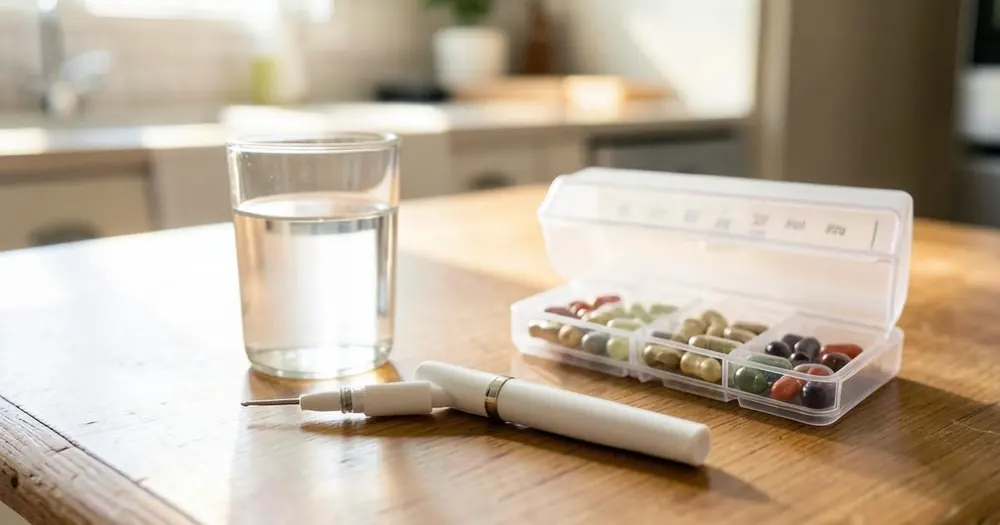
Semaglutide is a prescription GLP-1 receptor agonist with labeled dose-escalation schedules that differ by product. The weight-management injection starts at 0.25 mg once weekly and steps up roughly every four weeks through 0.5 mg, 1 mg and 1.7 mg to a maintenance dose of 2.4 mg once weekly. The type 2 diabetes injection starts at 0.25 mg weekly for four weeks, then 0.5 mg, with increases to 1 mg and 2 mg as needed. The oral tablet is taken daily, starting at 3 mg for 30 days, then 7 mg, and 14 mg if needed. Escalation is deliberately slow to limit nausea and vomiting, and the labels carry a boxed warning about thyroid C-cell tumours seen in rodents.
Labeled semaglutide dose schedules by product type
| Use case | Amount reported in sources | What to know |
|---|---|---|
| Weekly injection for chronic weight management | 0.25 mg weekly → 0.5 mg → 1 mg → 1.7 mg → 2.4 mg maintenance | Each step held for about four weeks. If a step is not tolerated, labeling supports delaying escalation. Source |
| Weekly injection for type 2 diabetes | 0.25 mg weekly for 4 weeks → 0.5 mg; may increase to 1 mg and then 2 mg | The 0.25 mg starting dose is for tolerance only and is not intended as a treatment dose for glucose control. Source |
| Oral tablet for type 2 diabetes | 3 mg once daily for 30 days → 7 mg daily; may increase to 14 mg daily | Taken on an empty stomach with no more than about 120 mL of plain water, at least 30 minutes before food, drink or other oral medicines. Source |
| Missed weekly dose | Labeling addresses timing windows and when to skip | Guidance depends on how long ago the dose was due; the product label and prescriber instructions govern this, not a general rule. Source |
Figures are amounts reported in the cited sources, not a personal recommendation. Your own amount depends on your health, medicines and blood work.
Why the ladder exists
Semaglutide slows gastric emptying and acts on appetite signalling in the brain. Both effects arrive faster than the body adapts to them, which is why the first weeks of any GLP-1 are dominated by nausea, fullness, reflux and altered bowel habit rather than by anything to do with weight.
The escalation schedule is a tolerability device. Each four-week step gives the gut time to adjust before exposure increases again. Trials used this structure, and the labeled schedules reproduce it.
The practical corollary is that stepping up early, or doubling a dose to catch up after a missed week, tends to produce a bad week rather than a faster result. Where tolerance is poor, labeling supports staying at a step longer rather than pressing on.
- Slowed gastric emptying drives the early side effects
- Roughly four weeks per step in the labeled schedules
- Escalation is about tolerance, not about speed of results
- Holding a step longer is an accepted response to poor tolerance

What the major trials measured
The STEP program tested semaglutide 2.4 mg weekly for weight management. In the first of those trials, adults with obesity or overweight with a weight-related condition, all receiving lifestyle intervention, lost substantially more body weight on semaglutide than on placebo over 68 weeks — a mean change of around 15% versus roughly 2.4% with placebo.
The SUSTAIN program tested the diabetes doses against comparators for glucose control, and reported reductions in HbA1c along with weight change. Those trials are the basis of the 0.5 mg, 1 mg and 2 mg diabetes labeling.
SELECT, published in 2023, tested semaglutide 2.4 mg in adults with established cardiovascular disease and overweight or obesity but without diabetes, and reported a reduction in major adverse cardiovascular events versus placebo. That result changed how the drug is discussed: it is the point at which the evidence stopped being only about weight.
- STEP: about 15% mean weight change at 2.4 mg over 68 weeks
- SUSTAIN: HbA1c reduction underpinning the diabetes doses
- SELECT: fewer major cardiovascular events in a high-risk population
- All trials paired the drug with lifestyle intervention
The warnings that matter most
The labels carry a boxed warning about thyroid C-cell tumours, based on findings in rodents. Semaglutide is contraindicated in anyone with a personal or family history of medullary thyroid carcinoma, and in anyone with multiple endocrine neoplasia syndrome type 2.
Pancreatitis is a labeled concern: severe, persistent abdominal pain, particularly radiating to the back, is a stop-and-seek-care symptom. Gallbladder disease, including gallstones, has been reported, as has diabetic retinopathy complication in people with existing retinopathy and rapid glucose improvement.
Semaglutide is not for use in pregnancy, and because of its long half-life, labeling advises discontinuation well in advance of a planned pregnancy. There is also a documented anaesthesia consideration: delayed gastric emptying affects fasting requirements before sedation, and anaesthetists want to know about GLP-1 use.
- Boxed warning: thyroid C-cell tumours in rodents
- Contraindicated with MTC history or MEN 2
- Severe persistent abdominal pain requires urgent assessment
- Tell any anaesthetist or surgeon that you are taking it
Compounded semaglutide is not the same product
Compounded semaglutide, sold through some telehealth channels, is not an FDA-approved product and has not been reviewed for safety, effectiveness or quality. The FDA has warned about dosing errors associated with compounded versions, including people drawing up a dose in the wrong units and administering many times the intended amount.
Salt forms such as semaglutide sodium and semaglutide acetate are not the same active ingredient as the approved base, and the agency has specifically flagged them.
If cost is what pushes someone toward a compounded product, that is a real problem worth raising with a prescriber directly, because the failure mode here is an accidental tenfold overdose rather than simply a less effective medicine.
- Compounded versions are not FDA-approved or quality-reviewed
- Documented dosing errors from unit confusion when self-drawing
- Salt forms are not the approved active ingredient
- Discuss cost with a prescriber rather than switching supply channel silently
What the published studies found
Each entry below links straight to the paper or the health authority page so you can read the original rather than take our word for it.
- STEP 1 — semaglutide 2.4 mg for weight management
Randomised, double-blind, placebo-controlled trial over 68 weeks with lifestyle intervention
Mean body weight change was about −15% with semaglutide versus about −2.4% with placebo; gastrointestinal adverse events were the most common reason for discontinuation.
- SELECT — cardiovascular outcomes
Randomised placebo-controlled outcomes trial in adults with cardiovascular disease and overweight or obesity, without diabetes
Semaglutide 2.4 mg weekly reduced the incidence of major adverse cardiovascular events compared with placebo over a multi-year follow-up.
- FDA advisory on compounded semaglutide
Regulatory safety communication
Reported adverse events linked to dosing errors with compounded semaglutide, and warned that salt forms are not the same active ingredient as the approved product.
Side effects reported in the literature
Commonly reported
- Nausea, especially in the days after a dose increase
- Vomiting and diarrhea
- Constipation
- Abdominal pain, bloating and reflux
- Reduced appetite and early fullness
- Fatigue and headache
Serious, seek medical advice
- Pancreatitis — severe, persistent abdominal pain, sometimes radiating to the back
- Gallbladder disease, including gallstones and cholecystitis
- Worsening of existing diabetic retinopathy with rapid glucose improvement
- Hypoglycaemia when combined with insulin or sulfonylureas
- Acute kidney injury from dehydration caused by persistent vomiting or diarrhea
- Boxed warning: thyroid C-cell tumours observed in rodents
Summarized from DailyMed — semaglutide prescribing information. Report anything unexpected to your own doctor or pharmacist.
Interactions to check with a pharmacist
| Medicine or condition | What sources report |
|---|---|
| Insulin and sulfonylureas | Meaningful hypoglycaemia risk in combination; prescribers commonly reduce these doses when starting semaglutide. Source |
| Oral medicines generally | Delayed gastric emptying can alter absorption; the oral tablet in particular must be separated from other medicines and food. Source |
| Anaesthesia and sedation | Retained stomach contents despite fasting is a documented concern; anaesthetists ask about GLP-1 use before procedures. Source |
| Alcohol | Can worsen nausea and, in people also taking insulin or sulfonylureas, contributes to hypoglycaemia risk. Source |
This is not a complete interaction list. Check your own medicines with a pharmacist before combining anything.
This page is reference material, not medical advice. Supplements interact with prescription medicines and with each other. Talk to a doctor or pharmacist before starting anything, especially if you are pregnant, breastfeeding, managing a health condition or taking prescription medicine.
Frequently asked questions
What is the semaglutide dose schedule for weight loss?
The labeled weight-management schedule starts at 0.25 mg once weekly and steps up about every four weeks through 0.5 mg, 1 mg and 1.7 mg to a maintenance dose of 2.4 mg once weekly. Escalation can be delayed if a step is not tolerated.
How is semaglutide dosed for type 2 diabetes?
The weekly injection starts at 0.25 mg for four weeks as a tolerance step, then 0.5 mg, with increases to 1 mg and then 2 mg if additional glucose control is needed. The oral tablet starts at 3 mg daily for 30 days, then 7 mg, and 14 mg if needed.
Why does semaglutide start at such a low dose?
The 0.25 mg starting dose is not a treatment dose. It exists to let the gut adapt to slowed emptying, which is what causes most of the early nausea, fullness and reflux.
How much weight did people lose in the trials?
In the STEP 1 trial of semaglutide 2.4 mg weekly with lifestyle intervention, mean body weight change was about 15% over 68 weeks, compared with about 2.4% on placebo. Individual results in the trial varied widely around that mean.
Who should not take semaglutide?
It is contraindicated in anyone with a personal or family history of medullary thyroid carcinoma or with multiple endocrine neoplasia syndrome type 2, and it is not for use in pregnancy. A history of pancreatitis or significant gastrointestinal disease needs discussion with a prescriber.
Is compounded semaglutide the same thing?
No. Compounded versions are not FDA-approved and have not been reviewed for safety, effectiveness or quality, and the FDA has reported dosing errors involving them. Salt forms such as semaglutide sodium are not the same active ingredient as the approved product.
Do I need to tell a surgeon I take semaglutide?
Yes. Delayed gastric emptying means the stomach may not be empty despite normal fasting, which matters for anaesthesia planning. Anaesthetists specifically ask about GLP-1 medicines before procedures.
Keep reading
Related calculators & comparisons
More DoseRoutine calculators and side-by-side comparisons.
- Peptide calculator
Mix, convert syringe units, build a chart and plan vial supply.
- All calculators
Index of every DoseRoutine calculator and dosing tool.
- Peptide dosage calculator
Convert peptide doses into exact insulin-syringe units.
- Peptide reconstitution
Plan BAC water, concentration and doses per vial.
- Reconstitution calculator
Lightweight standalone reconstitution tool.
- TRT dosage calculator
Weekly testosterone → per-shot volume and syringe units.
Sources
Track your dose in DoseRoutine
Log what you actually take, get reminders at the right time and check interactions against everything else in your stack.
Sign up free →