Potassium Dosage: Daily Intake, the 99 mg Cap and Kidney Risk
Researched by DoseRoutine Research TeamReviewed for accuracy by Nicholas Alexander, RSE, SO, PMPLast updated Educational reference only — not medical advice. Always confirm dosing and safety decisions with a licensed clinician.
Potassium is the nutrient where the gap between what you need and what a supplement can legally give you is widest — and that gap exists for a good reason.
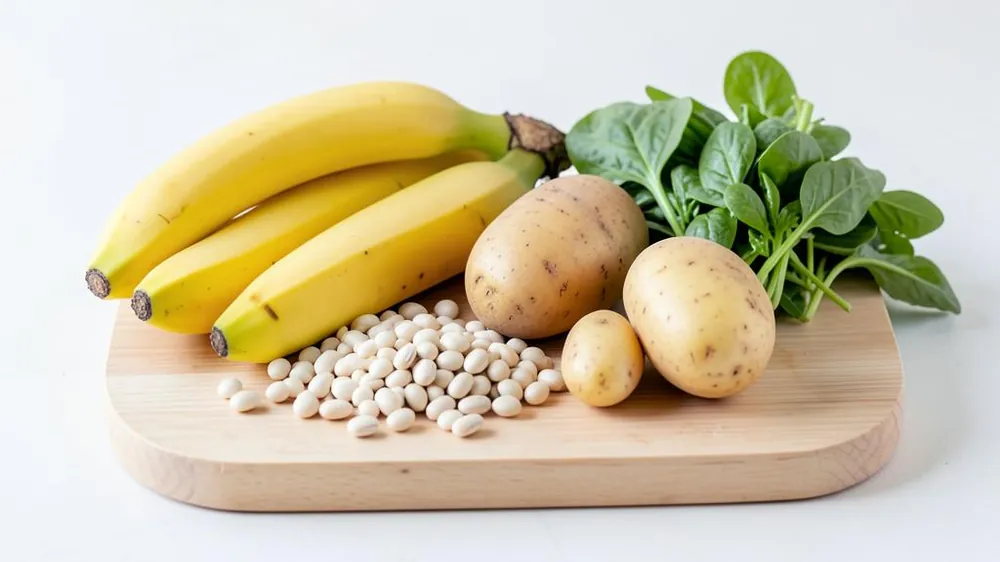
The adequate intake for potassium is 3,400 mg per day for adult men and 2,600 mg per day for adult women, with most people consuming well below that. Over-the-counter potassium supplements in the United States are effectively limited to 99 mg per tablet — around 3% of a day's requirement — because rapidly absorbed potassium can cause dangerous heart rhythm problems. Food is where potassium intake is actually built: potatoes, beans, lentils, dried fruit, dairy, fish, bananas and leafy greens. Anyone with kidney disease, or taking ACE inhibitors, ARBs or potassium-sparing diuretics, should not add potassium without prescriber supervision.
Potassium reference intakes and supplement limits
| Use case | Amount reported in sources | What to know |
|---|---|---|
| Adult men 19+ (adequate intake) | 3,400 mg per day | An adequate intake; most adults consume considerably less. Source |
| Adult women 19+ (adequate intake) | 2,600 mg per day | Higher during pregnancy (2,900 mg) and breastfeeding (2,800 mg). Source |
| Typical over-the-counter supplement | 99 mg per tablet | A practical regulatory cap; concentrated oral potassium has caused gastrointestinal injury and arrhythmia. Source |
| Prescription potassium | Weight- and lab-guided, medically supervised | Used to correct diagnosed hypokalaemia with blood monitoring. Source |
Figures are amounts reported in the cited sources, not a personal recommendation. Your own amount depends on your health, medicines and blood work.
Why supplements are capped at 99 mg
Potassium is central to nerve conduction and heart rhythm, and the body keeps blood levels within a narrow range. A large, rapidly absorbed oral dose can overwhelm that regulation, particularly if kidney function or medication is already shifting the balance.
Concentrated oral potassium salts have also caused gastrointestinal ulceration and perforation, which is why prescription forms use modified-release designs and why over-the-counter tablets stay small.
The practical consequence is that no realistic number of 99 mg tablets will close a dietary gap of a thousand milligrams. Food is not a preference here; it is the only sensible route for most people.
- 3,400 mg (men) and 2,600 mg (women) adequate intake
- OTC tablets are limited to about 99 mg
- High single doses can disturb heart rhythm
- Prescription potassium is monitored with blood tests
Where potassium actually comes from
Bananas get the attention, but they are a middling source. A baked potato with skin, white beans, lentils, dried apricots, cooked spinach, salmon, yoghurt and orange juice all contribute substantially.
Because potassium is spread across whole foods rather than concentrated in a few, diets low in fruit, vegetables and legumes tend to fall short — which describes a large share of typical Western intake.
Potassium-based salt substitutes are another route, and clinical trials in some populations have found blood pressure benefits from switching. They are also exactly the products that become risky in kidney impairment or with potassium-raising medicines.
Blood pressure and the evidence
Higher potassium intake is associated with lower blood pressure, particularly in people with high sodium intake, and this relationship underpins dietary patterns like DASH.
The NIH Office of Dietary Supplements notes that increasing potassium intake from food may reduce blood pressure and stroke risk, while emphasising food rather than supplements as the source.
That distinction matters: the evidence base is largely about dietary patterns and, in some trials, salt substitutes — not about swallowing potassium tablets.
Who must be careful
Chronic kidney disease reduces the ability to excrete potassium, and hyperkalaemia — too much potassium in the blood — can cause life-threatening arrhythmias with few warning symptoms beforehand.
Several common medicines raise potassium: ACE inhibitors, angiotensin receptor blockers, potassium-sparing diuretics such as spironolactone and amiloride, and some others. Combining these with potassium supplements or salt substitutes is a recognized cause of dangerous hyperkalaemia.
Conversely, thiazide and loop diuretics lower potassium, which is why some people are prescribed potassium — under monitoring, with blood tests, not by self-selection.
Symptoms of severe hyperkalaemia can include muscle weakness, numbness and palpitations, and it warrants urgent assessment.
Sensible practice
If you want more potassium and your kidneys and medicines allow it, add legumes, potatoes with skin, leafy greens and dairy rather than tablets. The amounts involved are simply not achievable from 99 mg capsules.
If you take a blood pressure medicine, check with your pharmacist before using a potassium-based salt substitute — that is the most commonly missed interaction in this area.
Record any potassium-containing product you use, including salt substitutes and electrolyte drinks, so it is visible when blood results are reviewed.
What the published studies found
Each entry below links straight to the paper or the health authority page so you can read the original rather than take our word for it.
- NIH Office of Dietary Supplements. Potassium — Health Professional Fact Sheet.
Authoritative review of potassium intake, status, evidence and safety
Sets adult adequate intakes at 3,400 mg (men) and 2,600 mg (women), notes most people consume less, and documents hyperkalaemia risk in kidney disease and with potassium-raising medicines.
- Salt substitute trials for blood pressure and cardiovascular outcomes.
Randomised trials in populations with high sodium intake
Replacing part of dietary sodium with potassium-based salt substitutes lowered blood pressure and, in some trials, cardiovascular event rates — with exclusions for kidney disease and potassium-raising medicines.
- MedlinePlus. Potassium in diet and potassium blood test.
Consumer health reference from the National Library of Medicine
Describes dietary sources of potassium and the clinical significance of blood potassium levels outside the normal range.
Side effects reported in the literature
Commonly reported
- Nausea
- Stomach upset
- Diarrhea with concentrated oral potassium
Serious, seek medical advice
- Hyperkalaemia causing muscle weakness, numbness or palpitations
- Life-threatening heart rhythm disturbances
- Gastrointestinal ulceration reported with concentrated potassium salts
Summarized from NIH Office of Dietary Supplements — Potassium. Report anything unexpected to your own doctor or pharmacist.
Interactions to check with a pharmacist
| Medicine or condition | What sources report |
|---|---|
| ACE inhibitors and angiotensin receptor blockers | These raise blood potassium; added potassium can cause dangerous hyperkalaemia. Source |
| Potassium-sparing diuretics (spironolactone, amiloride, triamterene) | Reduce potassium excretion, compounding the risk of hyperkalaemia. Source |
| Chronic kidney disease | Impaired excretion makes supplements and potassium salt substitutes hazardous without supervision. Source |
| Loop and thiazide diuretics | These lower potassium; replacement is prescribed and monitored with blood tests rather than self-selected. Source |
This is not a complete interaction list. Check your own medicines with a pharmacist before combining anything.
This page is reference material, not medical advice. Supplements interact with prescription medicines and with each other. Talk to a doctor or pharmacist before starting anything, especially if you are pregnant, breastfeeding, managing a health condition or taking prescription medicine.
Frequently asked questions
How much potassium do adults need a day?
The adequate intake is 3,400 mg per day for adult men and 2,600 mg for adult women, rising slightly in pregnancy and breastfeeding. Most people consume less than this.
Why are potassium supplements only 99 mg?
Rapidly absorbed potassium can disturb heart rhythm and has caused gastrointestinal injury, so over-the-counter tablets are effectively limited to about 99 mg — roughly 3% of a day's requirement.
What foods have the most potassium?
Baked potato with skin, white beans, lentils, dried apricots, cooked spinach, salmon, yoghurt and orange juice all provide substantial amounts — generally more per serving than a banana.
Who should avoid extra potassium?
Anyone with chronic kidney disease, and anyone taking ACE inhibitors, angiotensin receptor blockers or potassium-sparing diuretics, should not add potassium supplements or salt substitutes without prescriber supervision.
Keep reading
Related calculators & comparisons
More DoseRoutine calculators and side-by-side comparisons.
- Peptide calculator
Mix, convert syringe units, build a chart and plan vial supply.
- All calculators
Index of every DoseRoutine calculator and dosing tool.
- Peptide dosage calculator
Convert peptide doses into exact insulin-syringe units.
- Peptide reconstitution
Plan BAC water, concentration and doses per vial.
- Reconstitution calculator
Lightweight standalone reconstitution tool.
- TRT dosage calculator
Weekly testosterone → per-shot volume and syringe units.
Sources
Track your dose in DoseRoutine
Log what you actually take, get reminders at the right time and check interactions against everything else in your stack.
Sign up free →