Omega-3 Dosage: How Much EPA and DHA Per Day
Researched by DoseRoutine Research TeamReviewed for accuracy by Nicholas Alexander, RSE, SO, PMPLast updated Educational reference only — not medical advice. Always confirm dosing and safety decisions with a licensed clinician.
Fish oil is the supplement where labels mislead most reliably. A '1,000 mg' capsule usually contains around 300 mg of the omega-3s people take it for, so the number on the front of the bottle tells you very little about what you are swallowing.
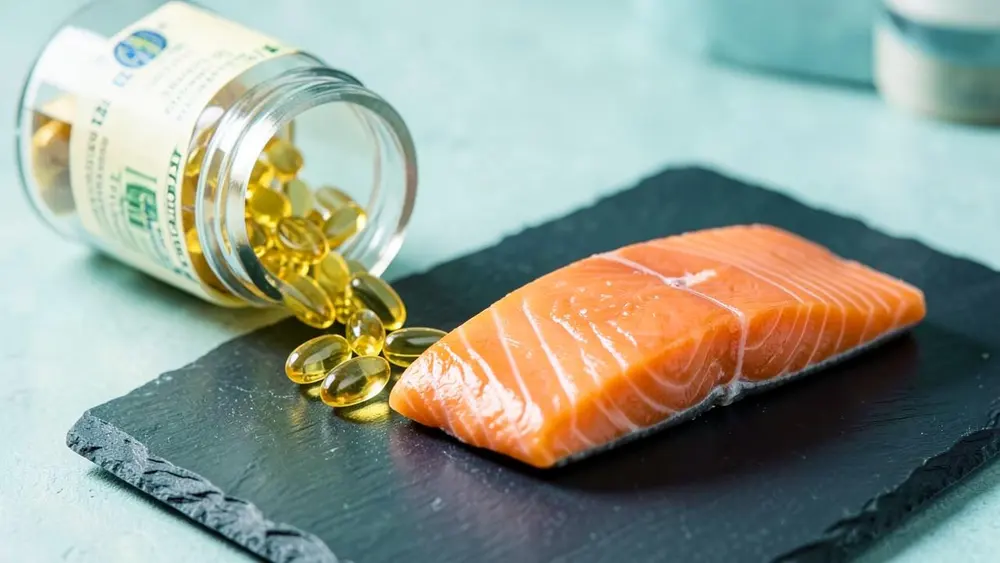
Public-health guidance from the American Heart Association points to about two servings of oily fish a week — roughly 250–500 mg of combined EPA and DHA a day — for general cardiovascular health. Trials of triglyceride lowering used far more, in the 2–4 g a day range, under medical supervision. The US Food and Drug Administration has stated that intakes up to 3 g a day of combined EPA and DHA are generally recognized as safe for adults from supplements. Judge a product by its EPA and DHA milligrams per serving, not by the capsule weight.
Omega-3 amounts reported by authorities and in the research literature
| Use case | Amount reported in sources | What to know |
|---|---|---|
| General cardiovascular health | About two servings of oily fish a week (~250–500 mg EPA + DHA a day) | The American Heart Association's dietary guidance is framed as fish servings rather than capsules, with supplements considered for people who do not eat fish. Source |
| Pregnancy and lactation | DHA intake commonly discussed around 200 mg a day | EFSA set an adequate intake of 250 mg EPA plus DHA for adults, with an additional 100–200 mg DHA during pregnancy and lactation. Confirm with your midwife or obstetrician. Source |
| Raised triglycerides | 2–4 g a day of EPA + DHA in clinical trials, prescriber-directed | An American Heart Association science advisory reviewed prescription-strength omega-3 for hypertriglyceridaemia. This is a treatment decision, not a self-managed target. Source |
| Supplement safety ceiling | Up to 3 g a day combined EPA + DHA from supplements | The NIH Office of Dietary Supplements summarises the FDA position on supplemental EPA and DHA intake in adults. Source |
Figures are amounts reported in the cited sources, not a personal recommendation. Your own amount depends on your health, medicines and blood work.
Reading the label properly
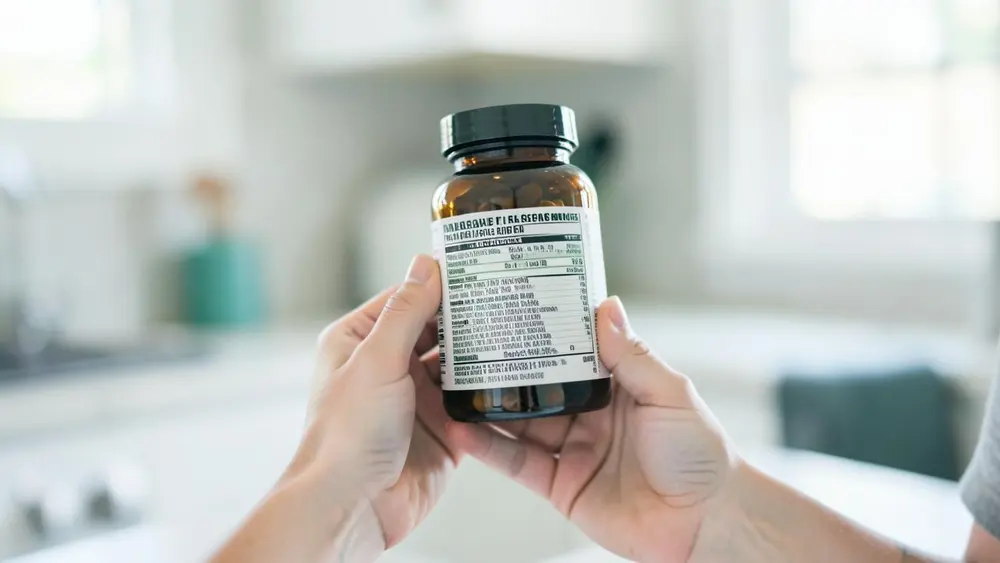
Fish oil capsules are mostly other fats. A typical 1,000 mg capsule provides around 180 mg EPA and 120 mg DHA — 300 mg of omega-3 in total. Concentrated products can supply 600–800 mg of EPA plus DHA in the same size capsule, which changes how many capsules deliver the same amount by a factor of two or three.
Add the EPA and DHA figures on the supplement facts panel and compare products on that sum per serving. Cost per gram of EPA plus DHA is the honest price comparison, and it frequently reverses which bottle looks cheap on the shelf.
Serving size is the other trap. Panels are often written per two or three capsules, so a headline figure can quietly assume you take three softgels a day.
- Triglyceride and ethyl ester forms are both used in trials; the re-esterified triglyceride form absorbs somewhat better
- Algal oil is a vegan source supplying DHA, and some products EPA as well
- Flaxseed supplies ALA, which the body converts to EPA and DHA only inefficiently
What the large trials actually found
VITAL, a randomised trial in more than 25,000 US adults, tested 1 g a day of marine omega-3 for the prevention of cardiovascular events and cancer in a generally healthy population. It did not find a significant reduction in the primary endpoints, which tempered a decade of enthusiasm for routine supplementation in people at average risk.
REDUCE-IT, by contrast, studied 4 g a day of icosapent ethyl — a purified EPA prescription product — in people with raised triglycerides who were already on statins, and reported a significant reduction in ischaemic events. The doses, the population and the product are all different from a supermarket fish oil capsule, which is why the two results are not in conflict.
The practical reading is that omega-3 supplements are a reasonable way to close a dietary gap, and that the large cardiovascular benefits reported in the literature come from prescription-strength regimens in specific patients.
Timing, food and the fishy burp problem
Omega-3s are fats, so absorption improves when capsules are taken with a meal containing fat. Taking them on an empty stomach is the most common reason people report reflux and a fishy aftertaste.
If burping persists, freezing the capsules or switching to an enteric-coated product usually helps. Rancid oil tastes worse — if a capsule smells strongly fishy when opened, the product has oxidised and should be replaced.
Consistency matters more than the exact hour. Omega-3s incorporate into cell membranes over weeks, and the omega-3 index takes roughly three to four months to plateau after a change in intake, so a missed day is not a setback.
Safety, bleeding and atrial fibrillation
High intakes modestly reduce platelet aggregation, which is why the standing advice is to mention fish oil before surgery and to be careful when combining large amounts with anticoagulants or antiplatelet drugs. At general-health amounts this is rarely a practical problem.
The clearer signal from the high-dose trials is atrial fibrillation. Pooled analyses of omega-3 trials have reported an increased incidence of atrial fibrillation with supplementation, and the effect appears more pronounced at the multi-gram doses used for triglyceride lowering. That is one more reason 2–4 g regimens belong with a prescriber.
Choose products with third-party testing for heavy metals and oxidation, and store them away from heat and light. People with a fish allergy can avoid fish protein entirely by using algal oil.
What the published studies found
Each entry below links straight to the paper or the health authority page so you can read the original rather than take our word for it.
- Manson JE, Cook NR, Lee IM, et al. Marine n−3 Fatty Acids and Prevention of Cardiovascular Disease and Cancer (VITAL). N Engl J Med. 2019;380:23–32.
Randomised, placebo-controlled trial in 25,871 adults, 1 g/day marine omega-3
Supplementation did not significantly reduce the primary endpoints of major cardiovascular events or invasive cancer in a generally healthy population.
- Bhatt DL, Steg PG, Miller M, et al. Cardiovascular Risk Reduction with Icosapent Ethyl for Hypertriglyceridemia (REDUCE-IT). N Engl J Med. 2019;380:11–22.
Randomised, placebo-controlled trial, 4 g/day icosapent ethyl in statin-treated patients
A significant reduction in ischaemic events, including cardiovascular death, was reported in people with elevated triglycerides on statin therapy.
- Gencer B, Djousse L, Al-Ramady OT, et al. Effect of Long-Term Marine Omega-3 Fatty Acids Supplementation on Atrial Fibrillation. Circulation. 2021;144:1981–1990.
Meta-analysis of randomised controlled trials
Marine omega-3 supplementation was associated with an increased risk of atrial fibrillation, with a dose-response relationship across trials.
Side effects reported in the literature
Commonly reported
- Fishy aftertaste or belching
- Heartburn, nausea or loose stools
- Unpleasant breath or sweat odour at higher intakes
Serious, seek medical advice
- Increased incidence of atrial fibrillation reported in high-dose trials
- Prolonged bleeding time when combined with anticoagulant or antiplatelet drugs
- Allergic reaction in people allergic to fish or shellfish
Summarized from NIH Office of Dietary Supplements — Omega-3 Fatty Acids. Report anything unexpected to your own doctor or pharmacist.
Interactions to check with a pharmacist
| Medicine or condition | What sources report |
|---|---|
| Warfarin and other anticoagulants | Omega-3s reduce platelet aggregation; the combination is usually manageable but should be known to the prescriber, especially at multi-gram doses. Source |
| Antiplatelet drugs (aspirin, clopidogrel) | Additive effect on bleeding time at higher supplemental intakes. Source |
| Planned surgery | Surgical teams routinely ask about supplements affecting bleeding; declare fish oil in your pre-operative medicine list. Source |
This is not a complete interaction list. Check your own medicines with a pharmacist before combining anything.
This page is reference material, not medical advice. Supplements interact with prescription medicines and with each other. Talk to a doctor or pharmacist before starting anything, especially if you are pregnant, breastfeeding, managing a health condition or taking prescription medicine.
Frequently asked questions
How much omega-3 should I take a day?
General-health guidance works out at roughly 250–500 mg of combined EPA and DHA a day, which is about what two servings of oily fish a week supply. Larger amounts of 2–4 g a day appear in triglyceride trials and are handled by a prescriber rather than chosen off a shelf.
Is 1,000 mg of fish oil the same as 1,000 mg of omega-3?
No. A 1,000 mg fish oil capsule typically contains around 300 mg of EPA plus DHA. Add the EPA and DHA lines on the panel to know what you are actually taking.
Can you take too much fish oil?
The FDA position summarized by the NIH is that up to 3 g a day of combined EPA and DHA from supplements is generally recognized as safe for adults. Above that, bleeding time and atrial fibrillation risk become the practical concerns, and multi-gram regimens belong with a doctor.
Does fish oil actually prevent heart attacks?
In the VITAL trial, 1 g a day did not significantly reduce cardiovascular events in generally healthy adults. The clear benefit reported in REDUCE-IT came from 4 g a day of a purified prescription EPA product in statin-treated people with high triglycerides — a different dose, product and population.
Is algal oil as good as fish oil?
Algal oil supplies DHA, and increasingly EPA too, without fish protein, which makes it the practical option for vegans and people with fish allergy. Compare it on the same EPA + DHA milligrams per serving.
When is the best time to take omega-3?
With a meal containing fat, which improves absorption and reduces reflux and fishy repeat. The exact hour does not matter; omega-3 status builds over months.
Should I stop fish oil before surgery?
Tell the surgical team you take it and follow their instruction rather than deciding yourself. Omega-3s modestly affect platelet function, and pre-operative supplement advice varies by procedure.
Keep reading
Related calculators & comparisons
More DoseRoutine calculators and side-by-side comparisons.
- Peptide calculator
Mix, convert syringe units, build a chart and plan vial supply.
- All calculators
Index of every DoseRoutine calculator and dosing tool.
- Peptide dosage calculator
Convert peptide doses into exact insulin-syringe units.
- Peptide reconstitution
Plan BAC water, concentration and doses per vial.
- Reconstitution calculator
Lightweight standalone reconstitution tool.
- TRT dosage calculator
Weekly testosterone → per-shot volume and syringe units.
Sources
- National Institutes of Health, Office of Dietary Supplements. Omega-3 Fatty Acids — Fact Sheet for Health Professionals.
- Manson JE, et al. Marine n−3 Fatty Acids and Prevention of Cardiovascular Disease and Cancer. N Engl J Med. 2019;380(1):23–32.
- Bhatt DL, et al. Cardiovascular Risk Reduction with Icosapent Ethyl for Hypertriglyceridemia. N Engl J Med. 2019;380(1):11–22.
- Gencer B, et al. Effect of Long-Term Marine Omega-3 Fatty Acids Supplementation on the Risk of Atrial Fibrillation. Circulation. 2021;144(25):1981–1990.
- European Food Safety Authority. Scientific Opinion on Dietary Reference Values for fats. EFSA Journal. 2010;8(3):1461.
- National Center for Complementary and Integrative Health. Omega-3 Supplements: In Depth.
Track your dose in DoseRoutine
Log what you actually take, get reminders at the right time and check interactions against everything else in your stack.
Sign up free →