Milk Thistle: Amounts Used in Studies and What They Found
Researched by DoseRoutine Research TeamReviewed for accuracy by Nicholas Alexander, RSE, SO, PMPLast updated Educational reference only — not medical advice. Always confirm dosing and safety decisions with a licensed clinician.
Milk thistle is the most-sold liver supplement in the world, and the gap between that popularity and its trial record is one of the widest in the supplement aisle. The extract is real, the traditional use is centuries old, and the controlled evidence for liver disease is repeatedly described as weak.
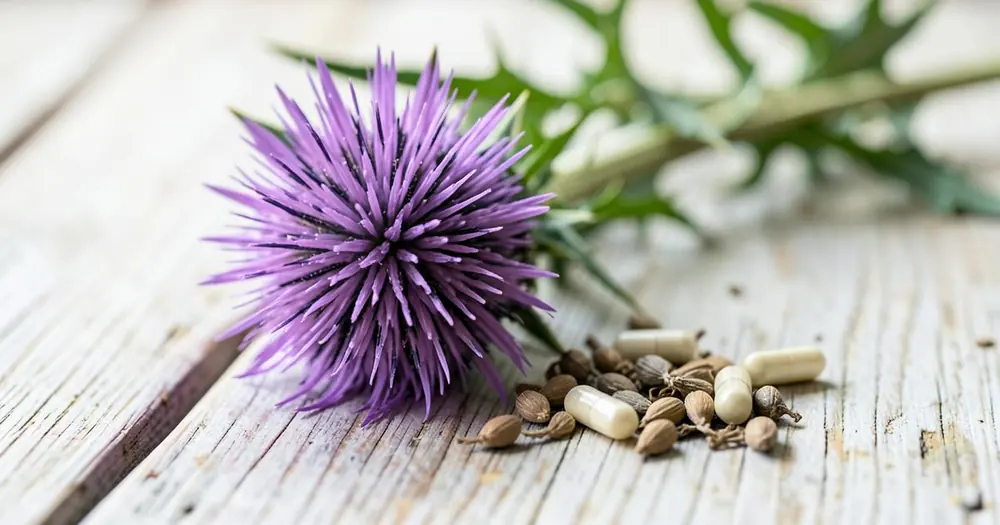
Trials have generally used standardized extracts providing 420–600 mg a day of silymarin, usually split into two or three doses, with some hepatitis C research going higher. A Cochrane review of milk thistle for alcoholic and hepatitis B or C liver disease found no convincing effect on mortality, liver complications or liver histology, and rated the supporting trials as low quality. NCCIH summarises the evidence as insufficient to recommend milk thistle for liver disease, hepatitis or diabetes. Reported side effects are mostly mild gastrointestinal, and the main caution is allergy in people sensitive to the ragweed and daisy family.
Milk thistle amounts reported in the published literature
| Use case | Amount reported in sources | What to know |
|---|---|---|
| Standardized extract, common trial range | 420–600 mg silymarin per day, divided | Extracts are typically standardized to 70–80% silymarin. Source |
| Hepatitis C research | Higher oral amounts and intravenous silibinin protocols | Studied in specialist settings; oral silymarin did not reduce viral load in trials. Source |
| Typical retail capsule | 150–250 mg extract per capsule | Check the silymarin percentage, not just the extract weight. Source |
| Amanita mushroom poisoning | Intravenous silibinin, hospital use only | The one setting with a strong clinical rationale, and it is not an oral supplement. Source |
Figures are amounts reported in the cited sources, not a personal recommendation. Your own amount depends on your health, medicines and blood work.
Silymarin is the active fraction, and the label often hides it
Milk thistle (Silybum marianum) seeds contain a mixture of flavonolignans collectively called silymarin, of which silibinin (silybin) is the most studied. Products vary from raw ground seed to extracts standardized to 70–80% silymarin, and a capsule stating '250 mg milk thistle' without a standardisation figure may contain a small fraction of the active fraction used in trials.
Silymarin is also poorly water-soluble and poorly absorbed, which is why phospholipid complexes such as silybin-phosphatidylcholine were developed and why intravenous silibinin exists at all. Bioavailability differences between products are large and rarely disclosed.
When comparing products or logging a dose, record the silymarin milligrams, not the extract weight.
- Look for standardisation to 70–80% silymarin.
- Trial amounts were 420–600 mg silymarin a day, usually split.
- Phospholipid-complexed forms absorb better than plain extract.
What the liver trials found
The Cochrane review of milk thistle for alcoholic and hepatitis B or C liver disease pooled randomised trials and found no convincing effect on all-cause mortality, liver-related complications or liver histology. When the analysis was restricted to trials with adequate methodological quality, even the borderline signals disappeared.
NCCIH's assessment is consistent: the evidence is insufficient to recommend milk thistle for chronic hepatitis, cirrhosis or diabetes, and the largest hepatitis C trial found that oral silymarin did not reduce viral load or serum ALT compared with placebo.
There is a more interesting corner of the literature in non-alcoholic fatty liver disease and in reducing chemotherapy-related liver enzyme rises, where some small trials report improvements in transaminases. Enzyme changes are surrogate markers, and these studies are too small to change the overall picture.
The one use with a genuine rationale
Intravenous silibinin is used in specialist care for Amanita phalloides (death cap) mushroom poisoning, where it appears to block toxin uptake into liver cells. That is an emergency hospital treatment with a specific pharmacological rationale.
It is worth stating plainly because it is often used rhetorically to support the oral supplement: an intravenous drug given for acute poisoning tells you very little about a capsule taken daily for general liver support.
'Liver support' after drinking is the most common consumer framing, and there is no trial evidence that milk thistle prevents alcohol-related liver injury. Reducing the alcohol is the intervention with the evidence behind it.
Safety, allergy and drug interactions
Milk thistle is generally well tolerated. Reported effects are mild and gastrointestinal — loose stools, nausea, bloating — plus occasional headache. It has a good safety record across the trials that did not find it effective.
The clear contraindication is allergy: milk thistle belongs to the Asteraceae family alongside ragweed, chrysanthemum, marigold and daisy, and cross-reactive allergic reactions have been reported.
Laboratory work has shown milk thistle constituents can inhibit cytochrome P450 enzymes and drug transporters, so interactions with medicines metabolised that way are plausible even though clinical studies have often found modest effects. Because it may also lower blood glucose, people on diabetes medicines should monitor more closely, and anyone with a hormone-sensitive condition should note that some milk thistle preparations have shown weak oestrogenic activity in laboratory work.
What the published studies found
Each entry below links straight to the paper or the health authority page so you can read the original rather than take our word for it.
- Rambaldi A, Jacobs BP, Gluud C. Milk thistle for alcoholic and/or hepatitis B or C virus liver diseases. Cochrane Database Syst Rev. 2007.
Cochrane systematic review of randomised trials
Pooled trials showed no significant effect of milk thistle on all-cause mortality, complications of liver disease or liver histology. Trials of adequate quality showed no benefit, and the reviewers judged the evidence base low quality.
- National Center for Complementary and Integrative Health. Milk Thistle.
Health-authority evidence summary
Concludes there is not enough evidence to support milk thistle for chronic hepatitis, cirrhosis or diabetes, notes that oral silymarin did not reduce hepatitis C viral load in a large trial, and lists allergy in the ragweed family as the main caution.
Side effects reported in the literature
Commonly reported
- Loose stools and diarrhea
- Nausea and bloating
- Headache
- Itching or rash in sensitive people
Serious, seek medical advice
- Allergic reactions in people sensitive to ragweed, daisies, marigold or chrysanthemum
- Possible additive blood-glucose lowering with diabetes medicines
Summarized from NCCIH milk thistle evidence summary. Report anything unexpected to your own doctor or pharmacist.
Interactions to check with a pharmacist
| Medicine or condition | What sources report |
|---|---|
| Diabetes medicines | Possible additive blood-glucose lowering; monitor more closely if combining. Source |
| Medicines metabolised by cytochrome P450 | Laboratory work shows enzyme and transporter inhibition; clinical significance varies by drug. Source |
| Hormone-sensitive conditions | Some preparations have shown weak oestrogenic activity in laboratory studies. Source |
| Ragweed-family allergy | Cross-reactive allergic reactions reported; avoid if you react to that plant family. Source |
This is not a complete interaction list. Check your own medicines with a pharmacist before combining anything.
This page is reference material, not medical advice. Supplements interact with prescription medicines and with each other. Talk to a doctor or pharmacist before starting anything, especially if you are pregnant, breastfeeding, managing a health condition or taking prescription medicine.
Frequently asked questions
How much milk thistle should I take?
Trials generally used standardized extracts providing 420–600 mg of silymarin a day, split into two or three doses. Record the silymarin milligrams rather than the extract weight, because standardisation varies widely between products.
Does milk thistle actually help the liver?
A Cochrane review of alcoholic and hepatitis B or C liver disease found no convincing effect on mortality, complications or histology, and NCCIH describes the evidence as insufficient. The strongest use — intravenous silibinin for death cap poisoning — is a hospital treatment, not a capsule.
Can milk thistle undo damage from alcohol?
No trial evidence supports that. Reducing alcohol intake is the intervention with evidence behind it; taking a supplement alongside continued heavy drinking has not been shown to protect the liver.
Who should avoid milk thistle?
People allergic to plants in the ragweed and daisy family, and anyone with a hormone-sensitive condition should check first because some preparations show weak oestrogenic activity in laboratory work.
Does milk thistle interact with medicines?
Laboratory studies show inhibition of cytochrome P450 enzymes and drug transporters, and it may lower blood glucose. Clinical effects are often modest, but tell your prescriber if you take medicines with a narrow safety margin.
How long do you take milk thistle for?
Trials generally ran for weeks to months. Because none of them established a benefit for liver disease, there is no evidence-based duration to recommend, and ongoing symptoms are a reason to get liver testing rather than to continue a supplement.
Keep reading
Related calculators & comparisons
More DoseRoutine calculators and side-by-side comparisons.
- Peptide calculator
Mix, convert syringe units, build a chart and plan vial supply.
- All calculators
Index of every DoseRoutine calculator and dosing tool.
- Peptide dosage calculator
Convert peptide doses into exact insulin-syringe units.
- Peptide reconstitution
Plan BAC water, concentration and doses per vial.
- Reconstitution calculator
Lightweight standalone reconstitution tool.
- TRT dosage calculator
Weekly testosterone → per-shot volume and syringe units.
Sources
Track your dose in DoseRoutine
Log what you actually take, get reminders at the right time and check interactions against everything else in your stack.
Sign up free →