Glycine Dosage: The 3 g Sleep Studies and What Else It Does
Researched by DoseRoutine Research TeamReviewed for accuracy by Nicholas Alexander, RSE, SO, PMPLast updated Educational reference only — not medical advice. Always confirm dosing and safety decisions with a licensed clinician.
Glycine is the smallest amino acid and one of the least glamorous supplements on the shelf. It is also cheap, sweet-tasting, and the subject of a small but consistent set of sleep studies that most people have never read.
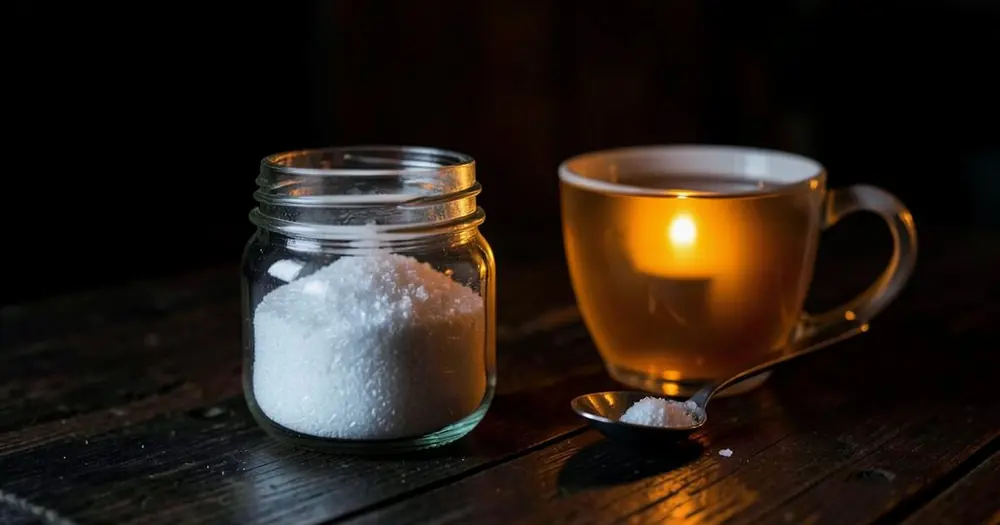
The sleep research on glycine has used 3 g taken before bedtime, and studies at that amount reported improvements in subjective sleep quality and next-day measures in people with poor sleep. Glycine is a non-essential amino acid the body can synthesise, and it is also the most abundant amino acid in collagen and a required component of glutathione. Typical dietary intake from protein foods is in the low grams per day, and gelatin and bone broth are the richest sources. There is no established daily requirement and no tolerable upper intake level.
Glycine amounts reported in the research literature
| Use case | Amount reported in sources | What to know |
|---|---|---|
| Subjective sleep quality | 3 g before bedtime in published sleep studies | Studies in people reporting poor sleep measured sleep quality scores and next-day fatigue. Source |
| Collagen structure | Roughly one third of collagen's amino acid residues | Glycine's repeating position in the collagen triple helix is why collagen products are glycine-rich. Source |
| Glutathione synthesis | One of three constituent amino acids, with cysteine and glutamate | Cysteine is usually the limiting one, which is why NAC rather than glycine dominates that literature. Source |
| Dietary intake | Low grams per day from ordinary protein intake | Gelatin, skin-on meat, bone broth and collagen peptides are the concentrated sources. Source |
Figures are amounts reported in the cited sources, not a personal recommendation. Your own amount depends on your health, medicines and blood work.
What glycine does in the body
Glycine is a non-essential amino acid, meaning the body can make it, though several researchers have argued that endogenous synthesis may not cover the full demand created by collagen turnover and glutathione production in some people.
It has three jobs worth knowing. It is the structural backbone of collagen, appearing at every third position in the triple helix. It is one of the three amino acids that make glutathione. And it acts as an inhibitory neurotransmitter in the brainstem and spinal cord, while also being a required co-agonist at NMDA receptors.
That last role is what makes the sleep studies mechanistically plausible rather than random. Glycine's effects on core body temperature and on peripheral blood flow are part of the proposed pathway.
- About one third of collagen's residues are glycine
- One of three amino acids in glutathione
- Acts as an inhibitory neurotransmitter in the central nervous system
- Influences core body temperature, which drops before sleep onset

The sleep research, in proportion
The glycine sleep literature comes largely from a small group of Japanese studies using 3 g before bed in people who reported unsatisfactory sleep. Reported outcomes included better subjective sleep quality, reduced next-day fatigue, and in polysomnography work, shortened time to fall asleep.
These are small studies with subjective primary endpoints, and they have not been widely replicated by independent groups. Nobody should present them as equivalent to the evidence base behind a sleep medicine.
What makes them interesting anyway is coherence: the proposed mechanism involves peripheral vasodilation and a drop in core body temperature, which is exactly the physiological signature that precedes normal sleep onset.
Glycine, collagen and protein quality
Collagen peptide supplements are effectively concentrated glycine and proline. Anyone already taking collagen for skin or joints is taking a substantial glycine dose without labeling it that way.
Modern diets that favour muscle meat over skin, connective tissue and slow-cooked cuts supply less glycine than traditional diets built around whole-animal cooking. This is the basis for the argument that glycine intake has quietly fallen, though it is a dietary-pattern observation rather than a demonstrated deficiency.
Because glycine tastes mildly sweet and dissolves cleanly, it is one of the easiest amino acids to add to tea or water without a flavor problem.
Tolerability
Glycine is well tolerated in the doses used in research. Reported effects are limited to occasional soft stools or mild nausea, generally at larger amounts, and the sweet taste is more often a reason people like it than a complaint.
No tolerable upper intake level has been established, which reflects the absence of concerning findings rather than the presence of comprehensive long-term data.
It has been studied at far higher doses than 3 g in clinical research contexts, including gram-scale amounts investigated in metabolic and psychiatric research, which supports its general safety margin without saying anything about benefit at those levels.
Who should check first
The main interaction to know is with clozapine. Glycine acts at NMDA receptors, and studies combining glycine with clozapine reported worsening of symptoms, so this combination should not be self-initiated.
People with kidney or liver disease should get clinical input before adding gram-scale amino acid doses, as with any amino acid supplement.
Glycine is not a treatment for insomnia disorder, and persistent sleep problems deserve assessment. A cheap amino acid that shifts a subjective score in a small study is a reasonable thing to try; it is not a reason to postpone a diagnosis.
What the published studies found
Each entry below links straight to the paper or the health authority page so you can read the original rather than take our word for it.
- Published Japanese studies of glycine ingestion before bedtime in adults with unsatisfactory sleep.
Small randomised and crossover studies with subjective and polysomnographic measures
3 g of glycine before bed was associated with improved subjective sleep quality scores, reduced next-day fatigue and shorter time to fall asleep in the populations studied.
- Martínez-Puig D, Costa-Larrión E, Rubio-Rodríguez N, Gálvez-Martín P. Collagen Supplementation for Joint Health: The Link between Composition and Scientific Knowledge. Nutrients. 2023.
Narrative review of collagen product composition and evidence
Describes the glycine-rich amino acid composition of collagen preparations and the variability between marketed products.
Side effects reported in the literature
Commonly reported
- Soft stools at larger doses
- Mild nausea
- Noticeably sweet taste
Serious, seek medical advice
- Interaction with clozapine, where combination has been associated with worsening symptoms
- Amino acid loads warrant clinical input in kidney or liver disease
- Not a treatment for diagnosed insomnia disorder
Summarized from PubMed — glycine and clozapine research. Report anything unexpected to your own doctor or pharmacist.
Interactions to check with a pharmacist
| Medicine or condition | What sources report |
|---|---|
| Clozapine | Glycine acts at NMDA receptors and combination studies reported worsening of symptoms; do not self-initiate. Source |
| Collagen peptides | Already supply substantial glycine, so doses stack without you noticing. Source |
| Kidney or liver disease | Gram-scale amino acid intake deserves clinical review in impaired clearance. Source |
This is not a complete interaction list. Check your own medicines with a pharmacist before combining anything.
This page is reference material, not medical advice. Supplements interact with prescription medicines and with each other. Talk to a doctor or pharmacist before starting anything, especially if you are pregnant, breastfeeding, managing a health condition or taking prescription medicine.
Frequently asked questions
How much glycine should I take for sleep?
Published sleep studies used 3 g taken before bedtime. These were small studies with mostly subjective endpoints, so treat the number as what was tested rather than as a recommendation.
Does glycine actually help you sleep?
Small studies in people with poor sleep reported better subjective sleep quality and less next-day fatigue at 3 g before bed. The proposed mechanism — peripheral vasodilation and a drop in core body temperature — matches normal sleep onset physiology, but independent replication is limited.
When should I take glycine?
The sleep studies dosed shortly before bedtime, roughly within an hour. For collagen or glutathione rationales, timing has not been shown to matter.
Is glycine the same as collagen?
No, but they overlap heavily. Glycine occupies about a third of collagen's amino acid positions, so collagen peptides deliver a large glycine dose alongside proline and hydroxyproline.
Can you take too much glycine?
No tolerable upper intake level has been set. Soft stools and mild nausea are the practical ceiling for most people, and higher gram-scale doses have been used in clinical research settings.
What foods are high in glycine?
Gelatin, bone broth, skin-on meat, connective tissue cuts and collagen peptides. Lean muscle meat contains far less than traditional whole-animal cooking supplies.
Is glycine safe with medications?
The clear exception is clozapine, where combination studies reported worsening of symptoms. Kidney or liver disease is also a reason to check before adding gram-scale amino acids.
Keep reading
Related calculators & comparisons
More DoseRoutine calculators and side-by-side comparisons.
- Peptide calculator
Mix, convert syringe units, build a chart and plan vial supply.
- All calculators
Index of every DoseRoutine calculator and dosing tool.
- Peptide dosage calculator
Convert peptide doses into exact insulin-syringe units.
- Peptide reconstitution
Plan BAC water, concentration and doses per vial.
- Reconstitution calculator
Lightweight standalone reconstitution tool.
- TRT dosage calculator
Weekly testosterone → per-shot volume and syringe units.
Sources
- PubMed search: glycine ingestion and subjective sleep quality in humans.
- Martínez-Puig D, et al. Collagen Supplementation for Joint Health: The Link between Composition and Scientific Knowledge. Nutrients. 2023;15(6):1332.
- Acetylcysteine. StatPearls — background on glutathione synthesis and its limiting amino acid.
Track your dose in DoseRoutine
Log what you actually take, get reminders at the right time and check interactions against everything else in your stack.
Sign up free →