GHK-Cu Dosage: Topical Concentrations, Evidence and the Injection Question
Researched by DoseRoutine Research TeamReviewed for accuracy by Nicholas Alexander, RSE, SO, PMPLast updated Educational reference only — not medical advice. Always confirm dosing and safety decisions with a licensed clinician.
GHK-Cu is the rare peptide most people meet in a serum bottle rather than a vial. That distinction — topical cosmetic versus injected research chemical — is the whole story of its safety profile.
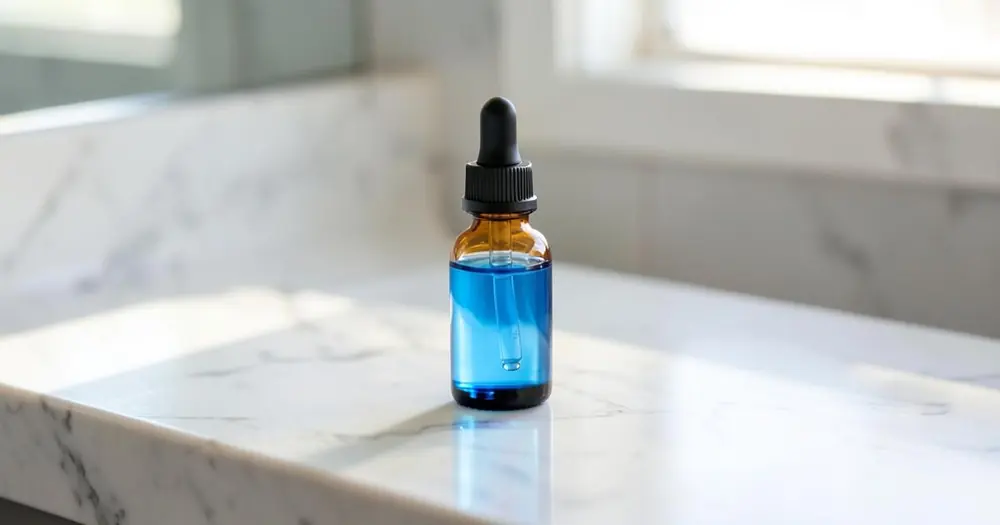
GHK-Cu is a naturally occurring copper-binding tripeptide used almost entirely as a topical cosmetic ingredient, where products typically supply somewhere between about 0.05% and 3% and are applied once or twice daily. Published human work is mostly small cosmetic and wound-healing studies of creams and eye products reporting improvements in skin appearance and barrier measures; these do not establish a therapeutic dose, and cosmetic ingredients are not regulated as medicines. Injectable GHK-Cu is a different proposition entirely: it is sold as research-use-only material with no human dosing trials, and it delivers copper systemically, where excess intake is limited by a tolerable upper intake level of 10 mg per day for adults.
GHK-Cu concentrations and copper reference amounts
| Use case | Amount reported in sources | What to know |
|---|---|---|
| Cosmetic topical serums and creams | Commonly formulated at roughly 0.05%–3% GHK-Cu, applied once or twice daily | Concentration ranges reflect product formulation practice, not a clinically established dose. Cosmetics are not assessed as medicines. Source |
| Human skin and wound studies | Defined cream or gel formulations applied topically over weeks | Small studies reporting changes in skin appearance, barrier function or wound outcomes; formulations and endpoints vary widely. Source |
| Injectable or intradermal use | No studied dose | No published human dose-finding trial. Sold as research-use-only material with no assurance of sterility or content. Source |
| Copper intake reference (context, not a GHK-Cu dose) | 800–900 mcg per day RDA for adults; 10 mg per day tolerable upper intake level | Relevant because GHK-Cu delivers copper. Chronic excess copper is associated with liver injury and gastrointestinal effects. Source |
Figures are amounts reported in the cited sources, not a personal recommendation. Your own amount depends on your health, medicines and blood work.
What GHK-Cu is and where it comes from
GHK is a tripeptide — glycyl-L-histidyl-L-lysine — found naturally in human plasma, saliva and urine. It binds copper with high affinity, and the copper complex is what is sold as GHK-Cu. Plasma levels of GHK are reported to decline substantially with age, which is the observation behind most of the anti-ageing framing around it.
Its proposed activities include stimulating collagen and glycosaminoglycan production, modulating metalloproteinases, and supporting wound repair. Copper itself is a required cofactor for lysyl oxidase, an enzyme involved in cross-linking collagen and elastin, so the mechanism is at least chemically coherent.
Where the story runs ahead of the evidence is in the size of the claims. Much of the widely cited literature consists of reviews written by researchers closely associated with the peptide, summarising laboratory and animal work rather than reporting controlled human outcomes.
- A naturally occurring copper-binding tripeptide
- Declines with age, which drives the anti-ageing framing
- Copper is a genuine cofactor in collagen cross-linking
- Much cited literature is review and laboratory work, not controlled trials
What the human skin studies actually measured
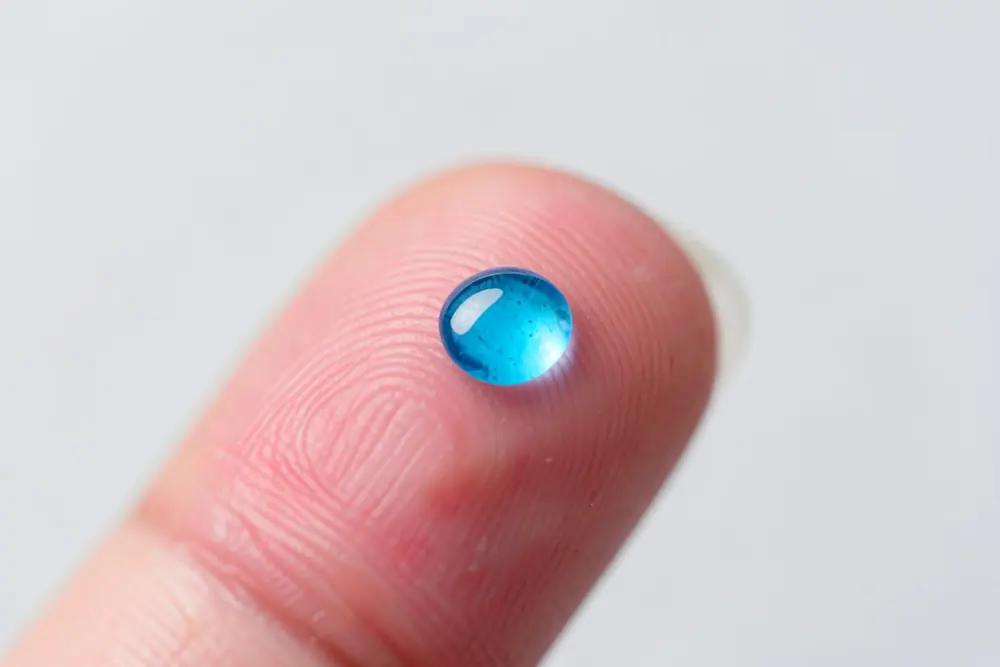
The human work is dominated by small cosmetic studies: creams applied to facial skin or the area around the eyes for periods of a few weeks to a few months, with outcomes such as visible wrinkle depth, skin density on ultrasound, hydration and barrier measures, or investigator-rated appearance. Several report improvements relative to a control.
These studies are worth something, but they carry the standard cosmetic-research limitations: small numbers, short duration, industry involvement, varied formulations, and appearance endpoints that are hard to blind convincingly. There is also a general problem in comparing them, because GHK-Cu products differ enormously in concentration, pH, vehicle and stability.
There is a separate literature on copper peptide dressings and formulations for wound healing, which is more clinically oriented but again does not translate into a general-purpose dose.
- Small topical studies over weeks to months
- Outcomes: wrinkle appearance, skin density, hydration, barrier measures
- Formulations vary too much to pool into a single dose
- Wound-care literature is separate from cosmetic use
Why injected GHK-Cu is a different risk conversation
Topical application of a cosmetic concentration puts a small amount of copper on the skin surface. Injection puts copper into tissue and, ultimately, into circulation. Those are not the same exposure, and no published human study establishes a safe injected amount, frequency or duration.
Copper has a defined tolerable upper intake level of 10 mg per day for adults, set because chronic excess is associated with gastrointestinal effects and liver injury. Anyone with Wilson disease — a genetic disorder of copper handling — should avoid deliberate copper loading entirely, and that condition is sometimes undiagnosed.
Add the unregulated supply chain, and injected GHK-Cu combines an unstudied route with an unverified product and a mineral that has a real ceiling. That is a poor combination for a cosmetic goal.
- Injection is a systemic copper exposure, not a skincare step
- Adult tolerable upper intake level for copper: 10 mg per day
- Wilson disease is an absolute reason to avoid copper loading
- No sterility or content assurance in research-grade vials
Using a topical product sensibly
For topical use, the practical questions are formulation ones. GHK-Cu is colored — that characteristic blue — and can stain or tint; it is also chemically incompatible with some common actives. Strong direct-acid vitamin C in the same layer is the classic conflict, and many formulators recommend separating them by time of day.
Skin responses are usually mild: transient redness, tingling or dryness, occasionally contact irritation. Patch testing on the inner forearm before facial use is a sensible habit for any new active.
Expect modest, slow effects if any, judge over eight to twelve weeks with photographs taken in identical light, and stop if irritation persists. That is a reasonable evidence-matched way to use a cosmetic ingredient with promising but limited data.
- Separate from direct-acid vitamin C, usually by time of day
- Patch test before facial use
- Judge over eight to twelve weeks with consistent photographs
- Stop for persistent irritation rather than pushing through
What the published studies found
Each entry below links straight to the paper or the health authority page so you can read the original rather than take our word for it.
- Topical GHK-Cu cosmetic studies
Small controlled and comparative studies of creams applied to facial or eye-area skin
Reported improvements in measures such as wrinkle appearance, skin density and barrier function over several weeks; formulations, sample sizes and endpoints vary considerably.
- GHK and GHK-Cu mechanistic reviews
Narrative reviews of laboratory, cell-culture and animal research
Describe roles in collagen and glycosaminoglycan synthesis, metalloproteinase modulation and wound repair, based predominantly on preclinical evidence.
- NIH Office of Dietary Supplements — copper
Authority nutrient review
Sets an adult RDA of around 900 mcg per day and a tolerable upper intake level of 10 mg per day, and describes the effects associated with chronic excess copper.
Side effects reported in the literature
Commonly reported
- Transient redness, tingling or stinging where applied
- Dryness or flaking with frequent use
- Temporary blue-green tint on skin or fabric from the copper complex
- Contact irritation in sensitive skin
Serious, seek medical advice
- Allergic contact dermatitis, which requires stopping the product
- Systemic copper loading from injected use — not a risk of ordinary topical use
- Copper accumulation is dangerous in Wilson disease and other copper-handling disorders
- Unregulated injectable vials carry infection and contamination risk
Summarized from NIH Office of Dietary Supplements — Copper. Report anything unexpected to your own doctor or pharmacist.
Interactions to check with a pharmacist
| Medicine or condition | What sources report |
|---|---|
| Direct-acid vitamin C serums | Formulation incompatibility in the same layer; commonly separated by time of day to avoid destabilising either active. Source |
| High-dose zinc supplementation | Zinc and copper compete for absorption; sustained high zinc intake can lower copper status, which matters more for oral intake than topical use. Source |
| Wilson disease and copper-restricted diets | Deliberate copper exposure conflicts directly with the treatment goal of reducing copper burden. Source |
This is not a complete interaction list. Check your own medicines with a pharmacist before combining anything.
This page is reference material, not medical advice. Supplements interact with prescription medicines and with each other. Talk to a doctor or pharmacist before starting anything, especially if you are pregnant, breastfeeding, managing a health condition or taking prescription medicine.
Frequently asked questions
What concentration of GHK-Cu should a serum have?
Cosmetic products are typically formulated somewhere between about 0.05% and 3%, applied once or twice daily. There is no clinically established concentration, because these are cosmetics rather than medicines and the studies behind them used varied formulations.
Is injectable GHK-Cu safe?
There is no published human dose-finding trial for injected GHK-Cu, so no safe amount has been established. Injection also delivers copper systemically, and adults have a tolerable upper intake level of 10 mg of copper per day.
What does GHK-Cu do for skin?
It is proposed to support collagen and glycosaminoglycan production and modulate enzymes involved in tissue remodelling. Small topical studies report improvements in wrinkle appearance, skin density and barrier measures, though the studies are small and the formulations differ.
Can GHK-Cu be used with vitamin C?
Not usually in the same layer. Direct-acid vitamin C and copper peptides are a well-known formulation conflict, so most guidance is to use them at different times of day.
Why does GHK-Cu look blue?
The color comes from the bound copper. It can also temporarily tint skin or stain fabric, which is normal for the ingredient rather than a sign of a problem.
Who should avoid GHK-Cu?
Anyone with Wilson disease or another copper-handling disorder should avoid deliberate copper exposure. Anyone who develops persistent irritation or an allergic reaction should stop, and injectable use is not advisable given the absence of human data.
How long before topical GHK-Cu shows anything?
Cosmetic studies typically ran for several weeks to a few months. Judging over eight to twelve weeks with photographs taken in identical lighting is a reasonable way to see whether anything actually changed.
Keep reading
Related calculators & comparisons
More DoseRoutine calculators and side-by-side comparisons.
- Peptide calculator
Mix, convert syringe units, build a chart and plan vial supply.
- All calculators
Index of every DoseRoutine calculator and dosing tool.
- Peptide dosage calculator
Convert peptide doses into exact insulin-syringe units.
- Peptide reconstitution
Plan BAC water, concentration and doses per vial.
- Reconstitution calculator
Lightweight standalone reconstitution tool.
- TRT dosage calculator
Weekly testosterone → per-shot volume and syringe units.
Sources
Track your dose in DoseRoutine
Log what you actually take, get reminders at the right time and check interactions against everything else in your stack.
Sign up free →