BPC-157 Dosage: What Protocols Report and What Research Exists
Researched by DoseRoutine Research TeamReviewed for accuracy by Nicholas Alexander, RSE, SO, PMPLast updated Educational reference only — not medical advice. Always confirm dosing and safety decisions with a licensed clinician.
BPC-157 is one of the most confidently discussed peptides on the internet and one of the least studied in people. The numbers repeated in forums look precise. Their source is not.
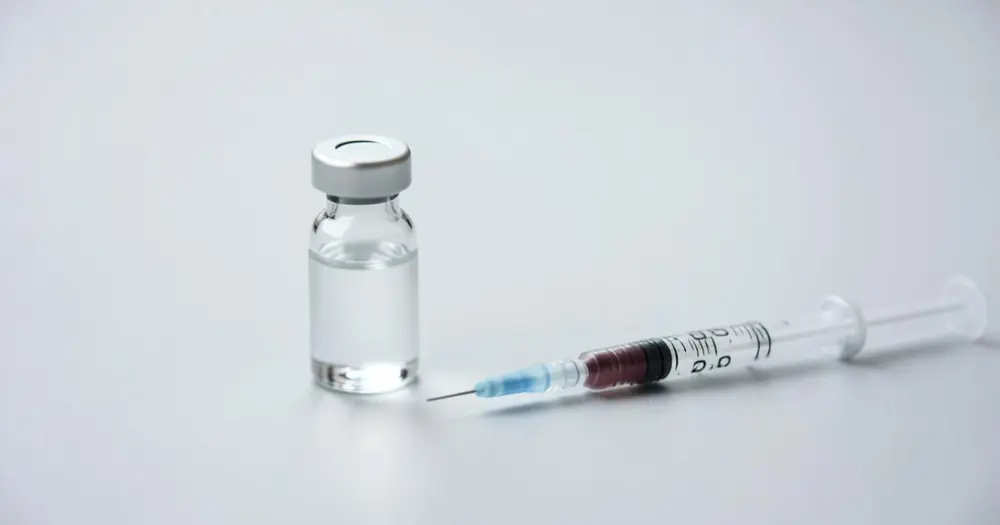
There is no established BPC-157 dose, because no completed human dose-finding trial has been published. The figures circulating in community protocols are typically 200–500 mcg per day by subcutaneous injection, sometimes split into two doses, run for four to eight weeks — but these come from user practice and from scaling rodent doses, not from clinical research. BPC-157 is not an approved medicine in the United States, the EU, the UK, Canada or Australia. The FDA placed it on the Category 2 list of bulk drug substances that raise significant safety risks for compounding, and WADA prohibits it at all times, so any tested athlete using it will fail a doping control.
Amounts reported in BPC-157 sources — none are clinical recommendations
| Use case | Amount reported in sources | What to know |
|---|---|---|
| Commonly reported community protocol | 200–500 mcg per day subcutaneously, often split into two injections | Circulating user practice, not a studied regimen. No human trial has tested this range for efficacy or safety. Source |
| Reported protocol length | Typically four to eight weeks | No published human data describe what happens with longer exposure, repeated cycles or cumulative dose. Source |
| Animal research doses | Usually expressed as mcg or ng per kilogram in rodents | Rodent milligram-per-kilogram figures do not convert directly to a human dose; allometric scaling is an assumption, not a measurement. Source |
| Regulatory status of the raw substance | No approved human dose in any major jurisdiction | FDA lists BPC-157 in Category 2: bulk drug substances that raise significant safety risks when used in compounding. Source |
Figures are amounts reported in the cited sources, not a personal recommendation. Your own amount depends on your health, medicines and blood work.
Why there is no real dose to quote
A dose becomes established when someone runs a dose-finding study: several groups of people receive different amounts, blood levels and outcomes are measured, and a range emerges where benefit is detectable and harm is not. That study has not been published for BPC-157. Searching the clinical literature returns animal work, cell-culture work, reviews of animal work, and a small number of early-phase registrations, but no completed and published efficacy trial in humans.
This is why every source quoting a confident BPC-157 dose is quoting something else — a rodent study converted by body weight, a supplier's suggested-use panel, or a protocol that circulated on a forum until repetition made it look official. None of those are evidence about what a given amount does in a person.
The honest position is that the animal literature is genuinely large and reasonably consistent, and that this tells you almost nothing about the right amount for a human being. Consistency in rats has repeatedly failed to survive contact with human trials across many drug classes.
- No published human dose-finding or efficacy trial
- Community numbers derive from animal-dose scaling and user reports
- Rodent-to-human conversion is an assumption, not a measurement
- Absence of reported harm is not the same as demonstrated safety
What the animal research actually reports
The published rodent work reports accelerated healing across a surprising range of injury models: transected Achilles tendon, damaged medial collateral ligament, muscle crush, segmental bone defects, and chemically induced gut injury. The proposed mechanisms center on angiogenesis — upregulation of VEGF receptor 2 signalling and the nitric oxide pathway — and on increased growth-hormone-receptor expression in tendon fibroblasts.
Much of that body of work comes from a relatively small number of research groups, which is a recognized limitation when judging how well findings will replicate. Independent replication in a second species, and then in humans, is the step that has not happened.
Where BPC-157 has come closest to clinical study is inflammatory bowel disease, where an oral formulation was investigated in early trials over a decade ago. No completed phase III result reached publication, and no product came to market.
- Tendon, ligament, muscle, bone and gut models in rodents
- Angiogenesis and growth factor signalling are the proposed mechanisms
- Concentrated in a limited number of research groups
- Early gut-focused clinical work never produced a published pivotal trial
Legality, sport and sourcing
BPC-157 cannot legally be sold for human consumption in the United States, which is why vials are labeled for research use only. In 2023 the FDA placed it in Category 2 of its bulk drug substances review — the list of substances that raise significant safety risks for use in compounded preparations — citing insufficient safety data and immunogenicity concerns. Australia's TGA and several other regulators treat it as a prescription-only or unapproved substance.
In sport, WADA prohibits BPC-157 at all times under S0, the class covering substances with no current approval by any governmental regulatory health authority for human therapeutic use. There is no threshold and no in-competition-only exemption.
Because the market is unregulated, what is in the vial is a separate question from what is on the label. Third-party certificates of analysis are common and easy to fabricate; an analysis is only meaningful if it names an independent laboratory, matches the batch number on the vial, and reports purity by a stated method.
- Sold as research-use-only material, not as a medicine
- FDA Category 2 bulk substance since 2023
- WADA prohibited at all times under S0
- Certificates of analysis are only meaningful if independent and batch-matched
If you are tracking it anyway
People do use BPC-157 outside medical supervision, and pretending otherwise does not make anyone safer. What does help is treating it as an experiment on yourself and recording it like one: the exact amount, the reconstitution math, the site, the date, and the outcome you are actually trying to change, measured the same way each week.
A log makes two things visible that memory hides. The first is whether anything changed at all once normal healing time is accounted for — most soft-tissue injuries improve over the same weeks a protocol runs. The second is whether a side effect tracks with dosing days.
This is also the point at which a conversation with a clinician stops being awkward and starts being useful. A doctor who knows what you are taking can interpret symptoms; one who does not is working blind.
- Record amount, reconstitution, site and date every time
- Pick one measurable outcome and re-measure it on a fixed schedule
- Account for the healing that would have happened anyway
- Tell your clinician what you are using, even if it is unapproved
What the published studies found
Each entry below links straight to the paper or the health authority page so you can read the original rather than take our word for it.
- Published BPC-157 literature in humans
Literature search of indexed clinical trials
No completed randomised controlled efficacy trial of BPC-157 in humans has been published to date; the indexed literature is dominated by rodent and in-vitro work.
- Rodent tendon and ligament healing models
Multiple controlled animal studies and in-vitro fibroblast work
Reported faster healing of transected tendon and ligament in rats, with proposed involvement of growth hormone receptor expression and VEGF-mediated angiogenesis.
- FDA bulk drug substances review, Category 2
Regulatory safety evaluation for compounding under section 503A
BPC-157 was placed in Category 2 — substances that raise significant safety risks — with the agency citing limited safety data and immunogenicity concerns.
Side effects reported in the literature
Commonly reported
- Injection-site redness, stinging or bruising reported by users
- Transient fatigue or light-headedness reported anecdotally
- Nausea and headache reported anecdotally
Serious, seek medical advice
- The true adverse-event profile is unknown: no controlled human safety dataset exists
- Immunogenicity — an immune response to a synthetic peptide — is an unresolved regulatory concern
- Angiogenic mechanisms have not been studied in people with existing tumours
- Unregulated product may contain impurities, endotoxin or the wrong peptide entirely
Summarized from FDA — Category 2 bulk drug substances. Report anything unexpected to your own doctor or pharmacist.
Interactions to check with a pharmacist
| Medicine or condition | What sources report |
|---|---|
| Anticoagulants and antiplatelet drugs | Injection into tissue while on blood thinners raises bruising and haematoma risk; no interaction studies exist for the peptide itself. Source |
| Active or previous cancer | The proposed mechanism involves promoting new blood vessel growth, which has not been evaluated for safety in people with tumours. Source |
| Drug testing in sport | Prohibited at all times under WADA S0; detection results in an anti-doping rule violation regardless of dose. Source |
This is not a complete interaction list. Check your own medicines with a pharmacist before combining anything.
This page is reference material, not medical advice. Supplements interact with prescription medicines and with each other. Talk to a doctor or pharmacist before starting anything, especially if you are pregnant, breastfeeding, managing a health condition or taking prescription medicine.
Frequently asked questions
What is the correct BPC-157 dose?
There is no correct dose, because no human dose-finding trial has been published. Protocols circulating online usually describe 200–500 mcg per day subcutaneously for four to eight weeks, but those numbers come from user practice and animal-dose scaling rather than clinical research.
How is BPC-157 usually taken in reported protocols?
Almost always as a subcutaneous injection of reconstituted lyophilized powder, sometimes near the site of injury. Oral capsules are marketed on the argument that the parent protein comes from gastric juice and is acid-stable, but human absorption data for oral BPC-157 are absent.
Is BPC-157 legal?
It is not an approved medicine in the United States, EU, UK, Canada or Australia, and cannot legally be sold for human consumption. It is sold labeled for research use only, and the FDA lists it as a Category 2 bulk substance raising significant safety risks for compounding.
Is BPC-157 banned in sport?
Yes. WADA prohibits it at all times under S0, the category for substances with no approval by any government health authority for human use. There is no permitted amount for a tested athlete.
Does BPC-157 work for tendon injuries?
In rats, published studies consistently report faster tendon and ligament healing. Those results have not been reproduced in controlled human trials, so no honest answer about human tendon healing is available yet.
What are the side effects of BPC-157?
Users mostly report injection-site reactions, transient fatigue, nausea and headache. Because no controlled trials have been completed, the real side-effect profile — including anything that only appears with long exposure — is unknown.
How long do reported BPC-157 protocols run?
Community protocols typically describe four to eight weeks, sometimes repeated in cycles. There is no published human evidence about what repeated or extended exposure does.
Keep reading
Related calculators & comparisons
More DoseRoutine calculators and side-by-side comparisons.
- Peptide calculator
Mix, convert syringe units, build a chart and plan vial supply.
- All calculators
Index of every DoseRoutine calculator and dosing tool.
- Peptide dosage calculator
Convert peptide doses into exact insulin-syringe units.
- Peptide reconstitution
Plan BAC water, concentration and doses per vial.
- Reconstitution calculator
Lightweight standalone reconstitution tool.
- TRT dosage calculator
Weekly testosterone → per-shot volume and syringe units.
Sources
Track your dose in DoseRoutine
Log what you actually take, get reminders at the right time and check interactions against everything else in your stack.
Sign up free →