Iron Supplement Dosage: How Much Iron Per Day?
Researched by DoseRoutine Research TeamReviewed for accuracy by Nicholas Alexander, RSE, SO, PMPLast updated Educational reference only — not medical advice. Always confirm dosing and safety decisions with a licensed clinician.
Iron is the supplement where taking more, more often, can absorb less. That sounds like folklore until you look at hepcidin — the hormone that shuts the absorption door after a dose — and at the trials that measured what happens when you leave a day between tablets.
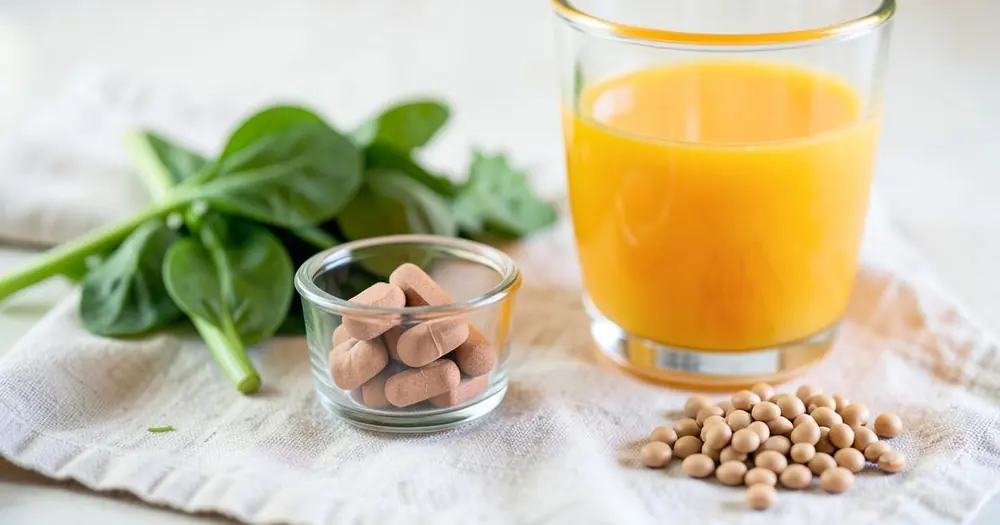
The NIH Office of Dietary Supplements sets the adult recommended dietary allowance at 8 mg a day for men and post-menopausal women, 18 mg a day for menstruating women aged 19–50, and 27 mg a day in pregnancy. The tolerable upper intake level for adults is 45 mg a day. Treatment doses for diagnosed iron-deficiency anemia are much higher and are prescribed and monitored by a clinician. Randomised absorption studies found that giving oral iron on alternate days, rather than daily or split twice daily, increased fractional absorption because it avoided the hepcidin rise triggered by the previous dose.
Iron amounts reported in authority documents and trials
| Use case | Amount reported in sources | What to know |
|---|---|---|
| Men and post-menopausal women (RDA) | 8 mg per day | Dietary requirement, not a supplement instruction. Source |
| Menstruating women aged 19–50 (RDA) | 18 mg per day | Reflects monthly blood loss; heavy periods increase requirements further. Source |
| Pregnancy (RDA) | 27 mg per day | Most prenatal formulations are built around this figure. Source |
| Upper limit, adults | 45 mg per day | Set on gastrointestinal tolerance; higher amounts are used only under medical supervision. Source |
| Alternate-day dosing studies | 60–240 mg elemental iron on alternate days | Open-label randomised absorption trials in iron-depleted women reported higher fractional absorption than daily or twice-daily schedules. Source |
Figures are amounts reported in the cited sources, not a personal recommendation. Your own amount depends on your health, medicines and blood work.
Elemental iron versus salt weight
Every iron label carries two numbers, and people routinely read the wrong one. Ferrous sulfate 325 mg supplies about 65 mg of elemental iron. Ferrous gluconate 325 mg supplies about 38 mg. Ferrous fumarate 325 mg supplies about 106 mg. The elemental figure is what your body sees and what every guideline refers to.
That difference is why one person's 325 mg tablet causes cramping and another's does not. It is also why swapping brands without checking the elemental content can quietly double or halve a dose that was working.
Newer formulations — iron bisglycinate, ferric maltol, sucrosomial iron — are marketed on tolerability rather than potency. Some people tolerate them better; the comparative evidence is thinner than the marketing implies, and they still need the same elemental accounting.
- Ferrous fumarate: roughly 33% elemental iron
- Ferrous sulfate: roughly 20% elemental iron
- Ferrous gluconate: roughly 12% elemental iron
- Always log the elemental figure, not the tablet weight
Why alternate-day dosing came out of the lab
Hepcidin is the master regulator of iron absorption. An oral iron dose raises hepcidin for roughly 24 hours, and while hepcidin is elevated the gut absorbs less of the next dose. That is the mechanism behind one of the more surprising findings in modern iron research.
In two open-label randomised trials in iron-depleted women, Stoffel and colleagues measured absorption from consecutive-day versus alternate-day schedules and from single morning doses versus twice-daily splits. Alternate-day, single-dose schedules produced higher fractional absorption than the daily and split regimens.
This changed practice in some settings, but it is not a license to redesign a prescription yourself. The trials measured absorption, and clinicians balancing anemia severity, tolerance and how fast hemoglobin needs to move may still choose daily dosing. If you are taking iron on prescription, ask the prescriber before switching to alternate days.
The gut side effects are the main reason people stop
A systematic review and meta-analysis of ferrous sulfate supplementation found significantly more gastrointestinal side effects — nausea, constipation, abdominal pain, black stools — than placebo. This is the single biggest driver of people abandoning iron before their stores refill.
Black stools are expected and harmless with oral iron. Constipation is common and often manageable with fluid, fiber and dose timing. Persistent pain, vomiting or blood in the stool is not something to manage at home.
Taking iron with food reduces symptoms but also reduces absorption, particularly with dairy, tea, coffee and calcium supplements. That trade-off is a real one: an absorbed smaller dose beats an unabsorbed larger dose that you stop taking after a week.
What helps and what blocks absorption
Vitamin C increases non-haem iron absorption, which is why taking iron with a glass of orange juice is standard advice. Haem iron from meat, poultry and fish is absorbed far more efficiently than the non-haem iron in plants and supplements.
The blockers are equally consistent. Tea and coffee polyphenols, calcium in dairy and supplements, phytate in whole grains and legumes, and proton pump inhibitors that reduce the acid needed to solubilise iron all reduce uptake. Antacids taken at the same time have a similar effect.
Iron also interferes with other medicines rather than only being interfered with. Levothyroxine, quinolone and tetracycline antibiotics, bisphosphonates and levodopa all lose absorption when taken close to iron, which is a spacing problem worth checking with a pharmacist rather than guessing.
- Take with vitamin C or a citrus drink where tolerated
- Keep at least two hours from tea, coffee, dairy and calcium supplements
- Space away from levothyroxine, antibiotics and bisphosphonates
- Do not combine with antacids at the same time
Never supplement iron blind
Unlike most nutrients, the body has no active route to excrete excess iron. Overload accumulates in the liver, heart and pancreas. People with haemochromatosis — a common inherited condition — can be seriously harmed by routine supplementation, and many do not know they have it.
Iron deficiency also has causes that matter more than the deficiency itself. In adults, unexplained iron-deficiency anemia is investigated for gastrointestinal bleeding, coeliac disease and, in women, heavy menstrual loss. Self-treating with a supplement can mask a diagnosis for months.
The right sequence is ferritin and full blood count first, then a supplement plan, then a recheck. Ferritin is the usual marker of stores, though it rises with inflammation and may need interpreting alongside CRP.
What the published studies found
Each entry below links straight to the paper or the health authority page so you can read the original rather than take our word for it.
- Stoffel NU, Cercamondi CI, Brittenham G, et al. Iron absorption from oral iron supplements given on consecutive versus alternate days and as single morning doses versus twice-daily split dosing in iron-depleted women: two open-label, randomised controlled trials. Lancet Haematol. 2017.
Two open-label randomised controlled absorption trials in iron-depleted women
Fractional iron absorption was higher when supplements were given on alternate days as single morning doses than on consecutive days or split twice daily, consistent with the hepcidin response to a preceding dose.
- Tolkien Z, Stecher L, Mander AP, Pereira DIA, Powell JJ. Ferrous sulfate supplementation causes significant gastrointestinal side-effects in adults: a systematic review and meta-analysis. PLoS One. 2015.
Systematic review and meta-analysis of randomised controlled trials
Oral ferrous sulfate was associated with significantly higher odds of gastrointestinal side effects than placebo, including nausea, constipation and abdominal pain.
- Office of Dietary Supplements, National Institutes of Health. Iron — Fact Sheet for Health Professionals.
Health-authority reference document
Publishes the RDAs by age and sex, the 45 mg adult upper intake level, absorption inhibitors and enhancers, and documented medicine interactions.
Side effects reported in the literature
Commonly reported
- Constipation
- Nausea and abdominal pain
- Black or dark stools, which are expected and harmless
- Metallic taste
Serious, seek medical advice
- Iron overdose, which is a leading cause of poisoning deaths in young children
- Iron overload in haemochromatosis or with unnecessary long-term supplementation
- Vomiting blood or blood in the stool, which needs urgent assessment
Summarized from NIH Office of Dietary Supplements iron fact sheet. Report anything unexpected to your own doctor or pharmacist.
Interactions to check with a pharmacist
| Medicine or condition | What sources report |
|---|---|
| Levothyroxine | Iron reduces levothyroxine absorption; separation by several hours is usual advice. Source |
| Quinolone and tetracycline antibiotics | Mutual chelation reduces absorption of both the antibiotic and the iron. Source |
| Proton pump inhibitors and antacids | Reduce stomach acid needed to solubilise non-haem iron, lowering absorption. Source |
| Calcium supplements and dairy | Reduce iron absorption when taken at the same time. Source |
| Levodopa | Iron binds levodopa and reduces its absorption. Source |
This is not a complete interaction list. Check your own medicines with a pharmacist before combining anything.
This page is reference material, not medical advice. Supplements interact with prescription medicines and with each other. Talk to a doctor or pharmacist before starting anything, especially if you are pregnant, breastfeeding, managing a health condition or taking prescription medicine.
Frequently asked questions
How much iron should I take per day?
The dietary requirement is 8 mg a day for men and post-menopausal women, 18 mg for menstruating women aged 19–50 and 27 mg in pregnancy, with an adult upper limit of 45 mg. Treatment doses for diagnosed anemia are higher and belong with a clinician who has seen your blood results.
Is it better to take iron every other day?
Randomised absorption trials in iron-depleted women found higher fractional absorption from alternate-day single morning doses than from daily or twice-daily schedules, because each dose raises hepcidin for about a day. If your iron is prescribed, agree any change of schedule with the prescriber.
When is the best time to take iron?
Absorption is highest on an empty stomach with a source of vitamin C and away from tea, coffee, dairy and calcium. Tolerance often pushes people to take it with food instead, which is a reasonable trade if it is the difference between continuing and stopping.
Why does iron make me constipated?
Unabsorbed iron in the gut is a well-documented cause of constipation, nausea and abdominal pain — a meta-analysis of ferrous sulfate trials found significantly more of these effects than placebo. Lower elemental doses, alternate-day schedules and different salts are the usual adjustments to discuss.
Can I take iron without a blood test?
It is not a good idea. The body cannot excrete excess iron, inherited haemochromatosis is common, and unexplained iron deficiency in adults is itself investigated for causes such as gastrointestinal bleeding. Ferritin and a full blood count should come first.
How long does it take iron supplements to work?
Hemoglobin typically starts responding within weeks in treatment settings, while refilling ferritin stores takes months. Clinicians usually recheck bloods rather than stopping when symptoms improve.
Which iron supplement is gentlest on the stomach?
Lower elemental doses and alternate-day schedules reduce symptoms more reliably than switching brand. Bisglycinate and ferric maltol are marketed as gentler, but the head-to-head evidence is limited compared with the well-documented dose relationship.
Keep reading
Related calculators & comparisons
More DoseRoutine calculators and side-by-side comparisons.
- Peptide calculator
Mix, convert syringe units, build a chart and plan vial supply.
- All calculators
Index of every DoseRoutine calculator and dosing tool.
- Peptide dosage calculator
Convert peptide doses into exact insulin-syringe units.
- Peptide reconstitution
Plan BAC water, concentration and doses per vial.
- Reconstitution calculator
Lightweight standalone reconstitution tool.
- TRT dosage calculator
Weekly testosterone → per-shot volume and syringe units.
Sources
- Office of Dietary Supplements, National Institutes of Health. Iron — Fact Sheet for Health Professionals.
- Stoffel NU, et al. Iron absorption from oral iron supplements given on consecutive versus alternate days and as single morning doses versus twice-daily split dosing in iron-depleted women. Lancet Haematol. 2017;4(11):e524–e533.
- Tolkien Z, et al. Ferrous sulfate supplementation causes significant gastrointestinal side-effects in adults: a systematic review and meta-analysis. PLoS One. 2015;10(2):e0117383.
- MedlinePlus, U.S. National Library of Medicine. Iron deficiency anemia.
Track your dose in DoseRoutine
Log what you actually take, get reminders at the right time and check interactions against everything else in your stack.
Sign up free →