Inositol: Amounts Used in PCOS and Metabolic Research
Researched by DoseRoutine Research TeamReviewed for accuracy by Nicholas Alexander, RSE, SO, PMPLast updated Educational reference only — not medical advice. Always confirm dosing and safety decisions with a licensed clinician.
Inositol is a sugar alcohol the body makes and also gets from food, and it has become the most-discussed non-prescription option in polycystic ovary syndrome. The research base is larger than most supplements enjoy, but the reviews are more cautious than the marketing, and the two isomers are not interchangeable.
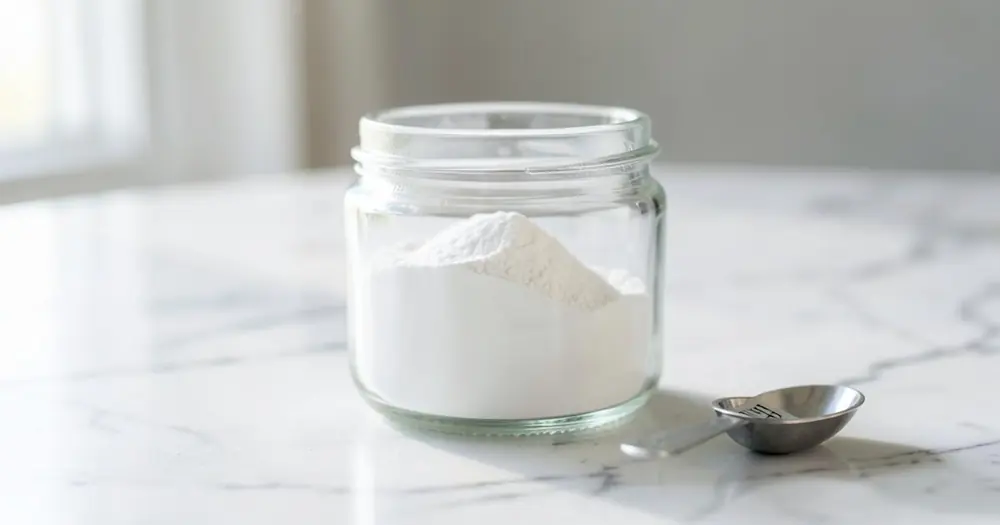
PCOS trials have mostly used 4 g a day of myo-inositol, frequently as a combination of myo-inositol and D-chiro-inositol in the 40:1 ratio found in plasma — typically 2 g of myo-inositol plus 50 mg of D-chiro-inositol twice a day. A 2018 Cochrane review of inositol for subfertile women with PCOS judged the evidence for improved ovulation and clinical pregnancy to be of low or very low certainty, while a separate meta-analysis of randomised trials reported improved ovulation frequency. Trials in panic and obsessive-compulsive disorder used far larger amounts, around 12–18 g a day.
Inositol amounts reported in published trials
| Use case | Amount reported in sources | What to know |
|---|---|---|
| PCOS, myo-inositol | 4 g per day, usually 2 g twice daily | The most common protocol across randomised trials in PCOS. Source |
| PCOS, 40:1 combination | 2 g myo-inositol + 50 mg D-chiro-inositol, twice daily | Ratio chosen to mirror the physiological plasma ratio of the two isomers. Source |
| Gestational diabetes prevention research | About 4 g per day with folic acid | Studied in pregnancy under supervision; not a self-directed use. Source |
| Panic and OCD trials | About 12–18 g per day | Small psychiatric trials; gastrointestinal effects are common at this level. Source |
Figures are amounts reported in the cited sources, not a personal recommendation. Your own amount depends on your health, medicines and blood work.
Myo-inositol and D-chiro-inositol are different molecules
Myo-inositol is the dominant isomer in the body and in most tissues; D-chiro-inositol is produced from it by an insulin-dependent epimerase and is found in much smaller amounts. Their proposed roles in insulin signalling differ, and the ovary appears to be sensitive to the balance between them rather than to either in isolation.
That is the reasoning behind the 40:1 products: the ratio approximates what is measured in plasma. Trials using D-chiro-inositol alone at high doses have raised concern about worsening oocyte quality, which is why 'more D-chiro' is not an upgrade.
Practically, read which isomer a product contains and at what amount. A capsule labeled simply 'inositol' is usually myo-inositol, but the D-chiro content — if any — is the number that distinguishes the products people compare online.
- Myo-inositol: the isomer used at gram amounts in trials.
- D-chiro-inositol: used in milligram amounts alongside it.
- 40:1 is the ratio most PCOS combination trials adopted.
What the reviews concluded about PCOS
A 2018 Cochrane review examined inositol for subfertile women with PCOS and concluded that the evidence for live birth, clinical pregnancy and ovulation was of low or very low certainty, largely because the trials were small, varied in design and often at risk of bias. Cochrane's separate review of insulin-sensitising drugs in PCOS included D-chiro-inositol in the same cautious framing.
A meta-analysis published in BJOG in 2018 pooled randomised trials of inositol for anovulation in PCOS and reported improved ovulation frequency compared with control, with a favourable side-effect profile relative to metformin.
Both statements can be true. Ovulation and hormonal markers are easier to move and easier to measure than live births, and the trial base has more of the former than the latter. Framing inositol as a well-tolerated option with promising but low-certainty fertility evidence is where the literature actually sits.
Metabolic markers, mood and where evidence thins
Beyond ovulation, PCOS trials have reported improvements in insulin resistance markers, triglycerides and androgen levels with myo-inositol. The size of those changes varies considerably between studies, and comparisons with metformin generally show similar direction with fewer gastrointestinal complaints.
Inositol also has a small psychiatric literature, mostly from the 1990s, using 12–18 g a day in panic disorder and obsessive-compulsive disorder. Those trials were tiny and have not been convincingly replicated; at that scale the gastrointestinal effects also become a practical limit.
In pregnancy, inositol has been studied for gestational diabetes prevention alongside folic acid. That research is conducted under supervision, and pregnancy is not the setting for self-directed supplementation.
Tolerability and practical notes
Inositol is generally well tolerated at PCOS-scale amounts. Reported effects are mild and dose-related: nausea, bloating, gas, loose stools, sometimes headache or dizziness. They cluster at the larger psychiatric doses rather than at 4 g a day.
Because it is a bulk powder, splitting the dose and dissolving it in water is the standard approach. Reported responses in trials generally took several weeks to appear, with menstrual and hormonal endpoints assessed over three to six months.
If you take metformin or another insulin-sensitising treatment, tell the prescriber you are adding inositol — not because a dangerous interaction is documented, but because the two act on overlapping ground and your monitoring should reflect that.
What the published studies found
Each entry below links straight to the paper or the health authority page so you can read the original rather than take our word for it.
- Showell MG, Mackenzie-Proctor R, Jordan V, et al. Inositol for subfertile women with polycystic ovary syndrome. Cochrane Database Syst Rev. 2018.
Cochrane systematic review of randomised trials
Evidence for live birth, clinical pregnancy and ovulation with inositol in PCOS was rated low or very low certainty; the reviewers could not draw firm conclusions about fertility outcomes.
- Pundir J, Psaroudakis D, Savnur P, et al. Inositol treatment of anovulation in women with polycystic ovary syndrome: a meta-analysis of randomised trials. BJOG. 2018.
Meta-analysis of randomised controlled trials
Pooled trials reported improved ovulation frequency with inositol compared with control, alongside changes in metabolic and hormonal markers and fewer gastrointestinal complaints than metformin.
- Tang T, Lord JM, Norman RJ, et al. Insulin-sensitising drugs (metformin, rosiglitazone, pioglitazone, D-chiro-inositol) for women with polycystic ovary syndrome. Cochrane Database Syst Rev. 2017.
Cochrane systematic review
Assessed insulin-sensitising agents including D-chiro-inositol in PCOS, with cautious conclusions about reproductive outcomes and an emphasis on the limited quality of available trials.
Side effects reported in the literature
Commonly reported
- Nausea and stomach discomfort
- Bloating and gas
- Loose stools at larger amounts
- Headache or light-headedness reported occasionally
Serious, seek medical advice
- Gastrointestinal effects become limiting at the 12–18 g amounts used in psychiatric trials
- Concern raised in the literature about high-dose D-chiro-inositol alone and oocyte quality
Summarized from BJOG meta-analysis of randomised inositol trials. Report anything unexpected to your own doctor or pharmacist.
Interactions to check with a pharmacist
| Medicine or condition | What sources report |
|---|---|
| Metformin and other insulin sensitisers | Overlapping action on insulin signalling; tell the prescriber so monitoring reflects both. Source |
| Fertility treatment protocols | Inositol has been studied alongside IVF and ovulation induction; coordinate with the treating clinic rather than adding it unannounced. Source |
| Pregnancy | Studied for gestational diabetes prevention under supervision; not a setting for self-directed dosing. Source |
This is not a complete interaction list. Check your own medicines with a pharmacist before combining anything.
This page is reference material, not medical advice. Supplements interact with prescription medicines and with each other. Talk to a doctor or pharmacist before starting anything, especially if you are pregnant, breastfeeding, managing a health condition or taking prescription medicine.
Frequently asked questions
How much inositol is used for PCOS?
Most randomised trials used 4 g a day of myo-inositol, commonly split as 2 g twice daily, and combination products pair each 2 g with 50 mg of D-chiro-inositol to give the 40:1 ratio.
What is the 40:1 ratio and does it matter?
It reflects the ratio of myo-inositol to D-chiro-inositol measured in plasma. Combination trials adopted it deliberately, and high-dose D-chiro-inositol alone has raised concerns about oocyte quality, so more is not better.
Does inositol actually help fertility?
A 2018 Cochrane review rated the fertility evidence low to very low certainty. A separate meta-analysis reported improved ovulation frequency. The fair summary is promising for ovulation, unproven for live birth.
How long does inositol take to work?
Trials generally assessed menstrual, hormonal and metabolic endpoints over three to six months, so several weeks at minimum before any change would be expected.
Is inositol better than metformin?
Head-to-head trial data suggests similar direction of effect on ovulation and metabolic markers with fewer gastrointestinal complaints, but the trials are small and metformin has far more long-term outcome data behind it. That is a decision for your clinician.
Does inositol have side effects?
At the 4 g PCOS amounts it is generally well tolerated, with mild nausea, bloating or loose stools. The 12–18 g amounts used in old psychiatric trials produce those effects far more often.
Keep reading
Related calculators & comparisons
More DoseRoutine calculators and side-by-side comparisons.
- Peptide calculator
Mix, convert syringe units, build a chart and plan vial supply.
- All calculators
Index of every DoseRoutine calculator and dosing tool.
- Peptide dosage calculator
Convert peptide doses into exact insulin-syringe units.
- Peptide reconstitution
Plan BAC water, concentration and doses per vial.
- Reconstitution calculator
Lightweight standalone reconstitution tool.
- TRT dosage calculator
Weekly testosterone → per-shot volume and syringe units.
Sources
- Showell MG, et al. Inositol for subfertile women with polycystic ovary syndrome. Cochrane Database Syst Rev. 2018;(12):CD012378.
- Pundir J, et al. Inositol treatment of anovulation in women with polycystic ovary syndrome: a meta-analysis of randomised trials. BJOG. 2018;125(3):299–308.
- Tang T, et al. Insulin-sensitising drugs for women with polycystic ovary syndrome. Cochrane Database Syst Rev. 2017;(11):CD003053.
Track your dose in DoseRoutine
Log what you actually take, get reminders at the right time and check interactions against everything else in your stack.
Sign up free →