KLOW vs GLOW Peptide: What Actually Differs
· DoseRoutine Editorial Team
Researched by DoseRoutine Research TeamReviewed for accuracy by Nicholas Alexander, RSE, SO, PMPLast updated Educational reference only — not medical advice. Always confirm dosing and safety decisions with a licensed clinician.
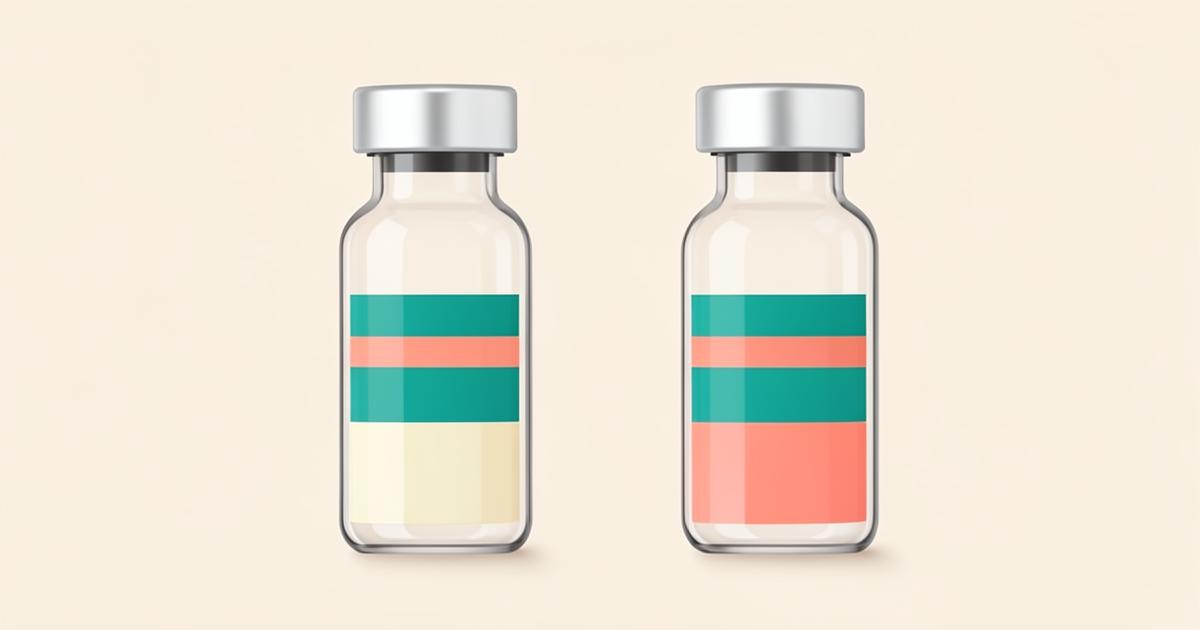
GLOW is normally a blend of GHK-Cu, BPC-157 and TB-500. KLOW is the same three with KPV added, an anti-inflammatory tripeptide. That single extra component is the only reliable difference between them, and neither blend has approved human evidence for the skin, hair or recovery claims made on product pages.
The question comes up constantly and the honest answer is short: KLOW is GLOW plus KPV. Everything else people argue about — potency, "which is stronger", which one is better for skin — comes down to the ratio a particular supplier chose, not to a real pharmacological distinction between two products.
That said, the comparison is worth doing properly, because the KPV addition genuinely changes what the blend is aimed at.
Side by side
| GLOW | KLOW | |
|---|---|---|
| GHK-Cu | Yes | Yes |
| BPC-157 | Yes | Yes |
| TB-500 | Yes | Yes |
| KPV | No | Yes |
| Marketed focus | Skin, hair, tissue repair | The same, plus inflammatory and gut complaints |
| Evidence quality | Preclinical and anecdotal | Preclinical and anecdotal, thinner for KPV |
| Approved for these uses | No | No |
Ratios vary by seller. A "10 mg" vial from one supplier and a "10 mg" vial from another can deliver quite different amounts of each component, which is why the total on the label is close to meaningless without a per-compound breakdown.
What KPV adds
KPV is a three-amino-acid fragment (lysine–proline–valine) from the tail end of alpha-MSH. In preclinical work it shows anti-inflammatory activity, mostly in models of colitis and inflammatory skin conditions, and it appears to act inside the cell rather than through the melanocortin receptors that give alpha-MSH its pigmentation effects.
That's a reasonable mechanistic story. What it is not is human evidence. There are no controlled human trials supporting injected KPV for gut inflammation, acne, or generalised recovery. In the evidence tiers used across our peptide cheat sheet, KPV sits at the mechanism-only end.

So which one do people pick?
In practice the split looks like this. People buying for skin quality, hair or a nagging tendon tend to end up with GLOW, because the extra component isn't aimed at their complaint. People with an inflammatory or gut-related reason — often after reading about KPV specifically — end up with KLOW.
Neither choice is supported by comparative evidence. There is no trial that has ever compared these two blends, because they are supplier products rather than studied formulations.
The argument against both
Everything in the full GLOW blend breakdown applies here, and adding a fourth compound makes it worse:
- Four locked variables. You cannot raise BPC-157 without also raising the copper peptide and the KPV.
- Attribution is impossible. Four compounds, one injection, one outcome. If something helps, you learned nothing transferable. If something goes wrong, you have to stop all four.
- Copper accumulates. GHK-Cu delivers copper. Long daily use of a copper-containing peptide without any monitoring is one of the few concrete physiological reasons to be cautious with the whole blend category.
- Purity is unverified. These are research-chemical products. A batch-specific certificate of analysis is the minimum, and even that only tells you about the batch that was tested.
If you're going to run these compounds at all, most people who take it seriously end up buying the components separately after the first vial, precisely so they can adjust and isolate.
If you do run a blend, log it properly
Record each component's milligram amount per dose rather than "0.2 mL of KLOW". Note the reconstitution volume, the vial batch, the injection site and the date. When you switch suppliers or move to single vials, that per-compound history is the only thing that lets you compare the before and after. DoseRoutine handles the reconstitution math and stores the per-compound breakdown against each vial so the history stays comparable across products.
Educational content only — not medical advice, and not an endorsement of either blend. Talk to a clinician before using any peptide.
FAQs
- Is KLOW stronger than GLOW?
- Not inherently. KLOW contains one extra compound, KPV, but the strength of any blend depends on the milligram amounts of each component in the specific vial you bought and how much water you reconstituted it with. Two vials with the same name and total weight can differ substantially.
- What does KLOW stand for?
- It is a supplier naming convention rather than a scientific term, referring to a blend of KPV, GHK-Cu, BPC-157 and TB-500. GLOW is the same blend without the KPV.
- Can you switch from GLOW to KLOW mid-protocol?
- Physically yes, but you would be changing the dose of every component at once as well as adding a new one, which makes any change in how you feel uninterpretable. If you want to test KPV, adding it as a separate vial while holding the rest steady is the only version of that experiment that produces an answer.
- Are KLOW or GLOW legal?
- The components are generally sold as research chemicals not intended for human use, and legality depends on your country. Several components are prohibited in tested sport under WADA rules. Neither blend is an approved medicine.
- Is the copper in GHK-Cu a concern?
- Copper is an essential trace mineral, but sustained injected exposure without monitoring is not something the cosmetic topical literature speaks to. It is a fair reason to treat long continuous daily use of copper-peptide blends with more caution than the product pages suggest.
This article is for informational purposes only and does not replace professional medical advice. Always consult your healthcare provider before changing medications or supplements.