Which Statements About Peptide Bonds Are True?
· DoseRoutine Editorial Team
Researched by DoseRoutine Research TeamReviewed for accuracy by Nicholas Alexander, RSE, SO, PMPLast updated Educational reference only — not medical advice. Always confirm dosing and safety decisions with a licensed clinician.
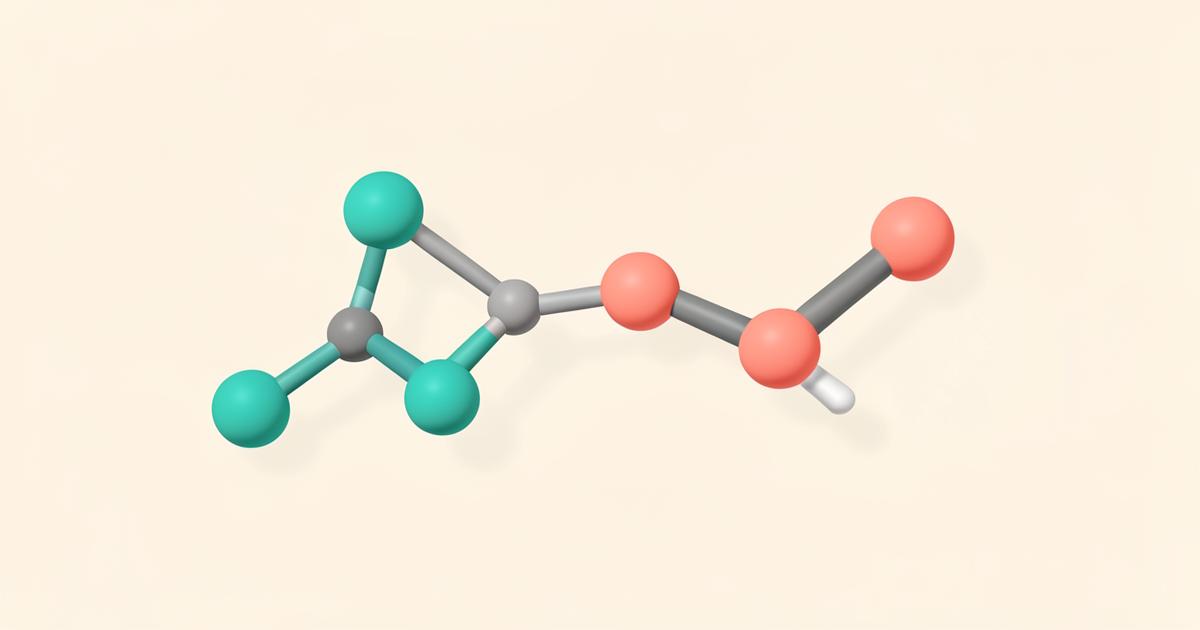
True statements about peptide bonds: they form by condensation between the carboxyl group of one amino acid and the amino group of the next, releasing water; they have partial double-bond character from resonance, which makes them planar and rigid; they are almost always in the trans configuration; and they are kinetically stable but thermodynamically unstable, so hydrolysis needs an enzyme or harsh conditions. False statements usually claim free rotation around the C–N bond, or that peptide bonds involve amino acid side chains.
This question shows up in almost every biochemistry course, usually as a multiple-choice item with four or five statements and a "select all that apply" instruction. The reason it trips people up is that two of the true answers — planarity and partial double-bond character — are the same fact stated differently, and one of the classic distractors sounds entirely reasonable.
Here's the full breakdown.
The statements that are true
1. A peptide bond forms by a condensation (dehydration) reaction. The carboxyl group (–COOH) of one amino acid reacts with the amino group (–NH₂) of the next. A molecule of water is released and an amide linkage remains. True.
2. The peptide bond has partial double-bond character. The nitrogen's lone pair delocalises into the carbonyl, producing a resonance hybrid somewhere between a C–N single bond and a C=N double bond. Measured bond length sits between the two — roughly 1.33 Å, shorter than a typical C–N single bond. True.
3. The peptide group is planar and rigid. This is a direct consequence of statement 2. Six atoms — the alpha carbon of the first residue, the carbonyl carbon, the carbonyl oxygen, the nitrogen, its hydrogen, and the alpha carbon of the second residue — lie in one plane. True, and it's the structural fact that makes protein folding tractable.
4. Rotation is restricted around the C–N bond, but free around the neighbouring bonds. The peptide bond itself doesn't rotate freely. The bonds either side of it do: N–Cα (the phi angle) and Cα–C (the psi angle). Those two angles are what a Ramachandran plot maps. True.
5. The trans configuration strongly predominates. In trans, the two alpha carbons sit on opposite sides of the peptide bond, minimising steric clash. Roughly 99.9% of peptide bonds are trans. Proline is the exception worth knowing — its ring makes cis notably more common, around 5–6% of X-Pro bonds. True.
6. Peptide bonds are kinetically stable but thermodynamically unstable. Hydrolysis is favourable in water, but the uncatalysed reaction is extraordinarily slow — hundreds of years at neutral pH. This is why proteases exist. True.
7. A peptide chain has directionality, written N-terminus to C-terminus. By convention, sequences are written left to right from the free amino end to the free carboxyl end. True.
8. The bond is uncharged at physiological pH. The amide nitrogen isn't protonated and the carbonyl isn't deprotonated under normal conditions. The backbone is polar but neutral; charge comes from side chains and the terminal groups. True.

The statements that are false
"There is free rotation around the peptide bond." The most common distractor, and false. Resonance restricts it. Free rotation happens around the adjacent phi and psi bonds instead.
"Peptide bonds form between the side chains (R groups) of amino acids." False. Peptide bonds are strictly backbone linkages between the alpha-carboxyl and alpha-amino groups. Side chains form other bonds — disulfide bridges between cysteines, ionic and hydrogen bonds — but not peptide bonds.
"A peptide bond is a type of hydrogen bond." False. It's a covalent amide bond. Hydrogen bonds involving the backbone are what stabilise secondary structures like alpha helices and beta sheets, but they're a separate interaction.
"Peptide bond formation releases energy and happens spontaneously in the cell." False as written. Although hydrolysis is thermodynamically downhill, forming a peptide bond in a cell requires energy input — amino acids are activated by attachment to tRNA at ATP cost before the ribosome catalyses the linkage.
"Peptide bonds are broken by heat alone at body temperature." False. They're remarkably stable; hydrolysis at physiological temperature requires enzymatic catalysis, or strong acid/base and prolonged heating in the lab.
"Peptides and proteins are chemically different kinds of molecule." False. The distinction is length and convention only — chains up to roughly 50 residues are usually called peptides, longer ones proteins. Same bond, same chemistry.
A quick memory hook
Planar, partial double bond, predominantly trans, protease-dependent. Four Ps covers most of what the exam wants. Add "condensation releases water" and "phi and psi rotate, the bond doesn't" and you've got the full answer set.
Why this matters outside the exam
The rigidity of the peptide bond is exactly why therapeutic peptides behave the way they do. A fixed planar backbone with only two rotatable angles per residue is what lets a short chain adopt a reproducible shape and bind a receptor precisely. It's also why peptides are injected rather than swallowed — digestive proteases cleave those bonds efficiently, which is the whole reason most peptide drugs can't survive the gut.
If you're studying this because you're also interested in therapeutic peptides, the 2026 peptide cheat sheet covers which ones have real human evidence behind them and which don't.
FAQs
- Is the peptide bond a single or double bond?
- Neither exactly. Resonance gives it partial double-bond character, so its length and rigidity sit between a pure single and a pure double bond. For exam purposes, "partial double-bond character due to resonance" is the expected phrasing.
- Why is the peptide bond planar?
- Because the nitrogen lone pair delocalises into the carbonyl group. That delocalisation requires the p-orbitals to align, which forces the six atoms of the peptide group into a single plane and prevents rotation about the C–N bond.
- Are peptide bonds cis or trans?
- Overwhelmingly trans — about 99.9% — because trans keeps the bulky alpha carbons apart. Bonds preceding proline are the notable exception, with cis occurring in roughly 5–6% of cases.
- What type of reaction forms a peptide bond?
- A condensation, also called a dehydration synthesis: the carboxyl group of one amino acid joins the amino group of the next and a water molecule is released. The reverse, hydrolysis, consumes water and is catalysed by proteases.
- How many peptide bonds are in a chain of n amino acids?
- n minus 1 for a linear peptide. A tripeptide has two peptide bonds; a cyclic peptide of n residues has n.
This article is for informational purposes only and does not replace professional medical advice. Always consult your healthcare provider before changing medications or supplements.